What Repiping Actually Improves in Your Home
Repiping is a large, disruptive, expensive job, so it is worth being precise about what it actually changes. Some of the benefits are immediate and obvious. Others are about risk you stop carrying rather than something you notice day to day.
By Ramin Shahbaziasl, Owner, Eastside Repipe and Plumbing · Last updated September 16, 2025
Here is an honest account of both.
Key Points
Repiping restores flow lost to internal corrosion in old pipe
Discolored water from corroding supply lines stops
The main long-term gain is eliminating recurring leaks and the damage they cause
Most whole-house repipes are two to five days of plumbing, plus restoration
Verify any contractor's license and insurance yourself before hiring
What Changes Immediately
Flow Returns
This is the one people notice first. Galvanized steel corrodes from the inside, and the corrosion builds inward until a three-quarter-inch pipe passes water like a half-inch one. Showers weaken when someone runs a tap elsewhere, and two fixtures at once stop working.
New pipe returns the system to its designed capacity. Worth being accurate about the mechanism, though: repiping restores flow that internal corrosion took away. It does not increase the pressure your utility delivers to the meter. If the pressure at the meter is low, repiping will not change that, which is why the inspection comes first.
Water Clears
Brown or rust-tinted water, particularly after the house has sat unused, comes from corrosion flaking off the pipe wall. Replace the pipe and the source is gone.
The metallic taste and the staining on fixtures and laundry go with it.
Leaks Stop Recurring
If you have had more than one pinhole in a year, the rest of the run is the same age and condition. Repiping ends that cycle rather than deferring the next one.

What Changes Over Time
You stop paying for repeat repairs. This is the clearest financial argument. Patching leaks on a failing system costs money every time and never resolves the underlying condition.
You remove the water damage risk. A pinhole inside a wall runs undetected until drywall stains, and by then framing and insulation have been wet for weeks. Restoration is a separate trade and frequently a larger bill than the plumbing.
Resale becomes simpler. Galvanized supply lines are a known deduction during a home inspection. Removing them removes the negotiation.
One thing worth being honest about: repiping is not primarily an energy-saving measure. It stops water waste from leaks, which shows up on a water bill if you had leaks. It does not materially change water heating costs or household usage. Anyone promising a large utility bill reduction from a repipe alone is overselling it.
When It Is Worth Doing
Brown or rusty water, especially after the house has sat unused
Flow that has dropped across multiple fixtures
More than one leak in a year
Galvanised supply lines, common in homes built before the 1970s
Musty smells or staining near walls where pipe runs
Our guide to rusted pipe repair covers where repair stops making sense, and detecting a hidden water leak covers the meter test you can run yourself.
Copper or PEX
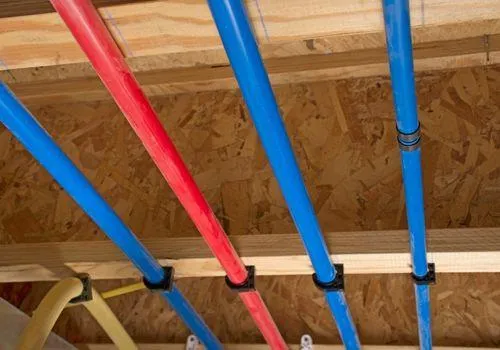
PEX. Flexible, corrosion-resistant, routes through existing framing with far less demolition, and lower in both material and labour cost. It suits most homes.
Copper. Long track record, rigid, higher cost because every joint is soldered. Preferred by some homeowners where pipe is exposed.
On freezing: PEX handles a freeze better than rigid pipe because it can expand somewhat, but it is not freeze-proof and will still split under sustained cold. Insulation matters with either material, and our winterizing guide covers it.
The choice depends on your home's layout, access, and water chemistry rather than on a general preference. Our comparison of PEX and copper covers the tradeoffs in full.

How the Work Runs
Inspect. Existing material, condition, and routing established, including cutting a section to see the interior
Plan. Routing, access points, zoning, and the schedule for keeping water on
Permit. Repiping is permitted work, and the contractor should pull it in their own name
Replace. Old lines out, new lines in, generally zone by zone
Test. Pressure tested before anything closes up
Inspection and restoration. Signed off, then walls patched and the site cleaned
Two to five days of plumbing for most homes, with water restored at the end of each working day. Drywall repair and paint follow and usually take longer on the calendar than the plumbing did.
What to Expect as a Homeowner
Before:
Clear under sinks and around access points
Cover or move valuables in work areas
Expect short water shut-offs during the day
Agree the access plan in writing beforehand
During:
There will be dust, and there will be access holes. A good crew protects the space and contains it, but the walls do get opened
You keep water access most of each day
After:
Better flow, clear water, and a documented permitted system
Drywall patching and paint to follow
Being straight about the disruption is more useful than promising you will not notice. You will notice. It lasts a few days, and then it is done for decades.
Common Assumptions Worth Correcting
"It takes weeks." Two to five days of plumbing for most homes, plus restoration.
"Repairs are just as good." Repairs buy time on a system that is failing predictably. On an isolated fault with sound pipe either side, a repair is the right call. On a system at end of life, it is an installment plan.
"It will wreck the house." Access points get opened and patched. The scope depends on routing and how carefully it was planned.
What to Check Before Hiring
Verify the license. Washington requires plumbing work to be performed by certified plumbers employed by a licensed contractor. The state Department of Labor and Industries lookup returns license status, bond, insurance, and any infractions in about a minute.
Ask for certificates of insurance. Our guide to hiring an insured repiping contractor covers what that coverage protects you from.
Get itemized pricing. Labour, materials, permit, and restoration separately. Our plumber cost guide covers typical local rates.
Ask what the warranty covers, in years and in writing.
Our guides to choosing a repiping company and what a repipe specialist does differently cover the selection process in more depth.
Frequently Asked Questions
What is repiping?
Replacing the water supply lines throughout the house with new pipe, rather than repairing failures individually. It is done when the system as a whole has reached the end of its service life.
How long does it take?
Two to five days of plumbing for most homes, depending on size and access. Water is normally restored at the end of each working day, and drywall repair follows afterwards.
Will it improve my water pressure?
It restores flow lost to internal corrosion, which is what most people mean. If the pressure arriving at your meter is low, that is a supply-side issue and repiping will not change it. An inspection establishes which you have.
Will it lower my water bill?
If you had leaks, yes, because you stop paying for water you never used. It does not reduce heating costs or household usage, so treat a large bill reduction claim with scepticism.
Do I need to move out?
No. Most homeowners stay throughout, with water access for most of each day.
Do I need a permit?
Yes. Repiping is permitted work in Washington, and the contractor should pull it in their own name. Unpermitted plumbing surfaces during a home sale.
Get an Inspection
If you are seeing brown water, falling flow, or a second leak in the same year, the next useful step is an inspection that tells you how much of the system is affected.
Book a free consultation or call 425-331-2011. We will inspect the system, show you the inside of your own pipe, and quote in writing, including permit and restoration.
See our repiping services for the full scope. We serve Bellevue, Kirkland, Redmond, Bothell, Renton, Issaquah, Sammamish, Seattle, and the wider Eastside service area.
