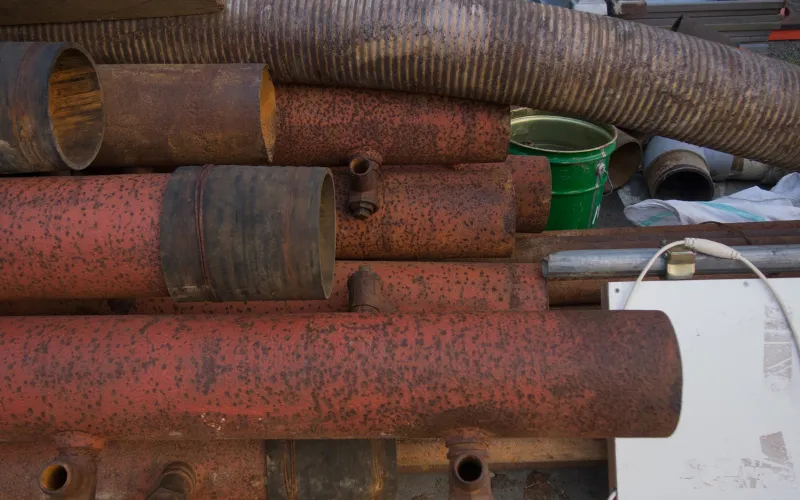
Rusted Pipe Repair: Fix or Replace?
Rust works from the inside out, which is why the first sign is rarely a leak. It is brown water in the morning, or a shower that has quietly lost pressure over a couple of years.
By the time a pipe fails, the corrosion has usually been developing for a long time. This guide covers how to recognize it early, when a repair is genuinely enough, and when replacement is the cheaper answer.
By Ramin Shahbaziasl, Owner, Eastside Repipe and Plumbing · Last updated October 07, 2025
What Is Actually Happening Inside the Pipe
Galvanised steel pipe was standard in homes built through the 1960s. The zinc coating protects the steel underneath, and it works well until it wears through.
Once the steel is exposed, it oxidizes. Rust builds on the pipe wall, narrows the interior, and flakes off into the water. The process accelerates because a narrower pipe means faster flow, which strips more coating.
You cannot clean the inside of a supply line, and you cannot reverse it. Once internal corrosion starts, the question is how long the pipe has left.
Why Pipes Rust
Age and material. Galvanized steel and iron were common for decades. They have a service life, and most of them are past it
Hard water. Mineral content accelerates the process
Acidic water. Low pH strips the protective coating faster
Persistent leaks or condensation. Even small amounts of moisture and oxygen at a fitting speed corrosion
Improper electrical grounding. Current traveling through plumbing accelerates metal loss significantly, and it is the cause people never suspect

Signs to Act On
Brown, orange, or reddish water, particularly first thing in the morning after the water has sat overnight. That is corrosion flaking off the pipe wall.
A metallic taste or smell. Iron dissolving into the supply.
Falling water pressure across multiple fixtures. Internal corrosion narrows the pipe, so there is less room for water.
Damp patches, staining, or visible corrosion at fittings and joints.
Age. If the house is over forty years old and still on original metal supply lines, assume corrosion is underway whether or not you can see it.
Our guide to detecting a hidden water leak covers the meter test that confirms whether water is escaping.
The Health Consideration
Rust itself is not toxic. The concern is what sits alongside it in older systems.
Homes with original galvanised plumbing frequently have lead solder at joints, and sometimes lead fittings or service lines. As corrosion breaks down surfaces, it can expose those materials to the water passing through.
The EPA's guidance on lead in drinking water covers how lead enters household supply and what testing options exist. If your water tastes metallic, leaves reddish staining, or the house predates 1986, testing is worth doing rather than guessing at.
Repair or Replace
A repair makes sense when the corrosion is confined to one accessible section, the rest of the system is sound, and an inspection confirms both.
Replacement makes sense when:
Pressure keeps dropping regardless of what gets fixed
Discoloured water does not clear after flushing
You have had more than one leak in a year
The pipes are over forty years old
You are selling or remodeling
The pattern that decides it: if you patch one leak and another appears within a few months, you are not fixing a fault. You are managing a system at end of life, and each patch costs money that would have gone toward the permanent answer.
Our guides to galvanized pipe replacement and corroded pipe repair cover both routes in more detail.
How the Repair Is Done
Locate it. Shut off the main and inspect accessible runs in the crawl space, basement, and under sinks. Where the corrosion is hidden, a camera inspection finds it without opening walls
Assess the surrounding pipe. A pinhole is rarely isolated. What matters is the condition on either side of it
Cut out the affected section and replace it with PEX or copper. Never with steel
Use dielectric unions at any joint between copper and remaining galvanized pipe. Joining dissimilar metals directly causes galvanic corrosion, which produces the next failure at the joint you just made
Pressure test the section properly before closing anything up. Turning the water on and listening is not a pressure test
On surface rust and patch products: light external rust on an exposed pipe can be cleaned back and the pipe monitored. Be careful with rust converters and epoxy putties on supply lines, though. Anything in contact with drinking water needs to be certified for potable use, and most general-purpose products are not. If a supply pipe has corroded to the point of a pinhole, the section needs replacing rather than sealing.
Choosing a Replacement Material
PEX. Flexible, cost-effective, will not corrode, and easier to route through finished walls. The default for most homes
Copper. Long service life, higher material cost, well proven
CPVC. Suitable in some applications, subject to local code
Stainless steel. Rare residentially and expensive, but effectively immune
Our comparison of PEX and copper covers where each fits. Whichever you choose, replacing galvanised removes the problem permanently rather than deferring it.

Preventing It Coming Back
Fix leaks quickly. Moisture and oxygen at a fitting is where corrosion starts
Address water chemistry. A softener for hard water, treatment for acidic water. Both extend the life of everything downstream
Insulate pipes in damp spaces to reduce condensation
Check the electrical grounding. Improper grounding is a genuine and commonly missed accelerant
Book an inspection every couple of years. A whole home plumbing inspection catches corrosion while it is still a repair rather than a replacement
Never paint over rust. It traps moisture against the metal
What It Costs
A single accessible section repair is a modest job. A whole-house replacement is a significant one. The relevant comparison is not repair against replacement in isolation, but repeated repairs plus the eventual replacement against doing it once.
Add the damage side to the calculation as well: soaked insulation, warped flooring, and mould remediation are separate trades with separate bills, and they arrive on the plumbing's schedule rather than yours.
Our plumber cost guide covers typical local pricing.
DIY or Professional
Cleaning light surface rust from an exposed pipe and monitoring it is reasonable.
Beyond that, the difficulty is that the visible problem is rarely the whole problem. Corrosion inside walls and under floors needs a camera to assess, dissimilar-metal joints need the right fittings, and anything touching drinking water needs materials rated for it.
If you are seeing multiple leaks or persistent discoloured water, the useful step is an inspection that tells you how much of the system is affected. You can verify any Washington contractor's licence, bond, and insurance for free through the state Department of Labor and Industries.
Frequently Asked Questions
How do I know if my pipes are rusted inside?
Run a tap that has been sitting overnight. Brown or reddish water is internal corrosion releasing into the supply. A camera inspection confirms the extent.
Is rust in tap water harmful?
Rust itself is not toxic, but in older systems it can indicate exposure of lead solder or fittings. If the house predates 1986, testing the water is worth doing.
Can rusted pipes be cleaned rather than replaced?
External surface rust can be cleaned back. Internal corrosion cannot be reached or reversed, which is why replacement becomes the answer once it starts.
Should I repair or replace?
Repair if the corrosion is isolated and the rest of the system checks out. Replace if it is widespread, if leaks are recurring, or if the pipes are over forty years old.
Will new pipes fix my water pressure?
Usually, yes, if the pressure loss came from internal corrosion narrowing the lines. An inspection confirms that is the cause before you commit.
How long does replacement take?
Typically two to five days for a house, depending on size and access. Water is normally restored at the end of each working day.
Book an Inspection
If you are seeing brown water, falling pressure, or a second leak in the same year, the next useful step is finding out how much of the system is affected rather than patching again.
Contact us or call 425-331-2011. We will inspect the system, tell you honestly whether a repair will hold, and quote in writing either way.
See our repiping services for the full scope of what we handle. We serve Bellevue, Kirkland, Redmond, Bothell, Renton, Issaquah, Sammamish, Seattle, and the wider Eastside service area.
