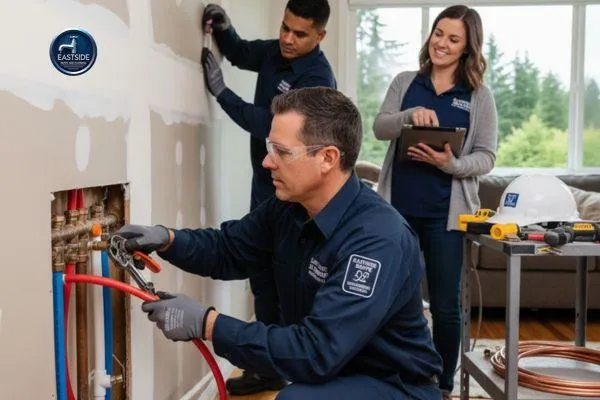
Why Your Repiping Contractor Must Be Insured
Repiping a house is a five-figure job that involves opening walls, cutting into your water supply, and having a crew in your home for several days. If something goes wrong during that, who pays depends entirely on whether the contractor carries insurance.
That is not a technicality. It is the difference between a claim on their policy and a claim on yours.
By Ramin Shahbaziasl, Owner, Eastside Repipe and Plumbing · Last updated October 11, 2025
This guide covers what coverage a repiping contractor should hold, how to verify it yourself in about a minute, and what else to check before you sign anything.
Key Points
An uninsured contractor transfers the risk of property damage and on-site injury to you
Washington lets you verify any contractor's license, bond, and insurance for free
Licensing and insurance are separate things, and you want both
Repiping addresses hidden problems and supports the value of the property
The cheapest quote is frequently the uninsured one
What Insurance Actually Covers
Two policies matter, and they do different jobs.
General liability covers damage the contractor causes to your property while working. A cracked line, a damaged wall, water reaching a finished floor. Without it, recovering those costs means pursuing the contractor directly.
Workers' compensation covers the crew if someone is injured on your property. Without it, an injured worker's options may include a claim against your homeowners policy. This is the coverage most homeowners never think about and the one with the largest downside.
Coverage limits and exclusions vary between policies, so ask for certificates rather than assurances, and check that the coverage amounts are appropriate to the size of the job.
How to Verify It Yourself
You do not have to take anyone's word for this, including ours.
Washington requires plumbing work to be performed by certified plumbers employed by a licensed plumbing contractor. The state maintains a free public lookup:
Enter the business name. It returns license status, bond, and insurance, and shows whether any of it has lapsed. It takes about a minute, and it is the single most useful thing you can do before hiring anyone for work of this size.
Then ask the contractor directly for certificates of insurance. A legitimate one provides them without hesitation.

What Happens Without It
The savings on an uninsured quote are real, and so is what you take on in exchange:
Property damage during the work becomes your problem to pursue
An injury on your property may land on your homeowners policy
Unpermitted or non-compliant work can mean correction orders and problems at resale
No recourse on defects, since an uninsured contractor is frequently also unbonded
Repiping involves opening walls and working on the water supply. It is not the job to economize on coverage.
Five Things to Check Before Hiring
1. Verify the license
Start at the L&I lookup. Confirm the licence is active and the bond is in place.
2. Ask for certificates of insurance
General liability and workers' compensation, in writing. Check the effective dates and the coverage limits.
3. Confirm repiping experience specifically
Repiping is not a routine repair. It involves access planning, drywall, rerouting, pressure testing, and restoration. Ask how many whole-house repipes they have completed and ask to see examples.
4. Read the reviews properly
Look for consistency and for how the company responds to problems rather than for a perfect score. A contractor who handles a complaint well tells you more than one with no complaints at all.
5. Compare quotes on scope, not price
A quote well below the others is usually excluding something: the permit, the restoration, the testing, or the insurance. Ask what is included rather than assuming it is the same work at a better price.
Signs Your Home Needs Repiping
Discolored water, whether brown, yellow, or rust coloured
Water pressure that has dropped across multiple fixtures
Repeated leaks or pipe failures
Water staining on ceilings or walls
Visible corrosion, particularly on galvanized supply lines
These are progressive rather than random. Our guide to detecting hidden water leaks covers how to confirm what you are seeing, and a whole home plumbing inspection establishes whether the system as a whole is at end of life.
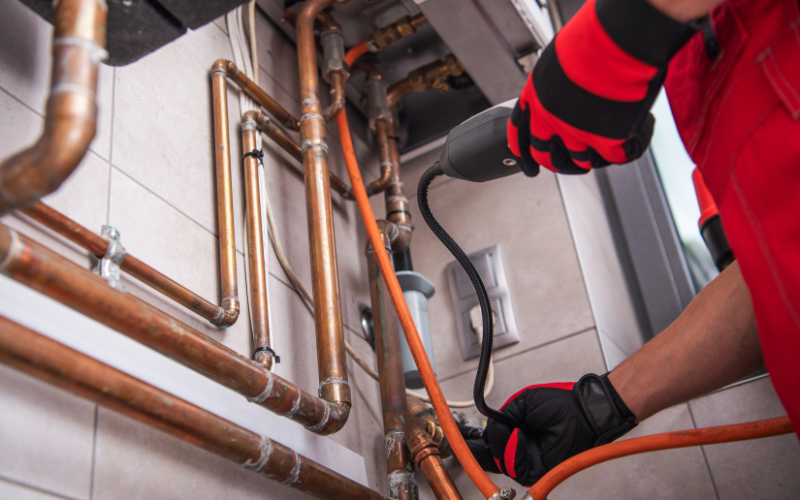
What You Get From a Properly Credentialled Contractor
Work that passes inspection. Permitted, inspected, and documented, which matters at resale.
A workmanship warranty that means something. A licensed, bonded, insured contractor is still there in three years. Ask what the warranty covers and get it in writing.
Accountability if something goes wrong. Coverage exists precisely for the situations nobody plans for.
Property value support. Updated supply lines are a documented improvement, and galvanised pipe is a known deduction during a sale.
What the Work Involves
Inspection and assessment. Existing material, condition, and routing established, followed by a written estimate before anything starts.
Planning and preparation. Which sections are replaced, how access is made, what material is used, and how the house is protected.
Replacement. Old pipe removed, new pipe installed. Most homes stay occupied throughout.
Pressure testing. Every joint tested before anything is closed up. This step is not optional and should appear in your quote.
Cleanup and restoration. Walls patched and the site left clean.
Our comparison of PEX and copper covers the material decision, and our plumber cost guide covers typical local pricing.
Why This Is Not a DIY Job
Repiping means cutting into the supply system, working inside walls, meeting code, and passing inspection. Getting it wrong produces leaks inside finished construction, which is the most expensive category of plumbing failure.
There is also no coverage. Damage you cause to your own home during unpermitted work is generally your own problem, and unpermitted plumbing surfaces during a sale.
Common Assumptions Worth Correcting
"It is too expensive." It is a high cost. It is also considerably less than remediating water damage from a failure inside a wall, and it is a planned expense rather than an emergency one.
"It will take weeks." Most whole-house repipes run two to five days depending on size and access.
"It will wreck the house." There is disruption, and access points have to be opened. A competent crew protects the space, patches properly, and cleans up.
"I only need it if a pipe bursts." Corrosion develops over years. The burst is the end of the process, not the start.
Frequently Asked Questions
How long does a repiping job take?
Usually two to five days depending on the size of the home, the material, and how accessible the runs are. Older homes with difficult access take longer.
Will my water be off the whole time?
No. Water is normally restored at the end of each working day, so you are not without it overnight.
Which pipe material is better, copper or PEX?
Both are good. Copper has a long service life and a higher cost. PEX installs faster, costs less, and handles tight access well. The right answer depends on your home, and our PEX vs copper guide covers the tradeoffs.
Does homeowners insurance cover repiping?
Generally not. Policies typically cover sudden accidental damage rather than replacing pipe that has reached the end of its life. Check your specific policy. Separately, hiring an insured contractor is what covers damage caused during the work itself.
Can I repipe just one section?
Sometimes. If one run has failed and the rest of the system is sound, a partial replacement makes sense. If the whole system is the same age and material, partial work usually means doing it again shortly afterwards.
How do I check a contractor is really insured?
Use the L&I lookup for license, bond, and insurance status, then ask the contractor for certificates of insurance directly. Both take minutes.
Before You Sign Anything
Verify the license. Ask for the certificates. Compare quotes on what is actually included. Those three steps take under half an hour, and they are the difference between a contractor who carries the risk and one who transfers it to you.
If you would like a written quote and a straight answer about what your system needs, contact us or call 425-331-2011. Check our credentials at secure.lni.wa.gov/verify before you call. We would rather you did.
See our repiping services for the full scope of what we handle. We serve Bellevue, Kirkland, Redmond, Bothell, Renton, Issaquah, Sammamish, Seattle, and the wider Eastside service area.
