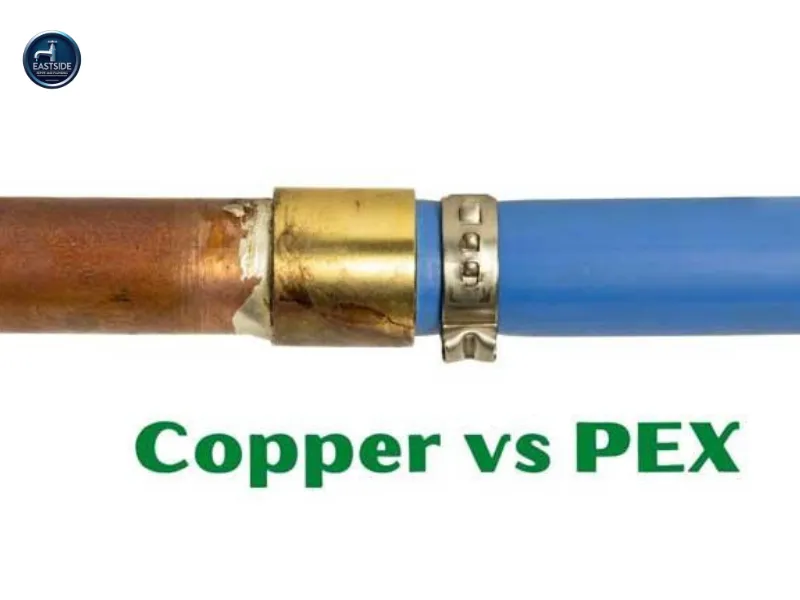
PEX vs Copper Pipes: Which One Is Right for Your Repiping Project?
If you need to repipe your home and you're trying to decide between PEX and copper, here's the short answer: PEX costs less and installs faster, copper lasts longer and handles extreme conditions better. Neither is universally superior. The right choice depends on your budget, your home's age, your local water quality, and how long you plan to stay in the property.
At Eastside Repipe and Plumbing, we've repiped hundreds of homes across Washington state using both materials. We've seen PEX outlast expectations in the right conditions and copper hold up for 60 years in older Eastside homes. This guide gives you the honest breakdown on PEX vs copper piping so you can walk into your repiping project knowing exactly what you're choosing and why.
Key Takeaways
PEX costs 25 to 40 percent less than copper in materials and labor.
Copper lasts 50 to 70 years. PEX lasts 25 to 40 years.
PEX is flexible and faster to install, especially in older homes with tight spaces.
Copper handles heat and UV exposure better. PEX should not be used outdoors without protection.
Washington's water quality and your home's age both affect which material performs better long-term.
What Is Repiping and When Do You Need It?
Repiping means replacing the existing water supply lines throughout your home with new pipe material. It's not a small job, but it's often the right one when the plumbing system has reached the end of its useful life.
Common signs that your home needs repiping include rust-colored or discolored water coming from the taps, low water pressure throughout the house, frequent leaks in multiple locations, and visible corrosion or pinhole damage on exposed pipes. The U.S. Environmental Protection Agency warns that aging and corroding pipes are one of the primary sources of contaminants entering household drinking water. Homes built before 1980 in Washington often have galvanized steel pipes that corrode from the inside out. You won't see the damage until water pressure drops or discoloration starts showing up.
Once you've established that repiping is necessary, the next decision is which material to use. That's where the PEX vs copper debate starts.
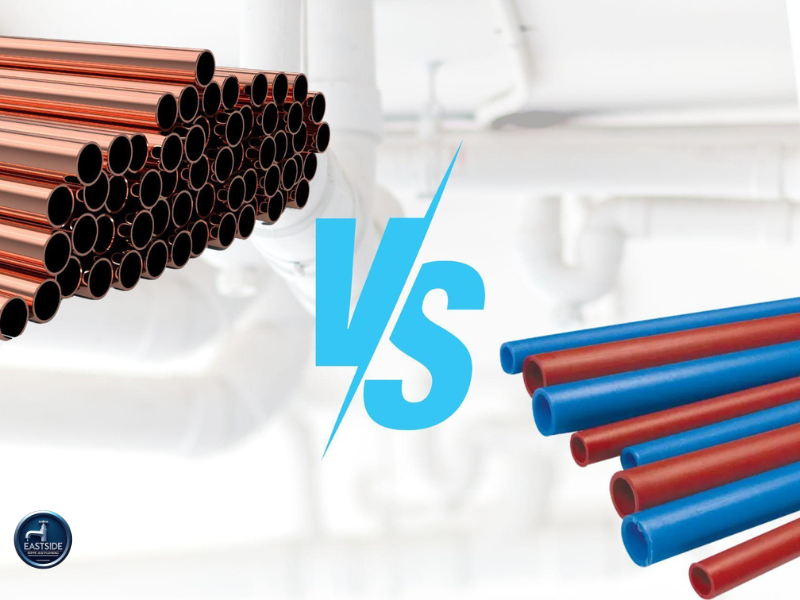
Overview of Copper Pipes
Copper has been the standard in residential plumbing for over 60 years for a good reason. It's tough, it's proven, and when properly installed, it lasts a very long time.
How long does copper last?
Copper pipes typically last 50 to 70 years under normal conditions. In some older Eastside homes, we've pulled out copper that's been running clean for 60-plus years with minimal degradation. That track record is hard to match.
Copper installation
Copper is a rigid material. It requires soldering at every joint, which takes time and skill. In homes with complex layouts or tight wall cavities, copper installation takes longer and costs more in labor. It also cannot be bent around corners the way PEX can, so it needs more fittings, which means more potential failure points over time.
Where copper performs best
Copper handles high heat well, which makes it the preferred choice for hot water lines in high-demand systems. It's also UV-resistant, so it works fine in outdoor or exposed applications. And unlike PEX, copper is fully recyclable, which matters to some homeowners from an environmental standpoint.
The one area where copper underperforms is corrosion from acidic or highly chlorinated water. In parts of Washington where the water supply has higher chlorine content, copper can develop pinhole leaks over 20 to 30 years. That's worth checking before you commit.
Overview of PEX Pipes
PEX (cross-linked polyethylene) has become the dominant repiping material in the last two decades because it's significantly cheaper, faster to install, and flexible enough to work in situations where copper simply can't.
How long does PEX last?
PEX typically lasts 25 to 40 years. That's shorter than copper, but for most homeowners planning to stay in a home for 10 to 20 years, it's more than sufficient. And the cost savings on installation often make it the smarter financial decision even accounting for the shorter lifespan.
PEX installation
PEX bends around corners without fittings. It comes on a reel and can be run in long, continuous lengths from the manifold to each fixture, which reduces the number of joints in the system. Fewer joints means fewer places for leaks to develop. In a whole-home repipe, this flexibility cuts installation time significantly and keeps labor costs down. These PEX pipe advantages become especially obvious when comparing installation timelines side by side with copper.
For older Washington homes where walls are already finished and access is limited, PEX is often the only practical choice. Running rigid copper through a finished wall without tearing everything open is expensive and disruptive. PEX can be fished through wall cavities with far less demolition.
Where PEX has limits
PEX should not be installed in locations with direct UV exposure. Sunlight degrades the material over time, so outdoor applications require UV-protective sheathing. PEX also cannot handle water temperatures above around 200 degrees Fahrenheit, though this is rarely an issue in residential systems. NSF International, which sets the safety and performance standards for drinking water system components, certifies PEX for residential potable water use when properly installed. And unlike copper, PEX is not recyclable, which is worth noting if environmental impact is a factor in your decision.
PEX vs Copper: Direct Cost Comparison
This is where most homeowners make their decision. When it comes to PEX vs copper piping, here are real numbers for a whole-home repipe in Washington:
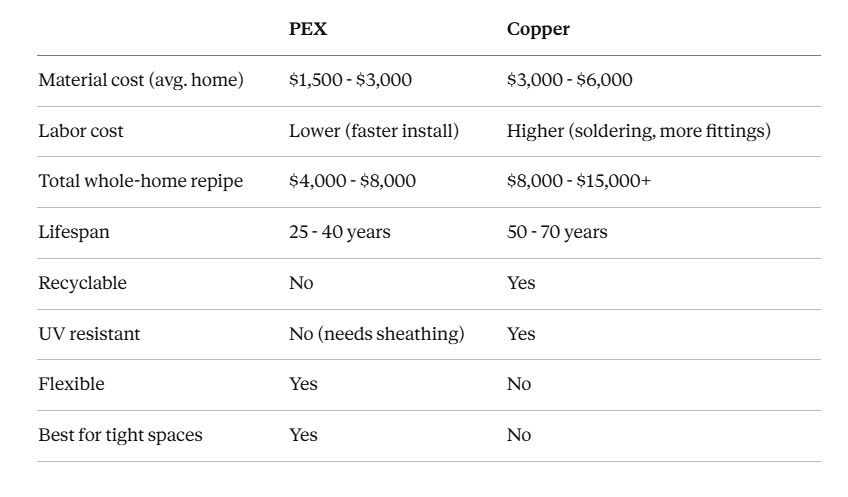
The price gap is real. A whole-home repipe with copper can cost nearly twice as much as the same job done with PEX. For most Washington homeowners, that difference is the deciding factor.
That said, cost per year of service is also worth calculating. If copper lasts 60 years and PEX lasts 30, copper at $12,000 costs $200 per year. PEX at $6,000 costs the same. The difference comes down to whether you want to pay now or pay again in 30 years.
PEX vs Copper for Washington Homes Specifically
Washington has some specific conditions that affect which material performs better long-term.
Water quality
Municipal water across the greater Seattle and Eastside areas is generally soft and low in chlorine compared to other parts of the country. That's actually good news for copper, since highly chlorinated water accelerates corrosion in copper pipes. The Washington State Department of Health publishes water quality reports by utility district, which can tell you exactly what's in your local water supply before you make a material decision. If you're on a well, however, water chemistry varies significantly and a water quality test before repiping is always a smart move.
Older homes
A large portion of homes in Eastside neighborhoods were built between 1950 and 1980 with galvanized steel pipes. When it's time to repipe these homes, PEX is almost always the more practical choice. Homeowners searching for the best repiping material in Issaquah WA and surrounding Eastside communities consistently find that PEX fits both the home type and the budget far better than copper in these situations. The flexibility makes it possible to route new lines through finished walls with minimal disruption. Copper in a fully finished 1960s home means cutting into drywall, ceilings, and cabinets far more extensively.
Freeze risk
Washington winters are generally mild, but homes in higher elevation areas or properties with exterior pipe runs can see freezing conditions. PEX handles freeze-thaw cycles better than copper. PEX expands under freezing pressure and returns to shape, while copper can crack or burst. For homes in parts of Washington where this is a risk, PEX has a clear functional advantage.
This is exactly the kind of local knowledge that shapes the recommendation when our team at Eastside Repipe and Plumbing walks through a home. A repipe recommendation shouldn't be generic. It should account for where you live, how old your home is, and what your water is actually doing to your pipes.
Which Should You Choose: PEX or Copper?
Here's a straightforward decision guide based on the most common homeowner situations.
Choose PEX if:
Budget is your primary concern
Your home was built before 1985 with finished walls
You're in an area with freeze risk
Your local water has higher chlorine content
You plan to sell the home within 15 to 20 years
Choose copper if:
You want the longest possible lifespan with no second repipe
Your home has exposed or outdoor pipe runs
You're doing a new construction or major renovation where walls are already open
Environmental recyclability matters to your decision
Your water supply is neutral pH and low chlorine
There's no wrong answer here. Both materials are used every day by professional plumbers across Washington. The PEX pipe advantages of lower cost, flexibility, and faster installation make it the right call for most older homes. The right material overall is whichever fits your home, your water, and your budget.
The Role of Professional Repiping Services
Regardless of which material you choose, the quality of the installation matters as much as the material itself. A poorly soldered copper joint fails faster than a well-installed PEX connection. And a PEX system routed incorrectly through a home creates pressure problems that are expensive to diagnose and fix.
Professional repiping services include more than just swapping out pipe material. The job should include a full assessment of your existing system, water pressure testing before and after, proper permit pulls where required by Washington state code, and a walkthrough of exactly what was done and why. The Washington State Department of Labor and Industries requires all plumbing contractors to hold a valid state license, so always verify your plumber's credentials before work begins. At Eastside Repipe and Plumbing, every repipe comes with clear documentation and a pressure test before we call the job complete.
If you're not sure which material is right for your home, a walkthrough assessment takes about 30 minutes and gives you a straight answer based on your actual plumbing layout and water conditions, not a generic recommendation.
Frequently Asked Questions
1. Is PEX or copper better for repiping a home?
It depends on the home. PEX is better for older homes with finished walls, tighter budgets, and freeze-prone areas. Copper is better for long-term durability, outdoor applications, and new construction where walls are already open. Most Washington homeowners repiping a home built before 1985 end up with PEX for practical and cost reasons.
2. How much does a whole-home repipe cost in Washington?
A whole-home repipe with PEX typically runs $4,000 to $8,000 depending on home size and complexity. The same job with copper runs $8,000 to $15,000 or more. The price difference comes from both material cost and labor time, since copper requires soldering at every joint and takes longer to install.
3. Does PEX add value to a home?
Yes. A freshly repiped home with PEX is a selling point, not a liability. Buyers and their inspectors know what failing galvanized pipes look like, and a documented repipe with quality materials removes that concern. Whether you use PEX or copper, a completed repipe adds value and peace of mind.
4. Can PEX and copper be used together in the same home?
Yes, and it happens regularly. Copper is sometimes used for the main supply line coming into the home and for sections near the water heater where heat resistance matters, while PEX handles the distribution lines to individual fixtures. A licensed plumber can design a hybrid system that takes advantage of both materials where they perform best.
5. How long does a whole-home repipe take?
Most whole-home repipes take one to three days depending on home size, layout complexity, and material. PEX jobs tend to run faster than copper because there is no soldering and fewer fittings. Eastside Repipe and Plumbing completes most residential repipes in one to two days with water restored the same day.
Why Washington Homeowners Choose Eastside Repipe and Plumbing
Repiping is not a job to hand to a general plumber who does it twice a year. It requires a team that does it every week, knows the material options inside out, and understands the specific conditions of Washington homes.
Eastside Repipe and Plumbing has repiped homes across the Eastside, Seattle, Issaquah, and surrounding Washington communities using both PEX and copper. Whether you're looking for the best repiping material in Issaquah WA or anywhere else on the Eastside, we assess your home, your water quality, and your budget and give you a straight recommendation with real numbers attached.
Every repipe we complete includes a full system pressure test, proper permits where required, and a walkthrough so you understand exactly what was replaced and why. No vague invoices, no surprise costs mid-job. Just clean work done right the first time.
If you're seeing rust-colored water, dropping pressure, or frequent leaks in multiple spots, it's time to get a proper assessment. Contact Eastside Repipe and Plumbing to schedule a home walkthrough and get a clear, no-pressure estimate on your repiping project.
Conclusion
PEX and copper are both solid repiping materials. PEX wins on cost, flexibility, and ease of installation, especially in older Washington homes with finished walls. Copper wins on lifespan, heat resistance, and long-term durability for homeowners who want a 60-year solution and don't mind the higher upfront cost.
The best way to decide is to have someone who knows both materials look at your specific home and give you an honest assessment. That's what Eastside Repipe and Plumbing does on every job across Washington state.
Ready to Repipe Your Home?
Call us today at (425) 331-2011 or visit Eastside Repipe and Plumbing to schedule your home walkthrough. We'll assess your plumbing, walk you through your options, and give you a free clear estimate with no surprises.
