Waste Line Replacement: Costs and Process
Nobody thinks about their waste line until it stops working. Then it becomes the only thing they think about.
Waste lines carry everything that leaves your house: sink water, laundry, showers, toilets. When they fail, the failure is rarely subtle. This guide covers how to recognize a failing line, when replacement beats another repair, what the methods and materials actually mean, and what it costs.
By Ramin Shahbaziasl, Owner, Eastside Repipe and Plumbing · Last updated September 23, 2025
Warning Signs You Need Replacement
One slow drain is a local clog. These point at the main line:
Clogs that keep returning after clearing
Multiple slow drains at once, rather than a single fixture
Gurgling toilets when you run a sink or the washing machine
Persistent sewer odor, indoors or in the yard
A patch of lawn noticeably greener or wetter than the rest
New cracks in a foundation or slab, which can indicate water escaping below
Any two of these together usually means the line itself is the problem rather than anything in it. Our guide to sewer line warning signs covers the symptoms in more detail.
Why Waste Lines Fail
Age and material. Cast iron corrodes from the inside. Clay cracks and separates at joints. Both were standard in Bellevue and the surrounding Eastside neighborhoods for decades
Tree roots. Roots find moisture at joints and hairline cracks, then expand until the line is blocked or split
Soil movement. Saturated ground through long wet seasons, plus settling and seismic activity, shifts buried pipe out of alignment
Sagging sections. A low spot collects waste and becomes a permanent blockage point
Buildup. Grease, soap, and debris narrow the interior over years
Our guide to corroded pipe repair covers the material side in more depth.
Repair or Replace
Repair makes sense when the damage is localized, the rest of the line is sound, and a camera inspection confirms both. A single cracked section on an otherwise healthy line is a spot repair.
Replacement makes sense when the line has multiple failure points, the material has reached the end of its service life, roots have intruded in several places, or you have been clearing the same blockage repeatedly.
Get a camera inspection before deciding either way. It is the difference between knowing and guessing, and it also establishes whether the fault sits on your side of the property line or the city's, which determines who pays.
Open Trench vs Trenchless
Open Trench
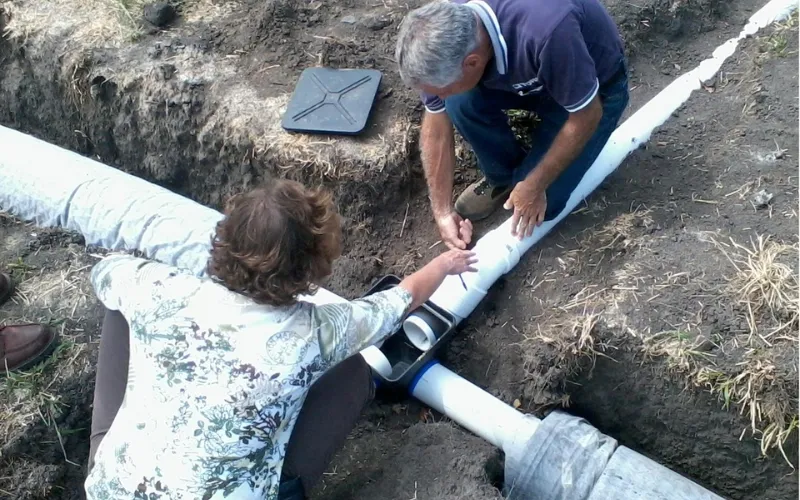
The line is excavated, removed, and replaced. Straightforward, works in every situation, and it is the only option when a line has fully collapsed.
The cost is what it does to the surface above: lawn, driveway, patio, mature planting, and sometimes interior flooring. Restoration is frequently a larger line item than the plumbing.
Trenchless
Pipe bursting or pipe lining, done through small access pits at either end. The existing line is either split outward while a new one is pulled through, or relined from the inside.
Less disruption, faster completion, and far less restoration work. It is not always possible — a fully collapsed line, severe misalignment, or certain access constraints rule it out.
On the cost comparison: trenchless generally has a higher floor per foot, and open trench has a higher ceiling once you account for restoration. The right comparison is not per foot at all. It is total project cost including putting your property back the way it was, and on that basis trenchless often comes out lower despite the higher starting rate.
Choosing a Material
PVC. The default for most residential waste line work. Inexpensive, durable, smooth interior that resists buildup, and a service life measured in decades
ABS. Similar performance to PVC. Whether it is permitted for your application depends on the plumbing code as adopted locally, so confirm before specifying it
HDPE. Flexible and well suited to trenchless pipe bursting. A strong option where that method applies
Cast iron. Quieter than plastic, which matters for lines running through living space, but it corrodes, and it is heavy to work with
Clay. Historic material only. Not used for new installation
Material choice should follow soil conditions, the replacement method, local code, and how long you intend to own the property, rather than price alone.
What It Costs
Waste line replacement is priced by the foot, and the range is wide because the variables are wide: length, depth, access, what sits above the line, and whether the work is trenchless or open trench.
The factors that move a quote most:
Length and depth of the run
What is above it. Lawn is cheap to restore. A driveway, patio, or mature landscaping is not
Access. A line under a crawl space is a different job from one under a finished basement floor
Method. Trenchless costs more per foot and usually less in restoration
Permits and inspection, which are required for this work
Material selected
Get a written quote that separates plumbing, restoration, and permits. A quote that bundles everything into one number makes it impossible to compare bids. Our plumber cost guide covers typical local pricing across services.
What Actually Happens
Camera inspection. The line is scoped end to end to confirm the problem, its location, and its extent
Scope and quote. Method, material, length, permits, and restoration, in writing
Permits pulled. This work is permitted. A contractor suggesting otherwise is transferring risk to you
Access created. Small pits for trenchless, a trench for open cut
Replacement. Old line removed or burst, new line installed to grade
Testing and inspection. Flow and fall verified, then signed off by the inspector
Restoration. Surface put back
Most residential jobs run one to three days. Trenchless is typically at the shorter end.
Preventing a Repeat
Keep grease out of drains. It cools, hardens, and becomes the anchor point for everything else
Nothing but toilet paper down the toilet. Wipes do not break down regardless of labelling
Use drain screens on showers and kitchen sinks
Mind tree placement relative to the sewer run
Scope the line every one to two years if you have mature trees or a pre-1980 property
Our guide on preventing clogged drains covers the day-to-day side.
Choosing a Contractor
Look for:
Licence, bond, and insurance you can verify independently
Camera inspection before quoting, not after
Both trenchless and open trench capability, so the method suits the job rather than their equipment
Itemised written pricing
A stated workmanship warranty
Permits handled as part of the job
Walk away from:
A quote given without inspecting the line
Any suggestion that a permit is unnecessary
A price far below the others with no explanation of what it excludes
Pressure to decide immediately
Washington requires plumbing work to be performed by certified plumbers employed by a licensed contractor. You can check any company's licence, bond, and insurance status for free through the state Department of Labor and Industries. Get three quotes and compare scope rather than headline price.
The Health Side
A failing waste line is not only a plumbing problem. Sewage carries bacteria, viruses, and parasites, and prolonged moisture in a structure supports mould growth.
If waste has backed up into the building, keep people and pets clear of the affected area and do not attempt cleanup yourself. CDC guidance on contaminated water in homes covers why household vacuums and fans make the situation worse rather than better.
If a backup is active, our guide on what to do during a plumbing emergency covers the immediate steps, and we run 24/7 emergency service.
Frequently Asked Questions
How long does waste line replacement take?
One to three days for most residential jobs. Trenchless is usually faster because there is less excavation and less restoration.
Is trenchless always an option?
No. A fully collapsed line, severe misalignment, or certain access constraints require open trench. A camera inspection establishes which applies before anyone quotes.
How long will a new waste line last?
PVC and HDPE have service lives measured in decades under normal conditions. Cast iron is shorter because it corrodes. Actual life depends on soil, usage, and whether roots are managed.
Does homeowners insurance cover it?
Usually not. Policies generally exclude gradual deterioration and wear, though sudden accidental damage may be covered. Some insurers offer service line endorsements separately. Check your policy before you need it.
Can I replace a waste line myself?
No. It is permitted work involving excavation, code-specified grade, and inspection sign-off. Getting the fall wrong produces a line that blocks repeatedly.
Who is responsible, me or the city?
Generally, you own the lateral from the house to the municipal main, and the city owns the main. A camera inspection establishes which side of that boundary the fault sits on.
Book a Camera Inspection
Repeated clogs and slow drains across the house are worth investigating before they become a backup. A camera run tells you whether you are looking at a spot repair, a full replacement, or a problem that belongs to the city.
Book an inspection or call 425-331-2011. We will scope the line, show you what we find, and quote the work in writing before anything starts.
We serve Bellevue, Kirkland, Redmond, Seattle, and the wider Eastside service area.
