How to Prevent Clogged Drains: A Complete Homeowner’s Guide
Understanding how to prevent clogged drains starts with simple, consistent habits. Most clogs come from everyday buildup like grease, food scraps, hair, and soap residue. Over time, these materials collect inside your pipes and restrict water flow. It doesn’t happen all at once. It builds slowly. But with the right approach to clogged drain prevention, you can avoid most of these issues before they turn into bigger problems.
Instead of waiting for slow drains or backups, homeowners can stay ahead by using strainers, flushing pipes regularly, and cleaning drains as part of routine maintenance. In areas like Washington, following practical drain cleaning tips in Sammamish WA can also help address local conditions that affect plumbing systems. This guide breaks down what works, what to avoid, and how to keep your drains clear long-term.
Key Takeaways
Small habits can prevent most drain problems
Kitchen and bathroom drains need different care
Routine cleaning reduces long-term repair costs
Early signs help you avoid major blockages
How to Prevent Clogged Drains in Everyday Use
Preventing clogs is not about doing one big thing. It’s about small habits. Repeated daily.
Watch What Goes Down the Drain
Most blockages start here.
Grease sticks to pipe walls
Coffee grounds clump together
Food scraps don’t fully break down
Bathroom drains are different. Hair and soap buildup are the main issues.
Even small amounts build up over time. Slowly. Then suddenly it becomes a problem.
Use Drain Strainers
Simple tool. Big impact.
Strainers catch debris before it enters your pipes. That alone prevents most clogs.
Use them in:
Kitchen sinks
Bathroom sinks
Showers
Flush Pipes Regularly
Hot water helps break down early buildup.
It’s not a full solution. But it helps keep things moving.
Quick Tip
Run hot water for a few minutes after heavy use. Especially after cooking.
Building small habits like these is one of the most effective ways to handle long-term clogged drain prevention without needing constant repairs.
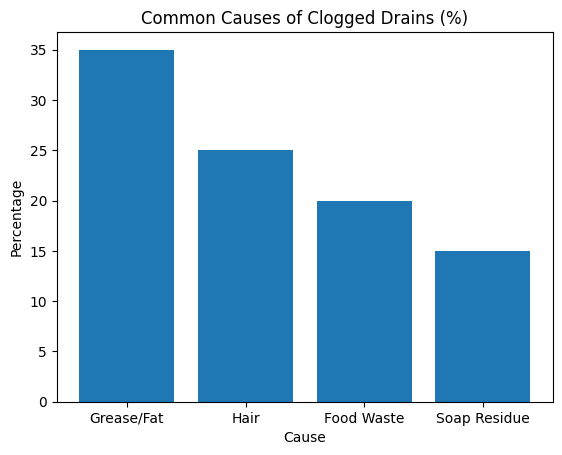
This chart shows the most frequent causes of clogged drains, with grease, hair, and food waste being the leading contributors to blockages.
As shown above, grease and fat are the leading causes of clogged drains, especially in kitchens. Hair and soap residue are more common in bathrooms. Understanding these causes is key to learning how to prevent clogged drains and applying effective long-term solutions.
Sources: EPA (Environmental Protection Agency), Roto-Rooter Plumbing & Drain Service Insights
Kitchen Drain Cleaning Tips in Sammamish WA and Nearby Areas
Kitchen drains deal with the most waste. That’s just reality.
And in Washington, grease buildup becomes worse due to temperature changes.
Never Pour Grease Down the Sink
This is the biggest mistake.
Grease goes in as liquid. Then hardens inside pipes. Sticks. Builds up.
Instead:
Pour grease into a container
Dispose of it in the trash
Be Careful with Food Waste
Garbage disposals are helpful. But not perfect.
Avoid putting:
Rice and pasta (they expand)
Eggshells (they leave residue)
Fibrous foods (they tangle blades)
Use Natural Cleaning Methods
Harsh chemicals damage pipes over time.
Better option:
Baking soda + vinegar
Follow with hot water
Safer. Still effective.
Local Insight
Many homeowners searching for drain cleaning tips in Sammamish WA deal with grease-related clogs. It’s common. And preventable.
Bathroom Drain Maintenance and Prevention Tips
Bathrooms clog differently. But just as often.
Hair Buildup Happens Fast
Hair collects. Mixes with soap. Forms thick clogs.
It builds slowly. Then suddenly blocks everything.
Use drain covers. Clean them often.
Be Careful What You Flush
Toilets are not designed for everything.
Avoid flushing:
Wipes
Paper towels
Hygiene products
They don’t break down properly.
Stick to Monthly Cleaning
Keep it simple:
Remove visible debris
Use natural cleaners
Flush with hot water
Simple routines like this support consistent clogged drain prevention, especially in bathrooms where buildup happens faster than expected.
Example
Ignoring small buildup leads to bigger problems later. Maintenance takes minutes. Repairs don’t.
Signs Your Drain Is Starting to Clog
Clogs don’t happen instantly. There are warning signs.
Slow Draining Water
Water taking longer to drain? That’s buildup forming.
Bad Odors
Smells usually mean trapped debris inside pipes.
Gurgling Sounds
Air trapped in pipes creates noise. Often a sign of blockage forming.
Recurring Minor Clogs
If the same drain keeps clogging, something deeper is going on.
Reality
Ignoring early signs leads to bigger, more expensive issues.
When to Call a Professional Plumber
Some problems go beyond simple fixes.
Persistent Clogs
If clogs keep coming back, it’s likely deeper in the system.
Multiple Drains Affected
This often means a main line issue.
Water Backups
If water comes back up, stop using the drain immediately.
Professional Tools Matter
Plumbers use:
Drain cameras
Hydro jetting
They fix the real issue. Not just the surface problem.
If regular maintenance and basic drain cleaning tips in Sammamish WA are no longer effective, it may be time to bring in a professional.
Read also: How to Find the Best Plumber
Why Homeowners Choose Eastside Repipe and Plumbing
Choosing the right plumber matters. More than people think.
Real Experience
They’ve handled everything from small clogs to full system issues.
Preventive Approach
Not just fixing. Helping avoid future problems.
Clear Communication
No confusion. Straight answers.
Reliable Work
Done properly the first time.
Simple Thought
Good service prevents repeat problems.
FAQs
1. What is the best way to prevent clogged drains at home?
The best way to prevent clogged drains is to avoid putting grease, food waste, and debris down your pipes while using strainers and cleaning drains regularly.
2. How often should I clean my drains to prevent clogs?
You should clean your drains at least once a month using hot water or natural cleaning solutions to maintain proper flow.
3. What are the most common causes of clogged drains?
Common causes include grease buildup, hair, soap residue, and improper disposal of non-flushable items.
4. Are chemical drain cleaners safe for long-term use?
No, chemical cleaners can damage pipes over time. Natural alternatives are safer for long-term clogged drain prevention.
5. When should I call a plumber for a clogged drain?
Call a plumber if clogs keep returning, multiple drains are affected, or water starts backing up.
Conclusion
Learning how to prevent clogged drains comes down to awareness and consistency. Small habits make the biggest difference. What you put down your drain. How often you clean it. How early you act.
With the right approach to clogged drain prevention, most problems can be avoided before they become serious or expensive.
Keep Your Drains Flowing Without Problems
If you’re dealing with slow drains or want to avoid future issues, contact Eastside Repipe and Plumbing for expert help, free quote, and long-term solutions tailored to your home. Call Now: (425) 331-2011
