Tankless vs Traditional Water Heater: Which Is Best?
Most people face this decision exactly once every ten to fifteen years, usually in a hurry, because the old unit has just failed.
The short version: tankless costs more up front, lasts roughly twice as long, and never runs out. A traditional tank costs less to install, handles heavy simultaneous demand better, and is simpler to replace. Which one wins depends on your household, your home's gas and electrical capacity, and how long you plan to stay.
By Ramin Shahbaziasl, Owner, Eastside Repipe and Plumbing · Last updated July 25, 2025
Here is the full comparison, including the sizing factor that catches out a lot of Puget Sound homeowners.
Quick Comparison
Upfront cost: Traditional is significantly cheaper to buy and install
Energy efficiency: Tankless wins, with no standby heat loss
Hot water supply: Tankless is continuous, traditional is limited to tank capacity
Simultaneous demand: Traditional handles multiple fixtures better
Lifespan: Tankless around 20 years, traditional around 10 to 15
Space: Tankless mounts on a wall, traditional needs floor space
Maintenance: Both need annual flushing; tankless is less forgiving if skipped
Install complexity: Tankless often needs a gas line, venting, or electrical upgrades
What Is a Traditional Water Heater?
A storage tank water heater holds 30 to 80 gallons and keeps it hot around the clock, ready for whenever you turn a tap.
Advantages:
Lower purchase and installation cost
Straightforward replacement, usually a same-day job
Handles several fixtures running at once without strain
Works with existing gas and electrical setups in most homes
Drawbacks:
Standby heat loss, since it heats water whether you use it or not
Finite capacity, so it runs out and then needs time to recover
Shorter lifespan, generally 10 to 15 years
Takes up floor space
A tank failure means water on the floor
What Is a Tankless Water Heater?
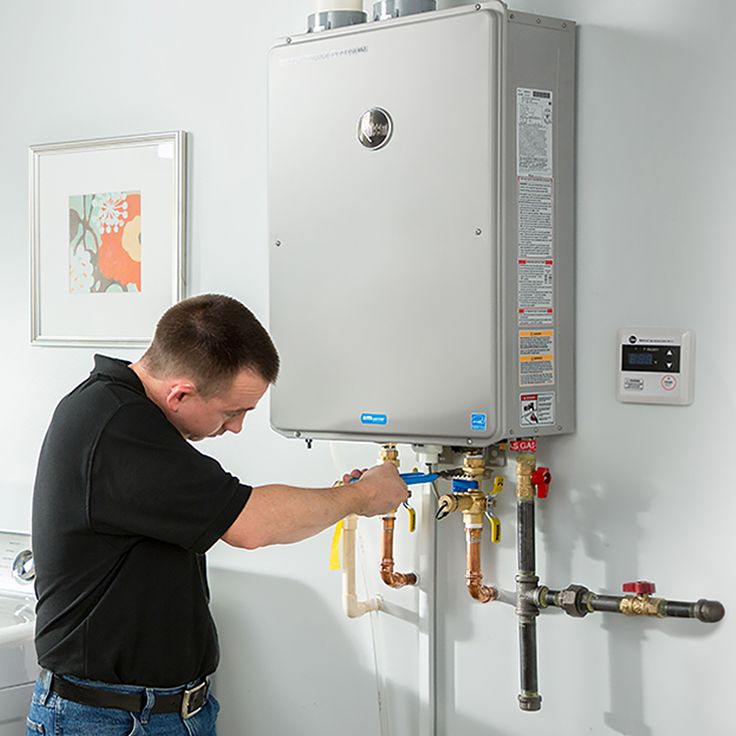
A tankless or on-demand unit heats water only as it flows through, using a gas burner or electric element. Nothing is stored.
Advantages:
No standby loss. Energy Star's technical bulletin estimates a certified gas demand unit saves a family of four around $95 a year, or $1,800 across the unit's life
Continuous hot water, with no waiting for recovery
Life expectancy around 20 years, roughly double a tank
Wall mounted, freeing up floor space
No large volume of stored water to fail
Drawbacks:
Considerably higher upfront cost, mostly installation
Often requires a larger gas line, new venting, or electrical panel capacity
Output is limited by flow rate rather than volume
Hard water accelerates scale in the heat exchanger, so annual descaling matters more
The cold water sandwich effect, where a short burst of cool water arrives between draws
The Five Comparison Points That Matter
1. Energy Efficiency
Tankless wins, and the margin is documented. The Department of Energy puts demand water heaters at 24 to 34 percent more efficient than storage tanks for homes using 41 gallons or less of hot water daily, and 8 to 14 percent more efficient for heavy users around 86 gallons a day.
The heavier your usage, the smaller the efficiency advantage becomes, which is the opposite of what most people assume.
2. Installation Cost
Traditional wins clearly. A like-for-like tank swap is usually straightforward. A tankless conversion frequently means upsizing the gas line, adding dedicated venting, or upgrading electrical service, and those costs can exceed the price of the unit itself.
If your home already has a tankless unit you are replacing, that gap narrows substantially.
3. Hot Water Availability
This is where it gets more nuanced than most comparisons admit.
A tank gives you a fixed volume of hot water, then a recovery period. A tankless unit never runs out, but it is limited by flow rate rather than volume. The DOE notes that tankless units typically deliver 2 to 5 gallons per minute, that gas-fired models produce higher flow rates than electric, and that even the largest gas model can be stretched by running a shower and a dishwasher at the same time.
The Puget Sound factor. Flow rate depends on temperature rise, meaning how far the unit has to lift the incoming water temperature. Groundwater here is cold, so a unit rated at 5 GPM in a warm climate delivers meaningfully less in Bellevue. A tankless system sized off a spec sheet without accounting for local inlet temperature will disappoint.
This is the single most common reason homeowners here are unhappy with a tankless install, and it is entirely a sizing problem rather than a technology problem.
4. Maintenance
Both need annual flushing. The difference is consequence.
A neglected tank accumulates sediment, loses efficiency, and eventually fails. A neglected tankless unit scales up inside a narrow heat exchanger, which reduces output and can void the warranty. Tankless is less forgiving, and hard water makes that worse.
5. Lifespan
Tankless runs around 20 years. Traditional tanks generally last 10 to 15 years.
That gap is what makes the long-term math work. Over 20 years, you buy one tankless unit or roughly two tanks, and the second purchase usually offsets a good portion of the higher install cost.
Which Should You Choose?
A tankless unit makes sense if you:
Plan to stay in the home 10 or more years, so the payback period completes
Want to free up floor space
Prioritize efficiency and lower operating cost
Have a household with spread-out rather than simultaneous hot water use
Already have adequate gas or electrical capacity
A traditional tank makes sense if you:
Need the lowest upfront cost
Are replacing a failed unit urgently
Have several people showering at overlapping times
Plan to move within a few years
Have a home where gas or electrical upgrades would be expensive
There is no universally correct answer. A family of five with three teenagers and one bathroom schedule is a genuinely different case from a couple in a two-bedroom.
What to Ask Before You Decide
How many people live here, and do hot water demands overlap?
What is the incoming water temperature, and what flow rate does that require?
Can the existing gas line and venting support a tankless unit, or is that an added cost?
Is the electrical panel adequate for an electric tankless system?
How long do you plan to stay in the house?
How hard is the water, and are you willing to keep up annual descaling?
Whichever you choose, set the thermostat to 120°F. The Consumer Product Safety Commission urges homeowners to use that setting to reduce or eliminate most tap water scald injuries, and it slows scale buildup in both system types.
Why Installation Quality Decides the Outcome
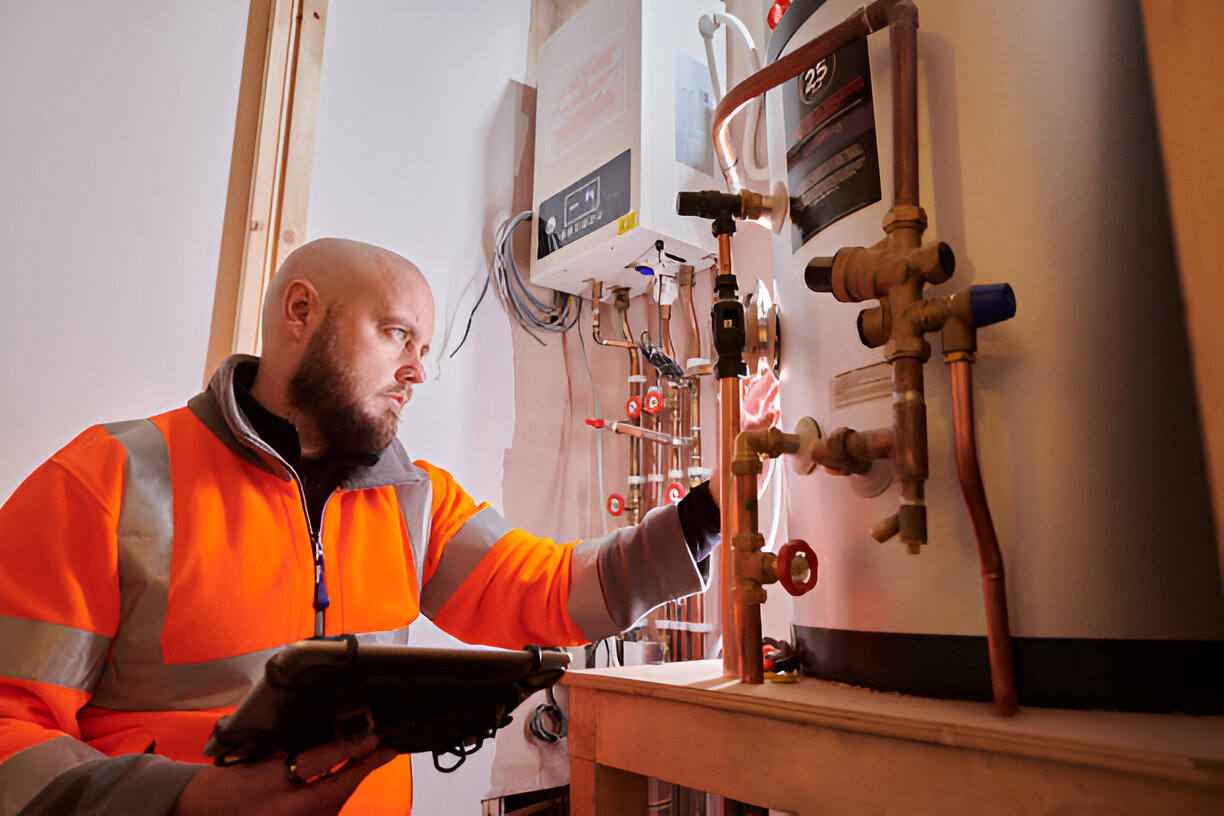
More tankless disappointments come from installation than from the equipment. Undersizing is the usual culprit, followed by inadequate gas supply and improper venting.
Poor installation on either type leads to:
Output that never matches the spec sheet
Leaks and water damage
Shortened equipment life
Voided manufacturer warranties
Failed inspection on permitted work
Washington requires plumbing work to be done by certified plumbers employed by a licensed contractor. You can verify any company's license, bond, and insurance status for free through the state Department of Labor and Industries. If you are shopping models, the Energy Star product finder lists certified units.
Frequently Asked Questions
Is a tankless water heater worth it?
If you are staying in the home long enough for the payback period to complete, usually around 10 years, and your household does not have heavy simultaneous demand, yes. If you are moving in three years or four people shower at once, a tank is often the better choice.
How long do tankless water heaters last?
Around 20 years with annual descaling, compared with 10 to 15 for a storage tank. Skipping maintenance in hard water shortens that considerably.
Can a tankless unit run two showers at once?
A properly sized gas unit usually can. An electric unit or an undersized gas unit often cannot, especially here where cold incoming water reduces effective flow rate. Sizing is what determines the answer.
Do I need to upgrade my gas line for a tankless heater?
Frequently, yes. Tankless units fire at much higher BTU rates than tanks, and existing gas lines are often undersized for them. This is one of the higher hidden costs in a conversion.
What temperature should I set either type to?
120°F. Hot enough for showers, laundry, and dishwashing, and it substantially reduces scald risk while slowing mineral buildup.
What if my current water heater just failed?
If you need hot water back today, a tank replacement is usually the faster path. Our guide on why a water heater stops working covers whether it is actually a failure, and when to replace a water heater covers the repair or replace decision.
Still Deciding?
The right answer depends on your household size, your usage pattern, your home's existing gas and electrical capacity, and how long you are staying. Those are things worth measuring rather than guessing at.
We will size the system properly for local water temperature, tell you honestly if a tank is the better value in your situation, and quote the full installation including any upgrades before you commit.
Book a consultation or call 425-331-2011. We install and service both types across Bellevue, Kirkland, Redmond, Bothell, Seattle, and the wider Eastside service area.
