When to Replace Water Heater: 7 Warning Signs Every Homeowner Should Know
When to replace water heater is something most homeowners don’t think about until there’s no hot water left. Or worse, a leak. In simple terms, you should consider replacing your water heater when it shows signs like inconsistent heating, rust-colored water, strange noises, or when it reaches around 8–12 years old. Waiting too long usually leads to bigger problems and higher costs.
A lot of these issues don’t show up all at once. They build slowly. Maybe your showers aren’t as hot as before. Maybe you hear rumbling sounds. Small things. Easy to ignore. But they’re usually early warnings.
That’s why working with experienced professionals like Eastside Repipe and Plumbing helps. They’ve seen these patterns over and over, especially with water heater replacement signs in Bothell WA, and can spot issues before they turn into emergencies.
Key Takeaways
Most water heaters last 8–12 years before replacement
Early warning signs help prevent sudden failure
Strange noises and rusty water indicate internal issues
Replacement is often cheaper than repeated repairs
Professional inspection helps confirm the right decision
7 Warning Signs: When to Replace Water Heater
Knowing when to replace water heater starts with recognizing the signs early. Some are obvious. Others not so much.
1. Your Water Heater Is Over 10 Years Old
Age matters. A lot.
Most traditional tank water heaters last:
8–12 years
After that, performance drops.
Tip:
Check the serial number on your unit it usually shows the manufacture date.
2. Inconsistent or No Hot Water
This one’s hard to ignore.
Water gets cold quickly
Takes longer to heat
Temperature fluctuates
These are classic old water heater symptoms.
3. Rusty or Discolored Water
If your hot water looks brown or rusty, that’s a red flag.
It usually means:
Internal tank corrosion
Potential leaks coming soon
4. Strange Noises (Rumbling or Banging)
Ever heard your water heater make noise?
That’s sediment buildup.
Over time:
It hardens
Reduces efficiency
Causes overheating
5. Water Leaks Around the Tank
Leaks are serious.
Even small ones can lead to:
Water damage
Mold issues
Structural problems
Reality Check:
If your tank is leaking, replacement is usually the only option.
6. Rising Energy Bills
Older units work harder.
That means:
Higher energy usage
Less efficiency
7. Frequent Repairs
If you’re calling for repairs often… it adds up.
At some point, replacing is cheaper than fixing.
Water Heater Replacement Cost: What to Expect
Let’s be honest. Cost matters.
Average Replacement Costs
Tank water heater → $800 to $2,500
Tankless system → $2,500 to $5,500+
Depends on size and installation complexity.
What Affects the Cost
Type of system
Labor and installation
Plumbing modifications
Permits
Why Delaying Replacement Costs More
This is where many homeowners make mistakes.
Delaying leads to:
Emergency repairs
Water damage
Higher energy bills
Example:
A $1,500 replacement now could turn into a $5,000 repair later.
Repair vs Replace: How to Decide
Not every issue means replacement. But some do.
When Repair Makes Sense
Minor issues
Unit is under 8 years old
No leaks or corrosion
When Replacement Is Better
Tank is leaking
Frequent breakdowns
Unit is over 10 years old
Quick Decision Guide
Repair → small issue, newer unit
Replace → major issue, older unit
Simple. But important.
Read also: How Much Does Water Heater Repair Near Me Cost? Repair vs Replacement Guide
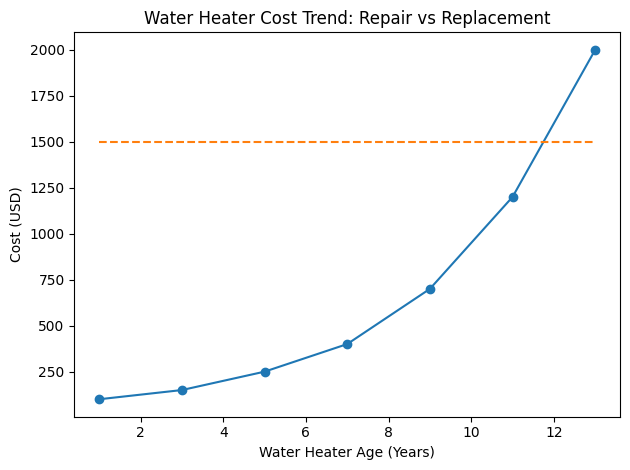
As water heaters age, repair costs tend to increase due to wear, sediment buildup, and system inefficiency. This chart shows how repeated repairs can eventually exceed the cost of replacement making replacement the more practical long-term solution.
Why Timely Replacement Matters (Expert Insight)
Waiting too long isn’t just inconvenient, it can be risky.
According to the U.S. Department of Energy, older water heaters become less efficient over time, leading to higher energy consumption and increased operating costs. Replacing an outdated unit can significantly improve energy efficiency and reduce utility bills.
What This Means for Homeowners
Older units cost more to run
Efficiency drops over time
Replacement improves performance and savings
Tip:
Even if your system still works, efficiency alone might justify replacement.
What to Expect During Water Heater Replacement
A lot of homeowners don’t know what the process looks like.
Typical Replacement Steps
Removing old unit
Installing new system
Connecting plumbing and power
Testing
How Long It Takes
Usually 2–6 hours
Depends on complexity.
Common Challenges
Tight installation space
Outdated connections
Code upgrades
Nothing major but they can affect cost.
Why Homeowners Choose Eastside Repipe and Plumbing
Choosing the right company matters more than people think.
Homeowners often go with Eastside Repipe and Plumbing because:
They focus on proper diagnosis first
Experience with all system types
Clear communication, no guesswork
Work done carefully not rushed
At the end of the day, people just want the job done right the first time.
FAQs
1. How do I know when to replace a water heater?
You should replace your water heater if it’s over 10 years old, leaking, making noise, or not producing consistent hot water.
2. What are the most common old water heater symptoms?
Common symptoms include rusty water, strange noises, leaks, and inconsistent heating performance.
3. How much does water heater replacement cost?
Costs typically range from $800 to $5,500+ depending on system type and installation complexity.
4. Should I repair or replace my water heater?
Repair if the issue is minor and the unit is newer. Replace if it’s old, leaking, or frequently breaking down.
5. How long does a water heater last?
Most water heaters last 8–12 years, depending on maintenance and usage.
Conclusion
Knowing when to replace water heater isn’t just about age, it's about recognizing warning signs early. Rusty water, strange noises, inconsistent heating they all point to a system that’s wearing out.
The key is acting before it fails completely. Because once it does, you’re dealing with more than just cold water you’re dealing with stress, damage, and higher costs.
Schedule Your Free Water Heater Inspection Today
Not sure if your water heater needs replacement?
Contact Eastside Repipe and Plumbing today for a free estimate and professional inspection. Get honest recommendations and reliable service you can trust. Call now (425) 331-2011
