When Do You Need Repiping Services in Sammamish, WA?
Later than you'd think, if you live here. Sammamish incorporated in 1999 and most of its housing went up in the 1990s and 2000s — which means the majority of homes on the plateau are still decades away from needing this. That's an odd thing for a repipe company to lead with, but it's the truth and it saves you a call.
By Ramin Shahbaziasl, Owner and Lead Plumber · Last updated August 25, 2026
Most Homes Here Are Too New
When does a house need repiping? The question isn't age, it's condition — but age tells you which conversation you're likely having.
Sammamish's building boom ran through the 1990s and 2000s, and a copper or PEX system installed in that window, in water like this, generally has plenty of life left. If your house dates from then and nothing is leaking, pressure is fine, and the water runs clear after a holiday, you almost certainly don't need repiping services. Come back to the question in a decade.
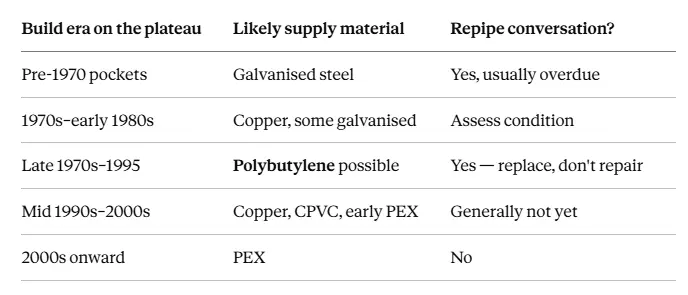
Two groups genuinely should look. The older pockets — parts of Pine Lake, Inglewood, and the pre-plateau-boom parcels — where galvanised steel turns up and narrowing is well advanced. And anyone whose house lands in the polybutylene window, which ran to roughly 1995 and therefore clips the early end of Sammamish's build-out. Grey, flexible, often stamped PB2110. Poly degrades throughout rather than failing in one spot, so a leak is a system signal rather than a repair job.
The four signs that override any of this: falling pressure at the furthest fixture, a second pinhole leak, discoloured water after the house sits empty, and walls already open for a remodel. Our Mercer Island repiping guide works through the diagnostics properly.
Your Water Isn't Mercer Island's Water
This matters, because generic Eastside advice gets the material argument backwards here.
Sammamish Plateau Water draws over 80% of its supply from groundwater wells across the district, supplemented by regional surface water through Cascade Water Alliance. The District states plainly that its groundwater is medium hard while the regional supply is soft, and that the two blend in the system to give a range of 3 to 6.5 grains of hardness.
Compare that with Mercer Island, which runs on very soft Cedar River surface water at around a grain and a bit. Soft, low-alkalinity water is comparatively aggressive toward copper, which is why the anti-copper argument is strong there. On the plateau, at three to six and a half grains, that argument is much weaker.
So what does that mean for a repipe here?
Copper is a legitimate choice in Sammamish in a way it isn't everywhere on the Eastside. It costs more in material and labour, since every joint is soldered, but the water chemistry isn't working against it.
PEX still wins on installation. Long continuous runs, far fewer joints, and much less demolition to get it in — which shows up directly in the restoration bill.
Hardness has its own consequence, and it isn't about the pipe. Medium-hard water leaves scale in fixtures, valves, and water heaters. If you're already opening walls, it's the right moment to think about treatment and about the water heater — our tankless guide covers why scale matters more to a tankless heat exchanger than to a tank.
Our PEX versus copper guide sets out the full comparison. Any repipe specialist Sammamish Washington homeowners hire should be asking which side of that hardness range your address sits on before recommending a material.
Where the District's Responsibility Ends
Worth knowing before anyone quotes you for work outside the house.
Sammamish Plateau Water states that it repairs leaks in water mains and service lines up to the meter, including the meter and the meter setter. The homeowner is responsible for leaks at and after the plumbing connection to the meter setter, including the service line running to the house.
That's a more precise boundary than most districts publish — it names the meter setter itself as the District's, which removes a common grey area. If water is surfacing near the meter box, call the District before authorising excavation.
One local quirk: in the northern end of the district, sewer service is billed by the Northeast Sammamish Sewer and Water District while water comes from Sammamish Plateau Water, so two bills from two districts is normal rather than an error. A separate King County sewer capacity charge can appear as well.
A water line repiping service replacing the run between meter and house is a different job from a whole house repipe, and the two get quoted separately.
Timeline, and Water During the Work
How long does a whole house repipe take: one to two days of plumbing for most Sammamish homes, then drywall repair, texture, and paint — the finishing work usually occupies more calendar than the pipework does.
You will have water. We shut down for part of each working day and restore service before leaving, so the house stays livable throughout. Nobody moves out.
What extends it: two storeys, more than two bathrooms, and slab-on-grade construction. Access drives the schedule far more than square footage, which is why a large single-storey home on a crawlspace can go faster than a smaller two-storey on a slab.
Cost, and Where We Work
How much do repiping services cost in Sammamish comes down to fixture count, bathrooms, storeys, access, material, and the standard of restoration afterwards. Our Washington repiping cost guide breaks the drivers down properly.
The one thing worth insisting on: a quote that includes drywall repair, texture matching, and paint. Restoration is a substantial share of a whole house repiping total, and a quote that stops at the pipe isn't comparable to one that doesn't.
We cover Sammamish including Pine Lake, Inglewood, Sahalee, and Klahanie, plus Issaquah, Redmond, and the wider Eastside. Whole house repiping near Sammamish runs the same way it does anywhere we work — the repiping page covers the service, the locations page has the full area, completed jobs are in the gallery, routine work is on our general plumbing page, and anything actively leaking goes to the emergency team.
If you've been searching repiping services near me Sammamish WA, do one thing first: find an exposed supply line in the garage or crawlspace and look at it. Grey and flexible is a conversation. Copper installed in 1998 probably isn't.
Frequently Asked Questions
1. How do I know if my home needs repiping?
Four signals matter more than the year built. Pressure falling at the furthest fixture, developing gradually until two fixtures at once stops working. A second pinhole leak, since the first was bad luck and the second tells you the rest of the run shares its age and condition. Water that discolours after the house has sat empty, meaning the pipe interior is shedding. And walls already open for a remodel, which is the cheapest moment a repipe will ever happen. Sound copper doesn't need replacing just because it's twenty-five years old.
2. How much do repiping services cost in Sammamish?
Cost is driven by fixture count, number of bathrooms, storeys, access, material choice, and the standard of restoration afterwards. Crawlspace homes cost less than slab-on-grade, since far less wall and ceiling needs opening. The variable that catches people out is restoration — drywall repair, texture matching, and paint — which is a substantial share of the total on a whole-house job. Always confirm whether a quote includes it, because one that stops at the pipe isn't comparable to one that doesn't.
3. How long does a whole house repipe take?
One to two days of plumbing for most Sammamish homes, followed by drywall repair, texture, and paint. That finishing work typically takes longer on the calendar than the pipework itself. Two-storey homes, more than two bathrooms, and slab-on-grade construction all extend the schedule, because access drives the timeline far more than square footage does — a large single-storey home over a crawlspace often moves faster than a smaller two-storey on a slab.
4. Will I have water during the repipe?
Yes. Water is not shut off continuously. We isolate and work in sections, shutting down for part of each working day and restoring service before we leave, so the house remains livable throughout and nobody needs to move out. You'll be told the evening before which fixtures will be offline the next day and roughly when service returns, so you can plan around showers and laundry rather than being surprised.
5. What pipe material do you use for repiping?
Both PEX and copper, chosen for the house rather than by default. Sammamish is worth a specific word here: the District's blended supply runs about 3 to 6.5 grains of hardness, since most of it is medium-hard groundwater rather than the very soft surface water some Eastside cities receive. That means copper isn't fighting the water chemistry the way it does elsewhere, so it stays a legitimate choice. PEX still installs in longer continuous runs with fewer joints and less demolition, which shows up in the restoration cost.
Visit or Call Us
Eastside Repipe and Plumbing 12005 NE 12th St # 29 Bellevue, WA 98005 Phone: 425-331-2011 Hours: Monday–Sunday, 8:00 AM – 5:00 PM Serving Sammamish including Pine Lake, Inglewood, Sahalee, and Klahanie, plus Issaquah, Redmond, Bellevue, and the Eastside.
Not sure what's in your walls? Request a free estimate or call 425-331-2011, and we'll identify the material and tell you honestly whether you need us yet.
