PEX vs Copper Repiping | Eastside Repipe
When it comes to PEX vs copper repiping, most homeowners just want a straight answer. Here it is: PEX installs faster and handles tight spaces better. Copper lasts longer and holds up to heat and UV exposure. Neither is wrong. The right choice depends on your home's age, your water quality, and your long-term plans for the property.
At Eastside Repipe and Plumbing, we've repiped hundreds of homes across Washington state with both materials. We've seen PEX work beautifully in 1960s Eastside homes where copper would've meant tearing out finished walls. We've also watched copper hold up for 60-plus years when conditions are right. This guide gives you the honest breakdown, including a PEX vs copper cost comparison for repiping, so you can walk into your repiping decision with confidence.
Key Takeaways
Copper lasts 50 to 70 years. PEX lasts 25 to 40 years.
PEX is flexible and faster to install. Copper is rigid and needs soldering at every joint.
PEX handles freeze-thaw cycles better. Copper handles heat and UV exposure better.
Your home's age and water quality both affect which material performs best long-term.
Neither is a bad choice. The right one depends on your specific home.
Pros and Cons of PEX vs Copper Pipe
Most guides bury this. Here it is upfront.
PEX Pipe: Pros and Cons
Pros:
Flexible, bends around corners without extra fittings
Resistant to corrosion and chlorine
Expands under freezing pressure instead of cracking
Faster to install with less disruption to your home
Works well in finished walls with limited access
Cons:
Shorter lifespan, 25 to 40 years
Cannot handle direct UV exposure without protective sheathing
Not recyclable
Not suitable for sustained temperatures above 200 degrees Fahrenheit
Copper Pipe: Pros and Cons
Pros:
Extremely durable, lasts 50 to 70 years
Handles high heat and UV exposure without degrading
Fully recyclable
Proven track record across decades of residential plumbing
Cons:
Rigid, needs more fittings in complex layouts
Soldering at every joint adds installation time
Can corrode in highly acidic or chlorinated water
More disruptive to install in finished homes
Is PEX or Copper Better for Repiping?
The answer isn't the same for every home. Here's a simple decision framework.
Choose PEX if:
Your home was built before 1985 with finished walls and limited pipe access
You're in an area with freeze risk or highly chlorinated water
You want faster installation with less mess and disruption
You plan to sell within the next 15 to 20 years
Choose copper if:
You want a one-time, 60-year solution
Your home has outdoor or exposed pipe runs
Walls are already open during a renovation
Recyclability matters to you
For most Washington homeowners repiping a pre-1980 home, PEX is the more practical call. The flexibility, faster installation, and freeze resistance make it the better fit for the majority of Eastside and Seattle-area homes. If you're also noticing warning signs beyond just age, check out our guide on Signs You Need to Repipe Your Home to know exactly what to look for.
Read also: Signs You Need to Repipe Your House
How Long Does PEX Pipe Last?
PEX typically lasts 25 to 40 years under normal residential conditions. Some manufacturers rate their products for up to 50 years, though real-world performance depends on water quality, UV exposure, and installation quality. NSF International, which sets the safety standards for drinking water system components, certifies PEX for potable water use when properly installed.
The two biggest factors in Washington are water chemistry and UV exposure. Seattle and Eastside municipal water is soft and low in chlorine, which is good news for PEX lifespan. If you're on a private well, a water quality test before repiping is worth doing since chemistry varies significantly by location.
PEX in direct sunlight without UV-protective sheathing will degrade faster than it should. For interior applications, properly installed PEX holds up reliably for its full expected life. To learn what the full process looks like from start to finish, see our Whole-Home Repiping Guide.
PEX vs Copper Repiping for Washington Homes
Washington has specific conditions most generic guides don't account for. Here's what actually matters for Eastside and greater Seattle homes.
Water Quality
The Washington State Department of Health publishes water quality data by utility district. Seattle and Eastside municipal water is soft, low in minerals, and low in chlorine. That's actually favorable for copper, since highly chlorinated water speeds up corrosion over time. If you're on city water here, copper performs well from a water quality standpoint. Well water is a different story and needs its own assessment.
Older Homes
A big portion of Bellevue, Kirkland, and Eastside homes were built between 1950 and 1980 with galvanized steel pipes. When it's time to repipe these homes, PEX pipe installation is almost always the more practical choice. It bends through finished walls with minimal cutting and patching. Running rigid copper through the same spaces requires far more demolition and adds significant time to the job, which is also why copper pipe replacement cost in Bellevue WA tends to run higher for older finished homes compared to newer construction.
Freeze Risk
Washington winters are mild in most areas, but homes at higher elevations or with pipes in unconditioned crawl spaces can see freezing conditions. PEX expands under freezing pressure and recovers. Copper doesn't. For any Washington home with pipes in exterior walls or unheated spaces, PEX has a clear advantage.
All Washington plumbing contractors must hold a valid license through the Washington State Department of Labor and Industries. Always verify credentials before any repiping work begins.
Installation Differences That Actually Matter
How each pipe installs affects how long the job takes and how much of your home gets disrupted.
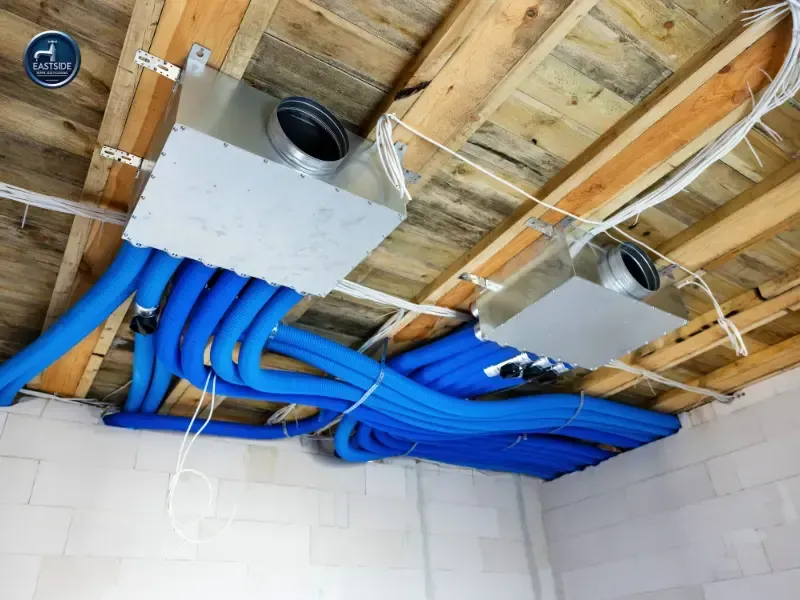
PEX runs in continuous lengths from a central manifold to each fixture. Fewer joints means fewer future leak points. It bends around framing and insulation without extra fittings, which makes it ideal for finished homes where access is tight.
Copper needs a soldered joint at every connection. That's skilled work that takes time. In an open-wall renovation, copper installs cleanly. In a finished home, the number of required joints adds complexity. For Bellevue WA homeowners considering copper pipe replacement, the layout of older finished homes is one of the biggest factors in how involved the job becomes.
Getting an on-site assessment before committing to either material is the only way to know what your specific home actually needs. When homeowners ask us about the PEX vs copper cost comparison for repiping, we always start there, because PEX pipe installation cost and copper replacement cost both vary significantly based on your home's layout, age, and how much wall access the job requires. See our Repiping Process Overview for a breakdown of what to expect.
Why Washington Homeowners Choose Eastside Repipe and Plumbing
Repiping is not a job to hand to a generalist. It takes a team that does it every week, knows both materials inside out, and understands Washington homes specifically.
Eastside Repipe and Plumbing has repiped homes across Bellevue, Kirkland, Redmond, Issaquah, and the greater Seattle area. We don't push one material over the other. We look at your home, your water, and your situation, and we give you a straight recommendation based on what we actually find.
Every repipe includes a full pressure test, proper permits where required, and a clear walkthrough of what was replaced and why. No surprises. No vague invoices. Just clean work done right the first time.
Frequently Asked Questions
1. Is PEX or copper better for repiping?
PEX is better for older homes with finished walls, freeze-prone areas, and faster installation. Copper is better for long-term durability and outdoor or high-heat applications. Most Washington homeowners repiping a pre-1985 home gowith PEX for practical reasons.
2. How long does PEX pipe last?
PEX lasts 25 to 40 years under normal conditions. Washington's soft municipal water is favorable for PEX longevity. UV exposure and installation quality also play a role.
3. What are the main advantages of PEX pipe over copper?
Flexibility, faster installation, freeze resistance, and corrosion resistance. PEX works especially well in older Washington homes where routing through finished walls requires minimal disruption.
4. How does copper pipe replacement work in Bellevue WA?
It involves removing existing failing lines and installing new copper throughout the home. Soldering is required at every joint, which adds installation time in finished homes. A walkthrough assessment helps determine the full scope before work begins.
5. Can PEX and copper be used together in the same home?
Yes, and it's common. Copper handles the water heater connection and outdoor runs. PEX handles the distribution lines to individual fixtures. A licensed plumber can design a hybrid system that uses each material where it performs best.
6. What is the lifespan difference between PEX and copper?
Copper lasts 50 to 70 years. PEX lasts 25 to 40 years. For most homeowners staying in a home for 10 to 20 years, PEX lifespan is more than enough. For a permanent long-term solution, copper wins on longevity.
7. Does PEX pipe affect water quality or taste?
No. NSF-certified PEX meets the safety standards for potable water and does not affect taste or quality under normal conditions. Washington's soft municipal water is well-suited for PEX systems.
8. When is repiping necessary for a Washington home?
When you have galvanized steel pipes showing corrosion, recurring leaks in multiple spots, rust-colored water, or dropping water pressure throughout the house. Homes built before 1980 are most commonly in need. See our Signs You Need to Repipe Your Home guide for a full breakdown.
Conclusion
PEX vs copper repiping comes down to what your home actually needs. PEX wins on flexibility, installation speed, and freeze resistance, especially in older Washington homes. Copper wins on lifespan and long-term durability. Both are solid choices when installed by a licensed plumber who knows what they're doing.
The best next step is an honest on-site assessment so you get a recommendation based on your actual home, not a guess.
Get a Free Estimate Today
Not sure which material is right for your home? Eastside Repipe and Plumbing will come out, assess your plumbing, and give you a free quote with no pressure and no obligation.
Call us at 425-331-2011 or visit Eastside Repipe and Plumbing to schedule your free estimate. We'll walk through your home, explain your options clearly, and get the job done right.
