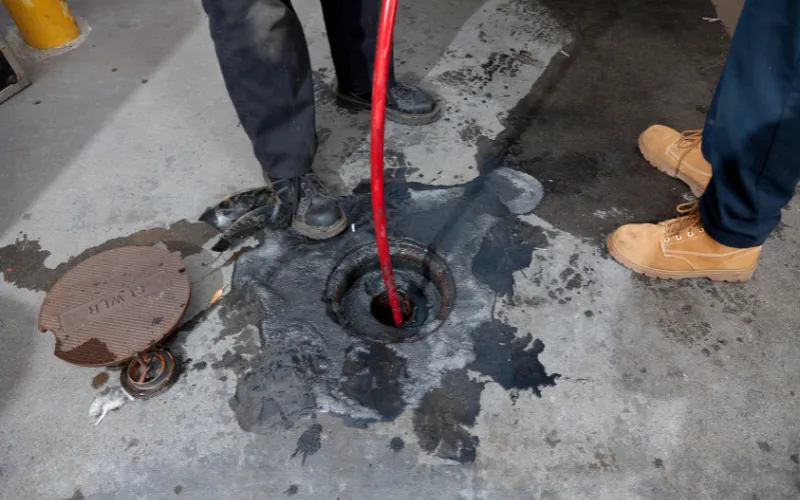
Professional Drain Cleaning in Bellevue, WA
By Ramin Shahbaziasl, Owner, Eastside Repipe and Plumbing · Last updated September 17, 2025
Most drain calls are the same drain twice. Something clears the blockage, flow returns, and a few months later it slows again, because the buildup that caused it is still on the pipe wall.
This guide covers what professional cleaning actually removes, when hydro jetting is the right tool and when it is not, and how often the work is worth scheduling.
What We Do Differently From a Plunger
We find the cause, not just the blockage. A camera run through the line shows what is in it, where, and what condition the pipe is in. That is the difference between clearing a clog and knowing why it formed.
We remove buildup rather than punching through it. A snake makes a channel through the obstruction and leaves the coating on the pipe wall. That coating is what the next blockage forms on.
We tell you what we found. Including when the honest answer is that the line needs replacing rather than cleaning, or that the fault sits past your property line and belongs to the city.
When Hydro Jetting Is the Right Tool
Hydro jetting drives water through a specialized nozzle at high pressure, scouring the full circumference of the pipe. It clears grease, mineral scale, sludge, and root intrusion in a way snaking does not.
It is not appropriate for every system. Pressure that scours sound pipe can damage a corroded or brittle one, and older Eastside homes frequently have cast iron or galvanised lines that look serviceable and are not.
That is why camera inspection comes first, every time. If a line will not take jetting, we say so and use a different method. Anyone offering to jet your drains without inspecting them is guessing with your plumbing.
Our comparison of drain cleaning and hydro jetting covers which suits which situation in detail.

What Regular Cleaning Prevents
Emergency callouts. This is where the saving actually is. A scheduled cleaning costs a fraction of an emergency visit plus the cleanup after a backup.
Recurring blockages. Removing the buildup extends the interval before the next problem rather than resetting the clock to zero.
Strain on the pipe. Restricted flow and repeated aggressive clearing both stress the line.
Problems you cannot see yet. Camera inspection catches root intrusion, cracks, and sagging sections while they are still cheap to address. Our guide to sewer line warning signs covers what those look like from inside the house.
Signs It Is Time to Book
Slow drains across more than one fixture
Gurgling from a drain when you run a different fixture
Foul smells from a drain or in the yard
Repeated blockages in the same line
Backups in multiple fixtures at once, which points to the main line rather than any single drain
For most homes, every eighteen months to two years is a reasonable interval. More often with mature trees near the sewer run, a pre-1980 property, or heavy kitchen use.
What We Handle
Drain and sewer work sits under our specialized plumbing services, and covers:
Camera inspection of drain and sewer lines
Hydro jetting where the pipe condition allows
Mechanical clearing for lines that will not take jetting
Sewer line diagnosis and repair
Repiping where supply lines have reached end of life
Interior leak detection
You can verify our license, bond, and insurance for free through the state Department of Labor and Industries before booking.

Keeping Drains Clear Between Visits
Bin cooking grease rather than pouring it. Let it solidify in a container first
Fit mesh screens over shower and sink drains
Flush with hot tap water weekly. Not boiling, which can soften PVC joints
Never flush wipes, regardless of labelling
Keep coffee grounds out of the sink
Act on the first slow drain rather than the third
Our guide to preventing clogged drains covers the day-to-day habits in more depth.
Frequently Asked Questions
How often should I schedule professional drain cleaning?
Every eighteen months to two years for most homes. More often with mature trees near the sewer line, an older property, or heavy kitchen use.
Is hydro jetting safe for my pipes?
For sound pipe, yes. For corroded or brittle pipe, no. That is why a camera inspection comes first, and why we will not jet a line we have not looked at.
Can you handle sewer line problems as well as drains?
Yes. Camera inspection, diagnosis, and repair. If the fault sits past your property line, the inspection establishes that too, which determines whether it is yours or the city's responsibility.
How do I know if my drains need cleaning?
Slow drainage across multiple fixtures, gurgling, foul odors, or repeated blockages. Multiple fixtures backing up at once means the main line needs a camera before anything else.
Do you offer emergency drain service?
Yes. Our emergency plumbing service covers active backups. If sewage is entering the house, stop using every fixture and call.
Why does my drain keep clogging after it is cleared?
Because clearing the blockage does not remove the layer coating the pipe wall. Recurring clogs in the same line are the clearest indication that a more thorough clean, or an inspection, is needed.
Book an Inspection
If a drain has blocked more than once, the useful step is finding out why rather than clearing it again.
Contact us or call 425-331-2011. We will camera the line, show you what is in it, and recommend the approach that suits the pipe you actually have.
We serve Bellevue, Kirkland, Redmond, Bothell, Renton, Issaquah, Sammamish, Seattle, and the wider Eastside service area.
