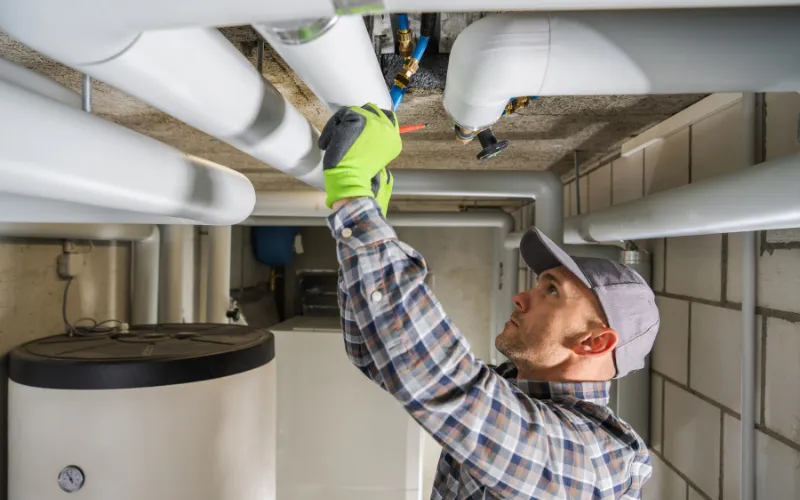
Commercial Repiping Services: Signs and Costs
Recurring leaks, dropping water pressure, and rust in the water are rarely isolated faults. In a commercial building, they usually mean the supply system has reached the end of its service life, and patching individual sections stops being economical.
Commercial repiping replaces that system rather than repairing it. This guide covers how to tell when a building has reached that point, which materials suit which situation, what the work involves, and what drives the cost.
By Ramin Shahbaziasl, Owner, Eastside Repipe Plumbing · Last updated October 07, 2025
What Commercial Repiping Involves
Repiping replaces the water supply lines throughout a commercial building with new pipe, rather than repairing failures as they appear.
It differs from residential repiping in three ways that matter:
Scale. More fixtures, higher continuous demand, and pipe sizing that has to account for pressure across multiple floors
Occupancy. The building usually has to keep operating, so work is phased and often scheduled outside business hours
Compliance. Commercial systems carry code obligations residential properties do not, and the work is permitted and inspected
The goal is a system that will not fail unexpectedly, installed with as little disruption to operations as the building allows.
Signs a Building Needs Repiping
Individually, these are maintenance items. Together they indicate the system rather than a component:
Repeated leaks, particularly in different parts of the building
Rust-coloured or discolored water, which usually means corrosion inside the supply lines
Water pressure that has dropped and does not recover after adjustment
Pipe age, typically 30 to 40 years or more depending on material
Maintenance costs climbing year on year
Visible corrosion on exposed pipe and fittings
Catching this before a failure is the difference between a phased project scheduled around your operations and an emergency shutdown.

Why It Matters
Leaks damage more than pipe. Water reaching stock, equipment, or tenant space costs considerably more than the plumbing repair itself.
Pressure problems affect operations. Restaurants, medical offices, and any business with equipment tied to the water supply feel this before anyone else does.
Water quality is a compliance issue. Discolored water from corroding supply lines is a health concern in food service and a tenant complaint everywhere else.
Codes change. Systems installed decades ago may no longer meet current requirements, which surfaces during renovation, sale, or inspection.
Failures compound. Once one section of a system starts failing, others of the same age and material generally follow.
Choosing the Material
Three materials cover almost all commercial supply work.
Copper. Long service life, corrosion resistant, and well understood by every inspector. The highest material cost of the three, and the longest to install.
PEX. Flexible, faster to install, and easier to route through occupied buildings with limited access. Lower material and labour cost. Not suited to every application, particularly where high temperatures or UV exposure are involved.
Stainless steel. The most durable and the most chemical resistant. Specified where the application demands it rather than as a default, because the cost is significantly higher.
The right choice depends on your building, water demand, access constraints, and budget, and it should follow a survey rather than a preference. Our guide to waste line replacement covers the drainage side, which is a separate system with separate materials.
How the Work Runs
Inspection and survey. Existing material, condition, routing, and access are established. This determines everything that follows
Material selection. Based on the survey rather than assumption
Planning and permits. Phasing mapped out, permits pulled, schedule agreed around your operations
Preparation. Water isolated by zone, work areas protected, temporary provisions arranged where needed
Installation. Old pipe removed and new pipe installed, generally zone by zone so the building keeps running
Testing. Pressure, flow, and water quality verified before each zone returns to service
Inspection sign-off. Permitted work checked by the jurisdiction
Cleanup and documentation. Site restored, and system details recorded for future maintenance
On scheduling: most commercial repiping happens outside business hours. It costs more in labour and almost always less in total, because the alternative is lost trading time.

What You Get From It
Fewer emergency callouts, which is usually where the saving actually comes from
Consistent pressure and flow across the building
Clean water with no discoloration from corroding pipe
Code-compliant documentation for sale, lease, or renovation
A system with decades of service life rather than one being managed toward failure
What Drives the Cost
Published figures are close to meaningless without knowing the building. What moves a quote:
Building size and fixture count
Material selected, where copper costs more than PEX but lasts longer
System complexity, including floors served and any specialized systems the supply feeds
Access. Exposed pipe in a plant room is straightforward. Pipe behind finished walls in occupied tenant space is not
Scheduling. After-hours and weekend labour costs more per hour and less in total
Phasing. Staging work to keep the building operating adds mobilization cost and removes downtime cost
Permits and inspection
Ask for the quote itemised into labour, materials, permits, and reinstatement, so bids can actually be compared. Our plumber cost guide covers typical local labour rates.
Planning for Failures Before They Happen
Even a well-maintained system fails eventually, and older systems fail without much warning.
Two things reduce the exposure:
Phased repiping. Replacing the system in stages, prioritising the sections in worst condition, spreads the cost and keeps the building operating throughout.
A relationship before the emergency. A contractor who has surveyed your building already knows the layout, the isolation points, and the material. That matters at 2 am. We run 24/7 emergency service across the Eastside.
Choosing a Contractor
Verify the licence. Washington requires plumbing work to be performed by certified plumbers employed by a licensed contractor. Check any company's licence, bond, and insurance for free through the state Department of Labor and Industries rather than taking it on trust.
Ask about relevant experience. Multi-tenant office, food service, and medical each present different constraints.
Confirm permit handling. It should be part of the job, not something you are left to arrange.
Get itemised written pricing, and ask how change orders are handled.
Ask who your point of contact is. On a phased project in an occupied building, communication failures cost more than technical ones.
Call the references. For a project this size it is worth the twenty minutes.
After the Work
New pipe still benefits from attention:
Annual inspection of the system and its isolation valves
Valve exercise and lubrication, so shutoffs work when needed
Periodic water quality checks
Pressure monitoring, since a change is often the first sign of a problem
A whole home plumbing inspection covers the equivalent checks on smaller properties, and the same principles apply at commercial scale.
Frequently Asked Questions
What is commercial repiping?
Replacing the water supply lines throughout a commercial building rather than repairing individual failures. It is done when the system as a whole has reached the end of its service life.
How do I know if my building needs it?
Repeated leaks in different areas, discolored water, pressure that has dropped and stayed down, and rising maintenance costs. Pipe age matters too, particularly past 30 to 40 years.
How long does it take?
It depends on building size, material, and access. Occupied buildings are normally phased by floor or zone, which takes longer overall and keeps you operating throughout.
Do we have to close during the work?
Usually not. Most commercial repiping is scheduled around operations, with work zoned and often done outside business hours.
Which material should we use?
It follows the survey rather than a preference. Copper for longevity, PEX where speed and access matter, stainless steel where the application demands it. A contractor recommending one before looking at the building is guessing.
Is a permit required?
Yes, for work of this scope. Permits and inspection should be included in the quote. Unpermitted work tends to surface during a sale or lease negotiation, which is an expensive time to discover it.
Book a Survey
If your building is showing several of the signs above, the useful next step is someone looking at the actual system and telling you whether you are looking at targeted repairs or a phased replacement.
Contact our team or call 425-331-2011. We will survey the building, give you a written scope and cost, and phase the work around how you operate.
See our repiping services for the full scope of what we handle. Related reading: choosing a commercial plumbing contractor.
We serve commercial properties across Bellevue, Kirkland, Redmond, Bothell, Renton, Issaquah, Sammamish, Seattle, and the wider service area.
