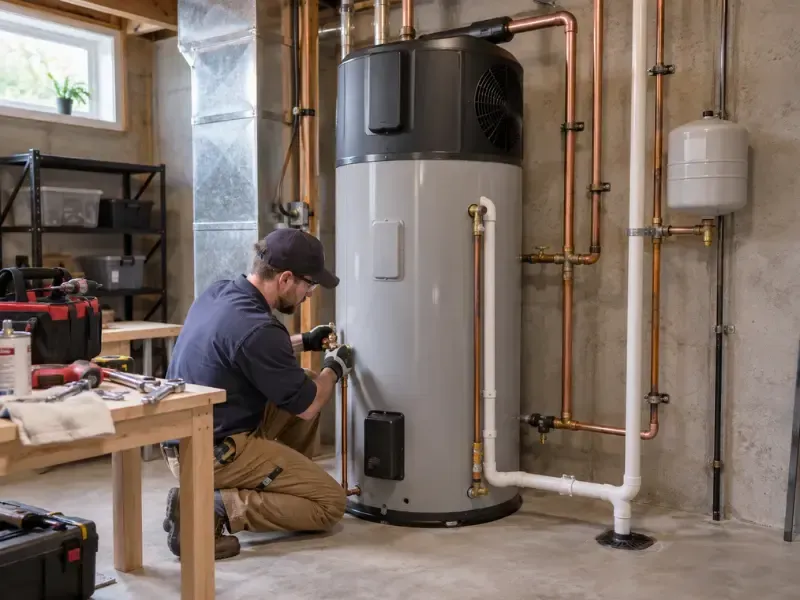
Who Handles Water Heater Installation in Kirkland?
A licensed plumber, under permit, with an inspection at the end. Washington treats a water heater as regulated work even when you are swapping like for like, and the code has specific requirements about how the tank is anchored, where it can sit, and what has to be plumbed alongside it.
By Ramin Shahbaziasl, Owner and Lead Plumber · Last updated September 18, 2026
What Does the Code Actually Require?
Four things beyond the tank itself, and they are the items inspections turn on.
Two seismic straps. WAC 51-56-0500 requires water heaters to be anchored or strapped against horizontal displacement from earthquake motion, with strapping in the upper one-third and the lower one-third of the tank's height. There is a detail people miss: at the lower point, the strap must sit at least four inches from the controls. The regional inspection tip sheet covering Kirkland goes further on specification, calling for 22 gauge metal straps three quarters of an inch wide, with the ends lag bolted into two different studs.
An expansion tank, where the system is closed. If a pressure-reducing valve or backflow preventer means water can enter the house but not flow back out, heated water has nowhere to expand to. Without a thermal expansion device that pressure discharges through the relief valve, which shortens the heater's life. Closed systems are common across Kirkland.
A temperature and pressure relief valve, piped full-size to discharge near the floor with no shutoff anywhere along it. Fitting a valve on that discharge line to stop a drip defeats the safety device entirely, and it is one of the commonest reasons an install fails inspection.
A drain pan, where a leak could damage the structure. More on that below.
Where Can the Heater Actually Go?
The location changes the requirements, which is why a garage swap and a closet swap are not the same job.
Garage rules are the stricter set, which is why searches for garage and utility closet water heater installation Kirkland tend to come from people who have already been told their current setup won't pass. WAC 51-56-0500 section 507.13 requires appliances in garages, and in adjacent spaces opening to the garage that are not living space, to be installed so that burners, burner-ignition devices and ignition sources sit not less than eighteen inches above the floor, unless the unit is listed as flammable vapor ignition resistant. That exception matters, because many modern gas units carry that listing and no longer need the platform. Older ones do.
There is a second garage requirement that catches people out. Where the heater sits in the normal path of a vehicle, it needs physical protection, typically a wheel stop or bollard. A tank tucked beside where a car parks is not compliant just because it has never been hit.
Utility closets bring their own question: combustion air for a gas unit, and clearances to combustibles. A closet that comfortably held a 40-gallon tank two decades ago may not suit a replacement with different dimensions or venting.
Anywhere above finished space, including a raised platform or upper floor, is where the drain pan requirement bites hardest, since a slow leak has somewhere expensive to go.
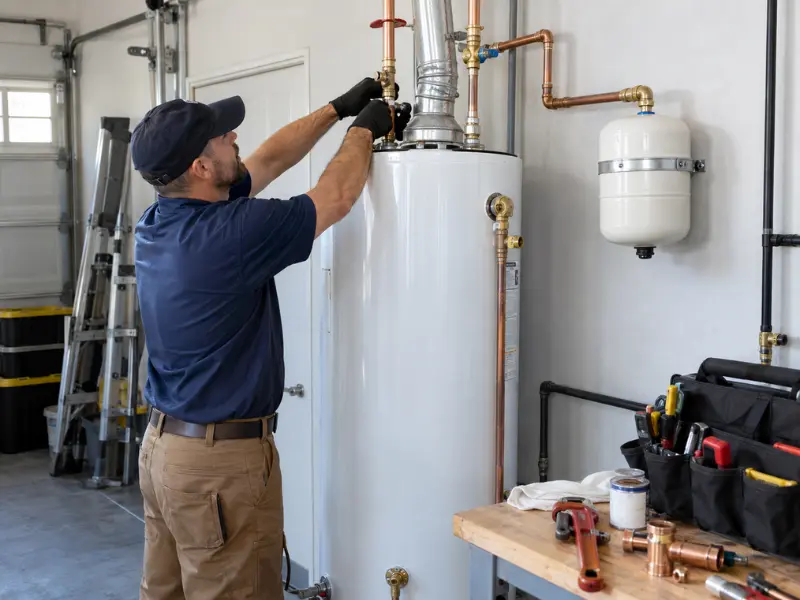
What's the Difference Between Gas and Electric?
If you're weighing up a gas and electric water heater install Kirkland suppliers both stock, the difference shows up in three places.
Venting. Gas units need approved venting, and the vent has to suit the appliance. Replacing an atmospheric unit with a power-vented or high-efficiency model changes the venting entirely, which is work in its own right rather than a detail.
Electrical. Electric tanks typically need a dedicated 240-volt circuit. If you are converting from gas to electric, that circuit usually does not exist yet, and the panel has to have capacity for it.
Recovery and running cost. Gas units generally reheat faster; electric units are simpler to install where gas is not already present. Neither is universally better, and the honest answer usually depends on what fuel the house already has.
Switching fuel type is a bigger project than a replacement. It brings a second trade, a second permit in most cases, and a different inspection. Worth pricing properly rather than assuming it is a small upgrade. Tankless conversions are their own conversation, covered in our tankless installation guide.
How Long Does It Take and Can You Come Today?
How long does a water heater installation take? A straightforward, like-for-like replacement is usually a half day on site. Draining the old tank takes longer than people expect, and the inspection happens separately afterwards.
What extends it: converting fuel type, moving the heater's location, upgrading to a larger tank that no longer fits the space, venting changes, or discovering the shutoff valve seized years ago.
On same-day service, yes, where the schedule allows, and the honest qualifier is that it depends on the hour you call and what unit your house needs. A common 40 or 50 gallon replacement is far more likely to happen today than an unusual size or a high-efficiency unit that has to be ordered. If you have no hot water and a tank that has failed, say so when you call, because a total failure is triaged differently from a heater that is simply old.
If you are searching which plumber near me offers same-day water heater installation, ask two things: do you have the unit for my house, and does the permit slow it down. For us the answer to the second is no, since permit filing runs alongside the work rather than before it.
What Happens to the Old Unit?
We take it. Haul-away and disposal are part of the job rather than a line item you discover afterwards.
That matters more than it sounds. A 50 gallon tank is heavy, awkward, still holds residual water, and is not something most kerbside collections will take. Steel tanks are recyclable as scrap, so responsible disposal is a matter of taking it to the right place rather than leaving it at the side of your house.
Worth asking any quote you compare whether removal and disposal are included, because it is a common exclusion and an unpleasant surprise.
How Much Does It Cost, and Who Should You Hire?
How much does water heater installation cost? It depends on six things: the unit itself, tank size, fuel type, whether the location changes, whether venting or electrical work is needed, and what the existing installation is missing. That last one catches people. If the old heater had no expansion tank, no drain pan or single-strap bracing, bringing the new one to current code adds parts and labor that were never on the old install.
Ask for the permit fee as a named line rather than absorbed into a total, and ask whether haul-away and the strapping and pan are included or extra.
On choosing, Washington asks for two credentials rather than one. The company holds a plumbing contractor license registered with Labor & Industries, and separately the individual doing the work holds their own certificate and carries photo identification with it. Ask any contractor for their license number before hiring, then check it for free on L&I's Verify a Contractor tool, which also shows the bond, the liability insurance and the workers' compensation account.
We serve Kirkland plus Bellevue, Redmond, Mercer Island, Sammamish and Issaquah. Routine work sits on general plumbing, urgent failures with the emergency team, the area list on our locations page, and finished jobs in the gallery.
Searching who installs water heaters near me, who installs water heaters in Kirkland, or comparing the best water heater installation company near Kirkland? Ask whether the quote includes the straps, the pan, the expansion tank and the permit. Those four are where quotes diverge.
Frequently Asked Questions
1. How much does water heater installation cost in Kirkland?
Six drivers: the unit itself, tank size, fuel type, whether the location moves, whether venting or electrical work is required, and what the existing installation lacks. That last one surprises people most, because an older install may predate current requirements, so a compliant replacement adds an expansion tank, a drain pan or proper two-point strapping that was never there before. Ask for the permit as a named line item, and confirm whether haul-away is included. Quotes diverge on those inclusions more than on the tank price.
2. Do you offer same-day water heater installation?
Often, depending on the hour you call and which unit your house needs. Common 40 and 50 gallon replacements are far more likely to go in same day than unusual sizes or high-efficiency models that have to be ordered in. Tell us on the call whether you have no hot water at all or a heater that is simply old, since a total failure is triaged ahead of a planned replacement. Permit filing does not hold the work up, because it runs alongside rather than beforehand.
3. Do you haul away and dispose of the old unit?
Yes, included rather than charged separately. Worth checking with any quote you compare, because it is a frequent exclusion. A 50 gallon tank is heavy, awkward to move, holds residual water after draining, and will not be taken by most kerbside collections, so a quote that leaves it behind has left you with a genuine problem. Steel tanks are recyclable as scrap, so disposal is about taking it to the right facility rather than simply removing it from view.
4. Do you fit seismic strapping and a new drain pan when installing?
Yes, and strapping is not optional in Washington. WAC 51-56-0500 requires anchoring against horizontal displacement, with straps in the upper and lower thirds of the tank, and at the lower point the strap must sit at least four inches clear of the controls. The regional tip sheet covering Kirkland calls for 22 gauge straps three quarters of an inch wide, lag bolted into two different studs. A drain pan is required where a leak could damage the structure, which covers anything above finished space, on a platform, or in a closet over living area.
5. Are you a bonded and insured plumbing contractor?
Yes, and Washington requires two separate things on plumbing work. The company holds a plumbing contractor licence registered with Labor & Industries, and the individual performing the work holds their own certificate and carries photo identification with it, since general contractor registration does not authorise plumbing. Verify both free on the state's Verify a Contractor lookup, which also shows the bond, the liability insurance and the workers' compensation account. Check that last one specifically, because it is what protects you if somebody is hurt at your property.
Visit or Call Us
Eastside Repipe and Plumbing 12005 NE 12th St # 29 Bellevue, WA 98005 Phone: 425-331-2011 Hours: Monday–Sunday, 8:00 AM – 5:00 PM Serving Kirkland plus Bellevue, Redmond, Mercer Island, Sammamish, Issaquah and the Eastside.
No hot water? Request a free estimate or call 425-331-2011, and tell us the tank size and fuel type if you can read them off the label.
