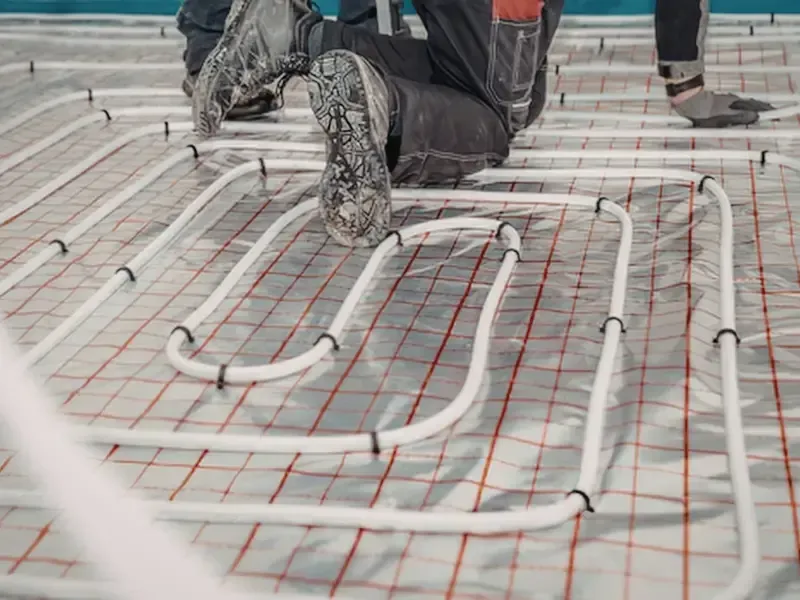
Why Get Radiant Floor Heating Installation in Redmond WA?
Eastside Repipe And Plumbing installs radiant floor heating systems throughout Redmond, WA — electric mat and cable systems for targeted room applications, and hydronic radiant heating for whole-home comfort. Among the best radiant floor installers near Redmond WA, we size, permit, and install both system types based on your home's construction, existing flooring, and how broadly you want the heating to extend.
By Ramin Shahbaziasl, Owner & Lead Plumber · Last updated July 2026
Is Radiant Floor Heating Good for the PNW Climate?
Radiant floor heating is exceptionally well-suited to the Pacific Northwest — and specifically to Redmond's climate — for reasons that matter more here than they do in a dry or warm-weather market.
Redmond's winters aren't brutally cold. The temperature rarely drops below 30°F. But from October through April, the combination of constant cloud cover, high humidity, and sustained grey-sky conditions creates an ambient chill that settles into concrete slabs and tile floors and simply doesn't leave. A forced-air furnace heats the air, but the floor stays cold. Radiant floor heating addresses exactly that problem by warming the surface you actually make contact with — bare feet on tile, a dog on the kitchen floor, kids on the bathroom rug.
In homes across Overlake, Education Hill, and Downtown Redmond where slab-on-grade construction is common and tile is the standard flooring in kitchens and bathrooms, the mismatch between a warm-air thermostat and a cold floor surface is a daily experience from late fall through spring. Radiant heat closes that gap directly.
Which radiant heat type is best for PNW homes depends on the application. Electric radiant floor heat is the right answer for targeted rooms — bathrooms, entry areas, kitchens — where you want warmth underfoot without the commitment of a whole-house system. Hydronic radiant heating in King County WA is the right answer when you're planning a major renovation or new construction and want radiant as the primary heating source for the full home. We address the electric vs. hydronic decision in detail below.
Radiant floor heating also lasts significantly longer than forced-air systems. Properly installed hydronic tubing (PEX) lasts 50+ years under the floor — well beyond the lifespan of any furnace, heat pump, or forced-air system it might replace. Electric heating cables typically last 20–30 years. This is why, when Redmond homeowners ask whether radiant floor heating is worth it, the honest answer factors in that the system they're installing may outlast several other heating-system cycles.
Is Electric or Hydronic Radiant Heat Better in Washington?
This is the question every Redmond homeowner should ask before committing to a radiant floor heating installation, and the answer here differs meaningfully from most of the US.
Electric radiant heat uses thin heating cables or mats installed beneath the floor surface and wired to a thermostat. Installation is straightforward — we lay the mat, connect to a dedicated circuit, and tile or finish floor goes on top. There's no boiler, no manifold, no pump. The tradeoff is that it costs more to run per square foot than hydronic at scale. Nationally, that running cost disadvantage is significant. In Washington State, it's considerably smaller.
Washington's electricity grid is predominantly hydroelectric — powered by dams on the Columbia River system through the Bonneville Power Administration. This keeps Washington electricity rates among the lowest in the nation. For Redmond homeowners served by Puget Sound Energy, the electric rate advantage means that electric radiant floor heat — particularly in smaller applications like a bathroom or entry — is far more cost-competitive here than it would be in a natural gas-heavy market. Electric radiant floor heat on the Eastside Seattle grid runs at a meaningfully lower cost per hour than the same square footage would cost in most other U.S. markets.
Hydronic radiant heating circulates warm water through PEX tubing beneath the floor, heated by a boiler (gas or electric, which we also install and connect — see our gas piping installation guide for Redmond for the gas-system connection context). It's significantly more efficient per BTU at large scale, making it the right choice for whole-home heating. But the install cost is higher — a boiler, manifold, pump, and PEX tubing loop throughout the home represents a major project, best done during a renovation or new construction when floors are already being replaced.
Our recommendation for most Redmond homeowners:
Electric: Bathroom tile, kitchen floor, entry/mudroom — specific zones where cold-floor discomfort is the primary complaint
Hydronic: Whole-home heating during a remodel or new build where the slab or subfloor is already exposed
As radiant floor contractors serving the Bellevue area and all of King County WA, we walk through this decision during the free estimate — no pressure toward either system, just the right fit for your home and budget.
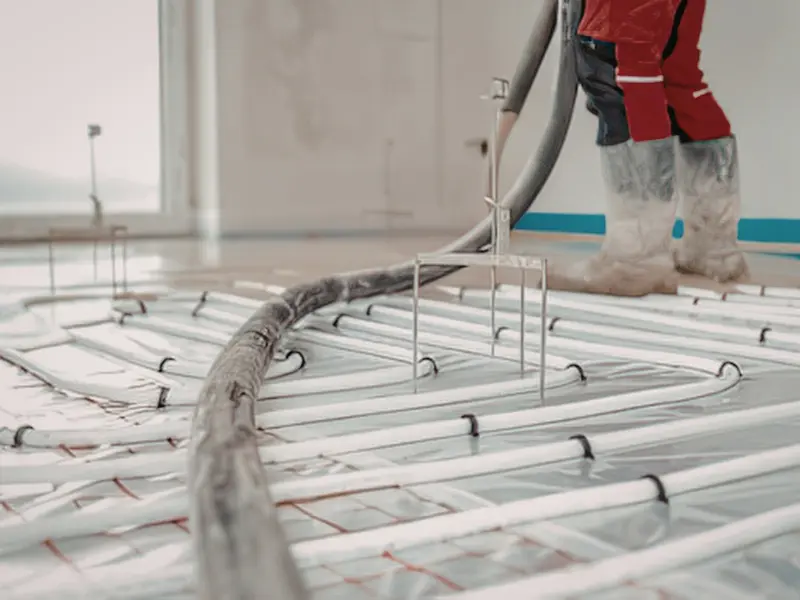
Can Radiant Floor Heating Be Added to Existing Floors?
The answer depends on the system type — and for Redmond homeowners this is often the pivotal question.
Electric radiant: Yes, with a floor replacement. An electric heating mat or cable system can be added to any room where you're replacing the floor surface. The mat installs directly over the existing subfloor or slab before new tile or engineered hardwood goes down. If you're already planning new bathroom tile or a kitchen floor refresh, the cost of adding electric radiant to that project is incremental — the floor is already coming up, the labor is already on site. We typically recommend addressing this during any flooring renovation.
Hydronic radiant: Retrofit is complex and best planned during renovation. Because hydronic systems require a network of PEX tubing embedded in or fastened to the subfloor, adding hydronic to an existing finished home means either floating a new layer above the existing floor (adding 1–1.5 inches of height, which affects door clearances and transitions) or full floor removal. In practice, hydronic radiant is almost always installed during new construction or a major renovation when the subfloor is already exposed. For Redmond homes undergoing kitchen or bathroom gut-renovations — common in the Education Hill and Grass Lawn neighborhoods where 1970s–1980s construction is being updated — hydronic is worth serious consideration if the scope is already that extensive.
We assess your specific floors, construction type, and renovation plans during the estimate and give you an honest answer about which system is practical for your home.
How Much Does Radiant Floor Heating Cost in Redmond WA?
Radiant floor heating cost in Redmond varies by system type, room size, and existing floor conditions. The two biggest variables are the scope of the heating zone and whether you're adding the system during a floor replacement or as a standalone project.
For a fuller breakdown of what drives radiant floor heating cost — by system type, room size, and installation method — our radiant floor heating cost guide and heated flooring systems overview cover the full range. The short version: electric systems for a single bathroom are the most accessible entry point; whole-home hydronic is a larger investment that makes sense when planned as part of new construction or a significant renovation.
Eastside Repipe And Plumbing provides free estimates for all radiant floor heating installations in Redmond and throughout King County WA. Call 425-331-2011 and we'll assess your space, flooring type, and heating goals before any numbers are finalized. As top rated radiant heat contractors in the Seattle Eastside, we price transparently — materials, labor, permit fees, and any electrical or gas-system connection work included in the estimate before work begins.
Which Redmond and Eastside Areas Do We Serve?
Eastside Repipe And Plumbing installs radiant floor heating systems throughout Redmond and the Eastside Seattle area, including:
Overlake — slab-on-grade construction common; tile bathrooms and kitchens are the primary electric radiant application zone
Education Hill — 1980s–2000s homes undergoing renovation; excellent candidates for retrofit electric in bathrooms and entry floors
Redmond Ridge and Trilogy — newer construction where hydronic radiant may have been considered at build time; we assess existing rough-in if present
Downtown Redmond and Grass Lawn — older construction; retrofit electric is typically more practical than hydronic in these homes
We also serve Kirkland, Bellevue, and Sammamish. For the full scope of our specialized plumbing services, including gas piping and water filtration, visit our specialized plumbing services page and our Redmond plumbing services page.
Frequently Asked Questions
1. Is radiant floor heating good for PNW climate?
Yes — the PNW climate is one of the best use cases for radiant floor heating. Redmond's long, damp, grey winters create cold tile and concrete floors that forced-air heating doesn't address. Radiant heat warms the surface you actually contact, making it effective at the exact discomfort the Pacific Northwest produces. It also operates without circulating air, which means no allergen distribution in a climate where damp conditions already promote dust mite and mold growth.
2. Can radiant floor heating be added to existing floors?
It depends on the system. Electric radiant can be added to any room where you're replacing the floor — the heating mat installs before new tile or engineered hardwood and adds minimal height to the floor stack. Hydronic radiant is best installed during new construction or a major renovation when the subfloor is already exposed; retrofitting hydronic in a finished home requires significant floor height modification or full removal. We assess your specific situation at the free estimate stage.
3. How much does radiant floor heating cost to run?
Running costs depend on system type, zone size, and local energy rates. Washington's electricity rates are among the lowest in the US thanks to the state's predominantly hydroelectric grid, which narrows the cost-per-hour gap between electric and hydronic systems compared to most US markets. A single electric bathroom mat (50–80 sq ft) used for a few hours daily typically adds $8–20 per month to an Eastside electricity bill. Whole-home hydronic costs depend on boiler type, PSE gas or electric rates, and how often the system runs.
4. What flooring works with radiant heat?
Tile and stone are the best conductors and ideal for radiant heat — which is why bathroom and kitchen applications are the most common in Redmond. Engineered hardwood works well and is more stable under temperature cycling than solid hardwood. Luxury vinyl plank is compatible with most systems but should be checked against manufacturer temperature limits. Solid hardwood is generally not recommended — thermal expansion and contraction causes gaps and cupping over time. Polished concrete is an excellent conductor and increasingly common in newer Eastside construction.
5. Is electric or hydronic radiant heat better in Washington?
For single-room applications (bathrooms, entries, kitchens), electric radiant is usually the right choice in Washington — lower install cost, straightforward permit process, and Washington's low electric rates make it more cost-competitive here than in most US markets. For whole-home heating in new construction or a major renovation, hydronic radiant is more efficient at scale and worth the higher install investment. The right answer depends on how many zones you're heating and whether your floor is already being replaced as part of a broader project.
Contact Eastside Repipe And Plumbing for a free radiant floor heating estimate in Redmond or anywhere across the King County Eastside.
Visit or Call Us
Eastside Repipe And Plumbing 12005 NE 12th St # 29 Bellevue, WA 98005 Phone: 425-331-2011 Hours: Monday–Saturday, 8:00 AM–5:00 PM
Serving Redmond and the Eastside Seattle area including Overlake, Education Hill, Redmond Ridge, Kirkland, Bellevue, Sammamish, and all of King County, WA.
