Radiant Floor Heating Cost: Benefits, Installation Guide & What to Expect in 2026
Radiant floor heating cost depends on the type of system, installation method, and size of your space. In simple terms, it’s a heating system installed beneath your floors that warms your home from the ground up. No vents. No blowing air. Just steady, even heat. Sounds great… but the cost is usually what stops people from moving forward.
Most homeowners start looking into it during renovations or new builds. Then they realize pricing isn’t always straightforward. Materials, labor, and system type all play a role. And yeah, costs can vary a lot.
That’s where working with experienced professionals matters. At Eastside Repipe and Plumbing, projects like radiant floor heating installation are handled with proper planning and attention to detail. Not rushed. Not guessed. Just done the way it should be.
Key Takeaways
Radiant floor heating cost varies based on system type and installation method
Installation is easier during new construction than retrofits
Systems provide consistent, energy-efficient heating
Upfront cost is higher, but long-term savings are possible
Proper installation is key to performance and lifespan
Understanding Radiant Floor Heating Cost and System Types
Radiant floor heating sounds simple. Heat from the floor. That’s it. But the system behind it? A bit more complex.
There are two main types of systems, and each affects the radiant floor heating cost differently.
Electric Radiant Floor Systems
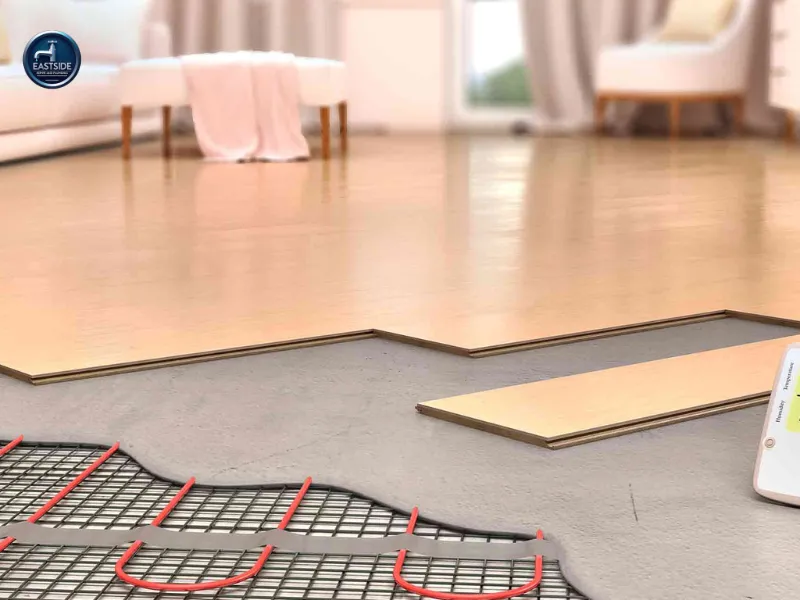
These use electric cables or mats installed beneath the flooring.
Easier to install
Lower upfront cost
Best for small areas (bathrooms, kitchens)
But… operating costs can be higher depending on electricity rates.
Tip:
Electric systems are great for single-room upgrades. Not always ideal for whole-house heating.
Hydronic (Water-Based) Systems
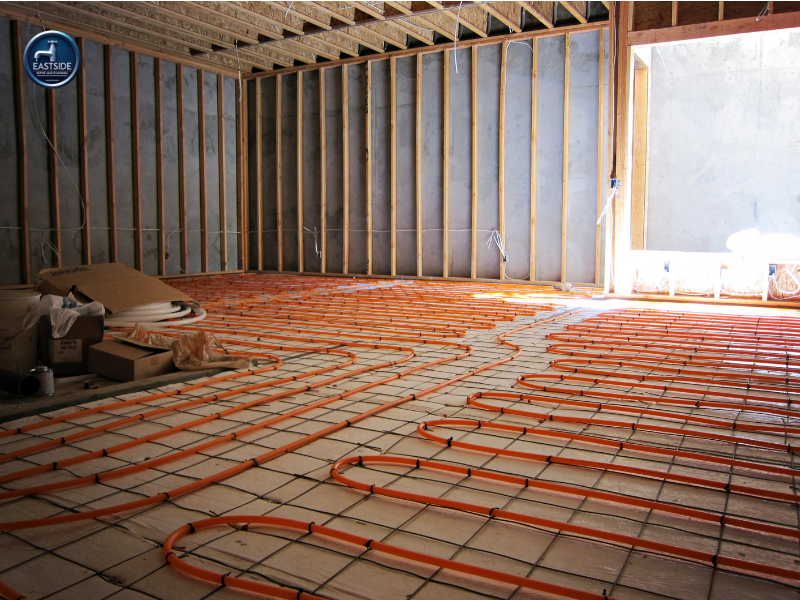
These use heated water flowing through pipes under the floor.
More efficient for large areas
Lower long-term energy cost
Higher installation cost
Hydronic systems are often used in full-home heating setups.
What Affects Radiant Floor Heating Cost
Several things influence pricing:
Type of system (electric vs hydronic)
Size of the space
Flooring material (tile vs wood, etc.)
Labor and installation complexity
The in-floor heating system cost isn’t just about materials. Labor plays a big role too.
Radiant Floor Heating Installation: What to Expect
Installation isn’t complicated but it’s not something you rush either.
Installation in New Construction vs Retrofit
This matters more than people think.
New Construction → Easier, cheaper, cleaner install
Retrofit (existing home) → More labor, higher cost
In retrofits, floors may need to be removed and reinstalled. That adds time. And cost.
Step-by-Step Installation Process
Here’s how it usually goes:
Subfloor preparation
Installing heating elements (cables or pipes)
Connecting system to power or boiler
Testing system
Installing finished flooring
Example:
A bathroom installation might take 1–2 days. Whole-home systems? Much longer.
Common Installation Challenges
Uneven subfloors
Limited floor height clearance
Compatibility with existing flooring
These don’t stop the project but they can increase the radiant floor heating cost.
Benefits of Radiant Floor Heating (Why Homeowners Choose It)
Let’s be honest. The cost is higher than traditional systems. So why do people still choose it?
Because the benefits are noticeable.
Consistent and Even Heating
No cold spots. No drafts.
Heat rises evenly from the floor. The entire room feels comfortable not just one area.
Energy Efficiency
Radiant systems use less energy to maintain temperature.
Lower energy bills (especially with hydronic systems)
Better heat retention
Quiet Operation
No noise. No vents. No airflow.
Just… heat.
Improved Air Quality
No dust circulation. No allergens blowing around.
Good for people with allergies or respiratory issues.
In-Floor Heating System Cost Breakdown
Now, let’s get specific.
Average Cost Range
Electric systems → $8 to $15 per sq ft
Hydronic systems → $15 to $30 per sq ft
Full home installation can range from:
$10,000 to $35,000+
Depends on size and complexity.
Where the Money Goes
Materials (cables, pipes, controls)
Labor (installation, flooring removal)
Equipment (boilers for hydronic systems)
Reality Check:
Labor often makes up a big part of the total cost.
Ways to Save on Installation
Install during new construction
Limit system to key areas (bathrooms, kitchens)
Choose system type carefully
Don’t overbuild. Start where it matters most.
Is Radiant Floor Heating Worth It?
Short answer… depends.
When It Makes Sense
You’re building a new home
You want long-term energy savings
You prefer consistent heating
When It Might Not Be Ideal
Tight budget
Small project with no major renovation
Existing HVAC works fine
Tip:
It’s not always about “cheapest.” It’s about long-term value.
Why Homeowners Choose Eastside Repipe and Plumbing
When it comes to something like radiant floor heating, most homeowners aren’t just looking for someone to install it. They want it done right. No shortcuts. No guessing halfway through the project.
That’s usually why they end up working with teams like Eastside Repipe and Plumbing.
They focus on proper planning first
Not every home is the same. Getting the layout and system right from the start avoids problems later.Experience with different system types
Electric or hydronic—it’s not treated like a one-size-fits-all job.Clear communication throughout the project
No confusing explanations. Just what’s happening, what it costs, and what to expect next.Attention to detail during installation
Radiant systems sit under your floors. If something’s off, fixing it later isn’t easy. So it needs to be done carefully the first time.Reliable, consistent work
Not rushed. Not patched together. Just done the way it should be.
At the end of the day, most homeowners just want peace of mind. A system that works, lasts, and doesn’t turn into a problem later. That’s really what it comes down to.
FAQs
1. How much does radiant floor heating cost in 2026?
Costs range from $8 to $30 per sq ft depending on system type and installation complexity.
2. Is radiant floor heating expensive to run?
Hydronic systems are generally energy-efficient, while electric systems may cost more depending on usage.
3. Can radiant floor heating be installed in existing homes?
Yes, but installation is more complex and may require floor removal.
4. What flooring works best with radiant heating?
Tile and stone work best, but engineered wood and some vinyl options also work.
5. How long does radiant floor heating last?
Most systems last 20–35 years or more with proper installation and maintenance.
Conclusion
Radiant floor heating is one of those upgrades that feels small at first but makes a big difference over time. It provides consistent heat, improves comfort, and can even reduce energy costs in the long run.
The radiant floor heating cost may seem high upfront, but understanding system types, installation requirements, and long-term benefits helps you make a smarter decision. Whether you’re planning a renovation or building new, knowing what to expect makes the process a lot easier.
Get Expert Radiant Floor Heating Installation
Thinking about installing radiant floor heating?
Contact Eastside Repipe and Plumbing today or call us at (425) 331-2011 for a free estimate, expert advice and professional installation. We’ll help you plan, budget, and install your system the right way.
