Galvanized Pipe Replacement | Eastside Repipe
If your Kirkland home was built before 1980 and still has original plumbing, galvanized pipe replacement is likely overdue. Galvanized steel pipes last 40 to 70 years. Most are past that. They corrode from the inside out, contaminate drinking water with rust and lead, and eventually fail often inside finished walls where you can't see it happening.
At Eastside Repipe and Plumbing, we handle galvanized pipe replacement across Kirkland, Bellevue, Redmond, Issaquah, and the greater Seattle area every week. This guide covers the warning signs, health risks, replacement options, and what the process looks like so you know exactly what you're dealing with.
Key Takeaways
Galvanized pipes last 40 to 70 years. Most pre-1980 homes are overdue.
Corroding pipes contaminate drinking water with rust and lead deposits.
Warning signs: rust-colored water, low pressure, recurring leaks.
PEX is the most practical replacement material for older finished homes.
Waiting costs more. A failed pipe becomes a water damage problem fast.
What Are Galvanized Pipes and Why Do They Fail?
Galvanized steel pipes are iron pipes coated with zinc to prevent rust. They were the residential plumbing standard from the early 1900s through the late 1970s. The zinc coating works well for decades, but eventually breaks down. When it does, the steel underneath corrodes from the inside out, building up rust and mineral deposits that narrow the pipe, restrict flow, and weaken the joints until they start to fail.
Why Galvanized Pipes Are a Problem in Kirkland WA and Eastside Homes
Kirkland, Bellevue, Redmond, and surrounding Eastside neighborhoods have a high concentration of homes built between the 1950s and 1970s, many still running on original galvanized plumbing. Kirkland specifically has mid-century neighborhoods like Juanita, Bridle Trails, and Rose Hill where these pipes are common and largely unaddressed.
Washington's soft municipal water makes things worse. Soft water is more aggressive at leaching minerals from pipe walls, which speeds up the corrosion process over decades of use.
The Lead Contamination Risk
Galvanized pipes don't contain lead themselves, but older homes often have lead solder at the pipe joints. As galvanized pipes corrode, rust particles can trap and release lead from those joints into your water. The U.S. Environmental Protection Agency states there is no safe level of lead exposure for children. If your home was built before 1986 and still has galvanized pipes, this is a real risk.
How Long Do Galvanized Pipes Last?
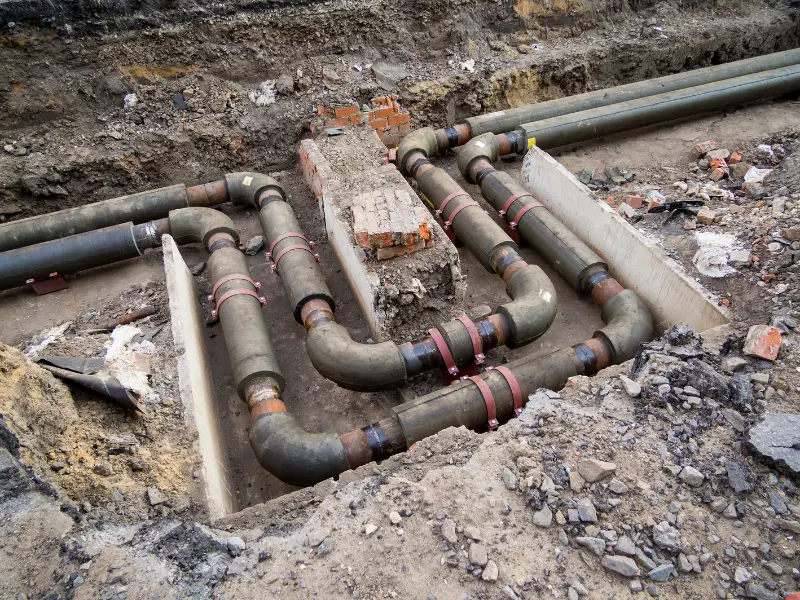
Galvanized pipes typically last 40 to 70 years. According to the International Association of Certified Home Inspectors, performance varies based on water chemistry and installation quality. In Washington, most galvanized pipes installed before 1975 are at or past the end of their expected service life. A pipe that looks fine from the outside can be significantly narrowed and weakened on the inside. You won't know without a camera inspection.
How to Tell If Your Pipes Are Past Their Prime
You can't see inside your walls, but the symptoms show up if you know what to look for.
What Are the Signs Your Galvanized Pipes Need Replacement?
Two or more of these together is a strong signal your system needs a professional assessment.
Rust-Colored or Brown Water
Brown or orange water from the tap means corrosion particles are breaking off inside the pipe. It usually shows up first thing in the morning after water has been sitting still. It's not just unpleasant it means the pipe interior is actively deteriorating.
Low Water Pressure Throughout the House
Pressure dropping at a single fixture is a localized issue. Pressure dropping throughout the entire house points to narrowing inside the supply lines from years of corrosion buildup. It gets worse over time, not better.
Recurring Leaks in Multiple Locations
One leak in one spot is a joint failure. Multiple leaks across the house in a short period means the corrosion is system-wide. That's not a patching problem that's a full replacement situation.
Visible Corrosion on Exposed Pipes
Check your basement, crawl space, or utility room. Surface corrosion, orange discoloration, and flaking at the joints on exposed pipes reflect what's happening inside the walls too.
Home Built Before 1980
If your home was built before 1980 and has never been repiped, that alone warrants a professional camera inspection. Not every home has failed pipes yet, but every home at that age deserves a look.
Should You Replace Galvanized Pipes With PEX?
For most Kirkland homeowners, replacing galvanized pipes with PEX is the most practical choice. Here's why PEX has become the go-to replacement material for older homes across the Eastside:
Flexible installation — PEX bends around corners without extra fittings. In older Kirkland homes with plaster walls and tight crawl spaces, it routes through finished walls with far less cutting than copper requires. Same goes for older homes in Bellevue, Redmond, and Issaquah.
Corrosion resistant — Unlike galvanized steel, PEX won't rust or build up mineral deposits on the interior walls. It handles Washington's soft municipal water well.
Freeze resistant — PEX expands under freezing pressure and recovers. Copper cracks. For homes with pipes in unconditioned spaces, this matters.
Longer lifespan than galvanized — PEX lasts 25 to 40 years, which covers most homeowners' remaining time in the property.
Less disruption — No soldering, fewer cuts, faster installation. Most jobs are done in one to two days.
Copper is a solid alternative if you want a 50 to 70 year lifespan and your walls are already open during a renovation. For a full side-by-side breakdown, see our PEX vs Copper Repiping Guide.
What About Replacing Just the Problem Sections?
This comes up a lot. A pipe fails in one spot and the homeowner asks if we can patch just that section. Usually no. If one section of a galvanized system has failed, the rest is at a similar stage of corrosion. Patching one spot means the next failure is likely only months away. A full galvanized pipe replacement addresses the system not just the symptom.
Galvanized Water Pipe Replacement in Kirkland WA: What the Process Looks Like
Galvanized water pipe replacement is a structured job done in clear steps. Here's what to expect.
Step 1: On-Site Assessment and Camera Inspection
A licensed plumber walks through the home, checks water pressure, inspects visible pipes, and runs a camera through the lines to see the interior condition. This determines the scope and best routing for the new pipes.
Step 2: Permit Pulling
Washington state requires permits for whole-home repiping. A licensed plumber handles the application. The Washington State Department of Labor and Industries requires all plumbing contractors to hold a valid state license. Always verify credentials before work begins.
Step 3: Installation
New PEX lines run from a central manifold to each fixture in continuous lengths. Access points are cut where needed, but PEX minimizes the number of cuts required. Old galvanized lines are removed as the new system goes in.
Step 4: Pressure Testing and Inspection
The plumber pressure tests the full system before closing walls. A building inspector signs off on the permitted work.
Step 5: Restoration
Access points are patched. Most whole-home repipes are completed in one to two days with water restored the same day.
Are Galvanized Pipes Dangerous?
Yes. Corroding galvanized pipes release rust particles into the water supply and, in homes with lead solder at the joints, can release lead. The Washington State Department of Health identifies corroding household plumbing as a primary cause of lead and sediment contamination in residential water.
Children and pregnant women are most vulnerable. If your home has galvanized pipes and young children, a water quality test and professional assessment should not wait. Beyond water quality, a pipe that fails inside a finished wall can cause serious water damage before it's even noticed.
Frequently Asked Questions
1. How long do galvanized pipes last?
Galvanized pipes last 40 to 70 years. Most homes built before 1980 with original plumbing are at or past that range.
2. Are galvanized pipes dangerous?
Yes. They release rust particles into the water supply and can leach lead from older solder joints into your drinking water. The EPA states there is no safe level of lead exposure for children.
3. What is the galvanized pipe replacement cost estimate?
It varies by home size, layout, and material. According to HomeAdvisor, whole-home repiping nationally averages $1,500 to $15,000. Eastside Repipe and Plumbing offers free on-site estimates for an accurate number specific to your home.
4. Should I replace galvanized pipes with PEX or copper?
PEX for most older homes with finished walls. It's flexible, corrosion resistant, and installs with minimal disruption. Copper if you want a 50 to 70 year lifespan and walls are already open. See our PEX vs Copper Repiping Guide.
5. How long does galvanized pipe replacement take?
One to two days for most whole-home jobs. Water is restored the same day in most cases.
6. Can I stay in my home during galvanized pipe replacement?
Yes. Water is shut off during active work and restored at the end of each day.
7. What happens if I don't replace my galvanized pipes?
Corrosion narrows the pipes, pressure drops, and eventually the pipes fail. A burst pipe inside a wall causes water damage that costs far more than a planned repipe.
8. How do I know if my home has galvanized pipes?
Check exposed pipes in your basement or crawl space. Galvanized pipes are grey, dull, and slightly magnetic. Scratch the surface with a key and you'll see silver-grey metal underneath. A licensed plumber can confirm during a walkthrough.
Why Washington Homeowners Choose Eastside Repipe and Plumbing
Galvanized pipe replacement is a job that requires experience with older homes, knowledge of Washington's specific plumbing conditions, and a team that does this work every single week.
Eastside Repipe and Plumbing has replaced galvanized pipe systems in homes across Kirkland, Bellevue, Redmond, Issaquah, and the greater Seattle area. We know what 60-year-old galvanized steel looks like on the inside. We know how to route PEX through a 1965 Kirkland home in Juanita or Rose Hill with plaster walls and a cramped crawl space without turning the job into a demolition project. And we give you a clear, honest assessment before we start. Homeowners across the Eastside trust us because we show up, do the job right, and don't leave surprises behind.
Every job includes a full pressure test, proper permits, and a walkthrough of what was completed and why. No vague invoices, no surprise charges, no cutting corners on the inspection sign-off. Just clean work done right the first time.
Conclusion
Galvanized pipe replacement isn't optional for homes with original plumbing that's 40 or more years old. It's a matter of when, not if. The signs are usually there well before the system actually fails rust-colored water, dropping pressure, recurring leaks. Acting on those signs before a failure happens is the difference between a planned, manageable repipe and an emergency water damage situation.
PEX is the right replacement material for most older Washington homes. It's durable, flexible, and purpose-built for exactly this kind of job. Get a proper assessment, understand your options, and get it done right.
Schedule Your Free Galvanized Pipe Assessment Today
If your Kirkland home was built before 1980 and you haven't had your plumbing assessed, now is the time. Eastside Repipe and Plumbing offers free on-site assessments and estimates across Kirkland, Bellevue, Redmond, Issaquah, and the greater Seattle area with no pressure and no obligation.
Contact Eastside Repipe and Plumbing or call us at 425-331-2011 to schedule your free estimate. We'll inspect your pipes, tell you exactly what's going on, and give you a clear plan for getting it fixed.
