What Causes Corroded Pipe Repair in Redmond, WA Homes?
Eastside Repipe And Plumbing handles corroded pipe repair throughout Redmond, WA — from copper pinhole leaks in Overlake homes built in the 1970s and 1980s to galvanized steel supply line failures in older Downtown Redmond construction. As the best corroded pipe repair plumbers near Redmond WA, we identify the actual cause of corrosion before recommending a repair or replacement approach, because fixing the symptom without addressing the root cause means the problem returns.
By Ramin Shahbaziasl, Owner & Lead Plumber · Last updated July 2026
What Causes Pipes to Corrode in PNW Homes?
The cause of pipe corrosion in Redmond homes isn't random — it's closely tied to which water supply feeds your address and what pipe material your home was built with. Both factors create predictable corrosion patterns we see repeatedly across the Eastside.
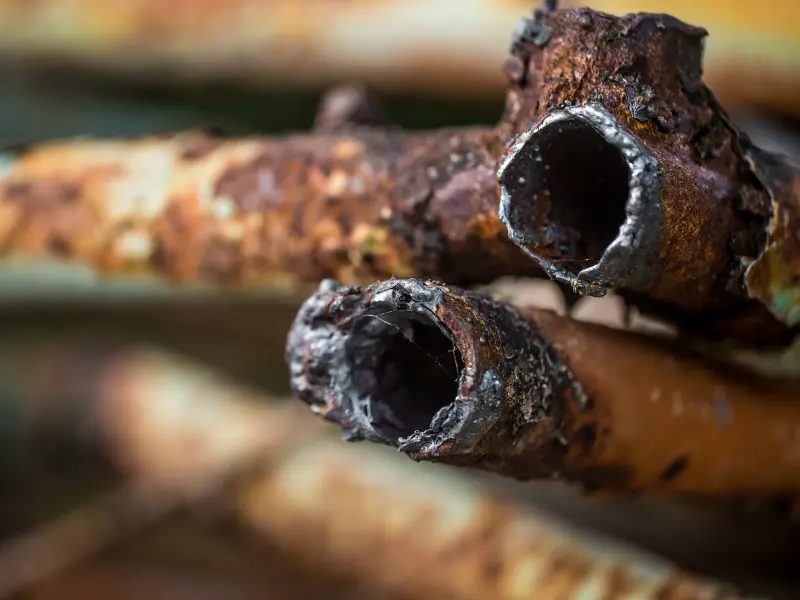
Tolt Reservoir water and copper pinhole leaks. Redmond residents west of the Sammamish River — including Overlake, the Education Hill neighborhoods near 148th Ave NE, and the Redmond Ridge and Trilogy communities — receive Tolt Reservoir surface water from the Cascades. That water is notably soft, around 1.2 grains per gallon, and slightly acidic after treatment. Counterintuitively, soft water is more corrosive to copper than hard water. Hard water deposits a thin mineral scale on the interior of copper pipe that acts as a protective barrier; soft water never forms that layer. Instead, the slightly acidic Tolt water attacks the copper surface directly over years of contact. The result is Type I pitting corrosion: concentrated pinholes through the copper pipe wall, typically appearing first on the undersides of horizontal hot water runs. A 1978 Overlake home with original copper is now running 48-year-old pipe through Tolt water — that's the math behind the pinhole leak pattern we see across those neighborhoods.
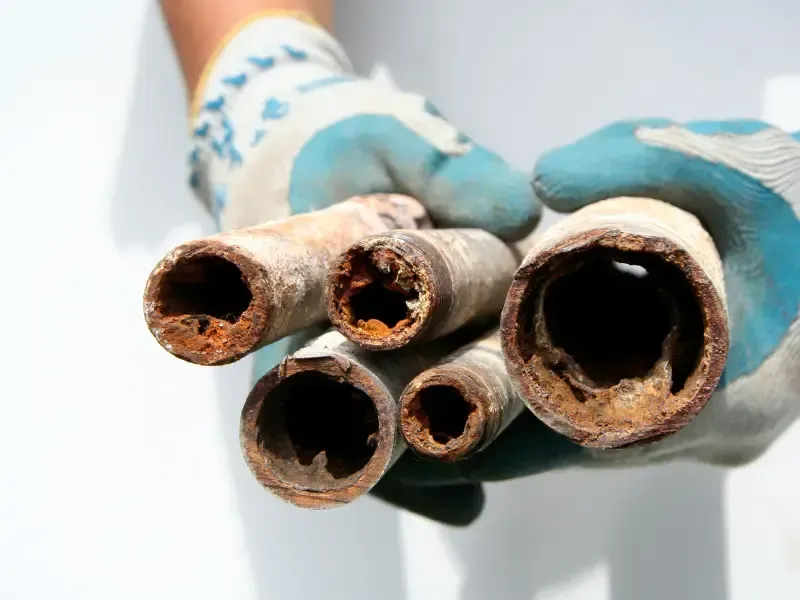
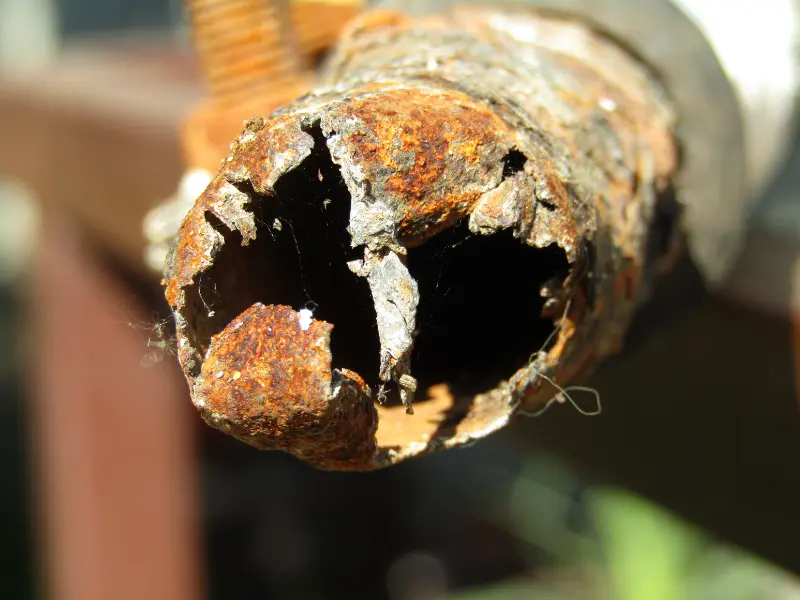
Groundwater and galvanized steel corrosion. Downtown Redmond, Grass Lawn, and the areas east of the Sammamish River draw from a local aquifer — groundwater that's harder (around 6 grains per gallon) and carries higher dissolved oxygen content. Harder water is gentler on copper, but dissolved oxygen is aggressive toward galvanized steel. Homes built between the 1950s and mid-1970s often have original galvanized steel supply lines. Inside these pipes, the zinc coating corrodes first, then the steel beneath it. The interior narrows as rust accumulates, pressure drops, and sections fail. The rust-colored water and pressure loss in older Downtown Redmond homes are the visible end stages of this decades-long process.
Flux residue and dissimilar metal joints. Improper flux removal at solder joints and dissimilar metal connections without a dielectric union both accelerate localized corrosion at the fitting level. We find these regularly on corroded plumbing repair calls in King County WA homes with multiple generations of plumbing patches.
Are Corroded Pipes Dangerous, and How Do I Know If Mine Are?
Whether corroded pipes are dangerous to drink from depends on the material and the severity of corrosion. The risks differ significantly by pipe type.
Galvanized steel: As the zinc coating erodes and internal rust builds up, particles enter the water supply. Elevated iron levels in drinking water from corroded galvanized supply lines are a real health consideration — the water takes on a rust color, metallic taste, and odor that are warning signs the system needs attention. Serious galvanized corrosion can also leach manganese and other minerals from the pipe material. Pipe corrosion plumbers on the Eastside Seattle market see this most frequently in older Redmond and Kirkland homes that have never been repiped.
Copper pinholes: A pinhole leak is primarily a structural failure, not a direct water-quality risk from the pipe material. The real hazard is the moisture — water leaking inside walls causes mold, framing damage, and subfloor rot that can go undetected for months. Pre-1986 copper with lead-solder joints is a separate concern worth testing for lead.
How to recognize the signs: Common indicators: rust-colored water (galvanized), wet spots in drywall or ceilings (copper pinhole), whole-house pressure drop (galvanized narrowing), and unexplained water bill increases. Blue or green staining in toilet tanks indicates copper leaching — active corrosion somewhere in the supply system. These are the first things we assess on every corroded plumbing repair call in King County WA.
Can Corroded Pipes Be Repaired or Must They Be Replaced?
The answer varies significantly by material type, corrosion extent, and location in the system. Here's how we make the decision as the top rated old plumbing repair contractors in the Seattle Eastside:
Isolated copper pinhole: A single pinhole in an otherwise sound section of copper pipe can be repaired with a push-fit repair coupling — fast, non-invasive, and appropriate as a permanent fix when the surrounding pipe is in good condition. If a pressure test shows the rest of the line is sound and the pinhole is isolated, this is the right call. If a home has had two or three pinhole repairs already, the pattern suggests the pipe chemistry is causing failures throughout the system and a targeted repair just delays the next one.
Section replacement: When corrosion is localized to a defined section — a specific run of galvanized under a sink, or a 10-foot stretch of copper on a hot water line that shows multiple failure points — we cut out that section and replace it with new copper or PEX. This is corroded pipe repair in its most practical form: addressing the damage without the scope and cost of a whole-home repipe.
Epoxy pipe lining: Corroded pipes can be epoxy lined as an alternative to physical replacement in specific circumstances. Epoxy coats the pipe interior with a cured resin layer that stops corrosion and seals minor pitting — appropriate for structurally intact supply lines with thinning walls, not for active pinholes, heavy rust deposits, or severely narrowed galvanized interiors. We assess epoxy lining viability at the inspection.
Full repiping: When corrosion is widespread — multiple pinhole failures, whole-house galvanized supply lines, or a system with pre-1986 lead-solder joints — targeted repair is no longer cost-effective. Our whole-home repiping services replace the full supply system in a single project, eliminating the ongoing cost of individual repairs and restoring reliable water quality and pressure throughout the home. For an old copper pipe pinhole leak pattern in a Bellevue area or Redmond home, we give homeowners an honest assessment of whether repair or full replacement is the better financial decision.
How Much Does Corroded Pipe Repair Cost in Redmond?
Corroded pipe repair cost in King County WA depends on what's failing and how accessible it is. A single copper pinhole on an exposed supply line costs considerably less to repair than a galvanized section buried under a concrete slab or running through finished cabinetry. The key variables:
Pipe accessibility. Exposed pipes in basements, crawl spaces, or utility areas are the most straightforward. Pipes inside finished walls require opening drywall, which adds restoration work to the repair scope.
Material and scope. Replacing a 5-foot section of galvanized steel is a different project than patching a pinhole. Epoxy lining of a full supply system requires specialized equipment and staging time.
Water shutoff and restoration. Every corroded plumbing repair requires a water shutoff. For whole-house shutoffs, we work efficiently to minimize the time the home is without water and restore service the same day in most cases.
Eastside Repipe And Plumbing provides free estimates for all corroded pipe repair projects in Redmond and across King County WA. Call 425-331-2011 and we'll assess the pipe material, corrosion extent, and access conditions before providing a firm quote. For a comprehensive reference on what the repair decision involves, our general corroded pipe repair guide covers the repair method options in more detail.
Which Redmond Homes and Neighborhoods Are Most Affected?
Which contractor handles pipe corrosion in older Redmond homes most commonly serves these neighborhoods and construction eras:
Overlake (1970s–1990s construction): The densest concentration of copper pinhole leak calls we receive. Original copper supply lines, Tolt water, 35–55 years of service life.
Downtown Redmond and Grass Lawn (1950s–1970s construction): Galvanized steel supply lines at or past end of life. Rust-colored water and pressure loss are the primary presenting symptoms.
Education Hill (1980s–2000s): Copper lines approaching pinhole failure age on the west/Tolt side; mixed galvanized and copper on the east/groundwater side.
Redmond Ridge and Trilogy (2000s+): PEX-plumbed; not a corrosion concern. Calls from these neighborhoods are typically for other plumbing issues.
We also handle corroded plumbing repair throughout Kirkland, Bellevue, and Sammamish. For the full picture of our specialized plumbing services and our Redmond plumbing page, those pages have detailed service listings. If your home's water quality concerns suggest filtration may also be worth considering, see our Redmond water filtration guide.
Frequently Asked Questions
1. What causes pipes to corrode in PNW homes?
Two main factors: water chemistry and pipe material age. Tolt Reservoir water (serving west Redmond and Overlake) is soft and slightly acidic — conditions that accelerate copper pitting and pinhole leaks by preventing the mineral-scale protective layer that forms in hard-water markets. Groundwater (serving Downtown Redmond and east of the Sammamish River) has higher dissolved oxygen, which corrodes galvanized steel supply lines from the inside out. Both patterns are well-documented in the Seattle Eastside and predictable by neighborhood once you know which water supply feeds the address.
2. Are corroded pipes dangerous to drink water from?
It depends on the material. Galvanized steel corrosion introduces iron and rust particles into drinking water — noticeable as discoloration, metallic taste, and odor, and worth addressing promptly. Copper pinholes are primarily a structural leak risk rather than a direct water-quality hazard, though homes with pre-1986 copper plumbing using lead-solder joints should have their water tested for lead. If you're seeing rust-colored water or have decades-old galvanized supply lines, a plumbing inspection is the appropriate next step.
3. How do I know if my pipes are corroded?
The most reliable indicators: rust-colored or discolored water, significant whole-house pressure drop, wet spots in drywall or ceilings without an obvious cause, blue or green staining in toilet tanks or at drains, and a higher-than-usual water bill with no apparent increase in usage. Any one of these warrants a plumber inspection. A pressure test and visual assessment of accessible pipe sections will confirm the material type and corrosion extent.
4. Can corroded pipes be epoxy lined instead of replaced?
Yes, in the right circumstances. Epoxy pipe lining is appropriate for structurally intact supply lines with mild interior corrosion or thinning walls. It's not appropriate for pipes with active pinholes, heavy internal rust deposits, or galvanized lines with significantly narrowed interiors. We evaluate epoxy lining as an option during the inspection and recommend it when it's the right call — not as a universal alternative to replacement.
5. How long do plumbing pipes last in PNW homes?
Shorter than national averages, in most cases. Copper supply lines last 50–70 years nationally but often 30–50 years in PNW soft-water environments due to accelerated pitting corrosion. Galvanized steel lasts 20–50 years nationally but tends toward the shorter end in the Pacific Northwest because of higher dissolved oxygen content in local water sources. PEX — installed in most Eastside Seattle new construction since the late 1990s — is largely corrosion-resistant and should last 40–80+ years under normal conditions. If your home was built before 1990 and has never been repiped, a plumbing inspection is a worthwhile investment.
Contact Eastside Repipe And Plumbing for a free corroded pipe repair assessment in Redmond or anywhere across King County and the Eastside.
Visit or Call Us
Eastside Repipe And Plumbing 12005 NE 12th St # 29 Bellevue, WA 98005 Phone: 425-331-2011 Hours: Monday–Saturday, 8:00 AM–5:00 PM
Serving Redmond and the Eastside Seattle area including Overlake, Education Hill, Grass Lawn, Kirkland, Bellevue, Sammamish, and all of King County, WA.
