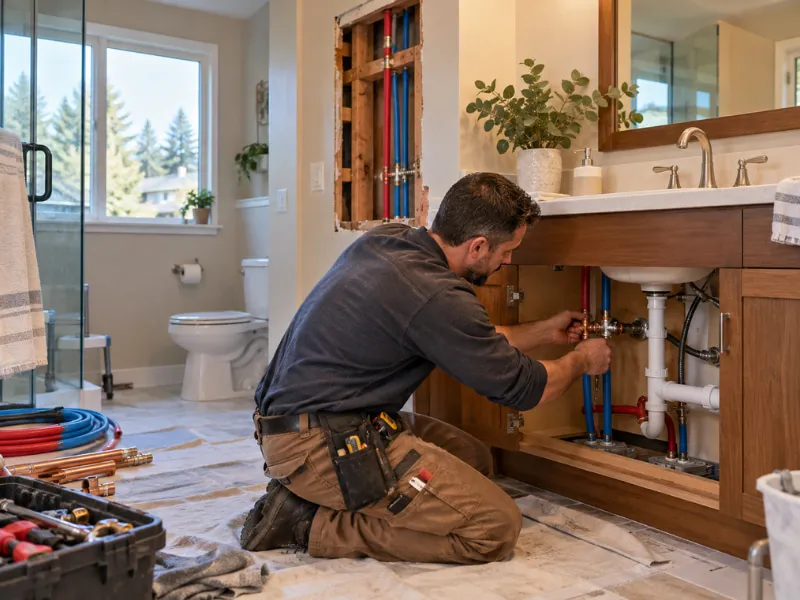
When Should You Repipe House Plumbing In Redmond, WA?
You should repipe house plumbing in Redmond, WA if your pipes are polybutylene, galvanized steel, or older copper that is continually leaking in different rooms. One leak can be repaired. At the point when failures happen regularly or the pipe material is known to fail, it is more cost-effective and less risky to replace the whole plumbing system than attempting to chase down and repair every leak within a wall.
By Ramin Shahbaziasl, Owner and Lead Plumber · Last updated October 21, 2026
What should you check before you repipe house plumbing?
Check three things first: material of the pipe, mixing of materials, and condition of the mainline. Taken all together, it will define what kind of repiping you need: a complete replacement, a section replacement, or repair.
The pipe at your water heater. The short runs above the tank are the easiest pipes to see, and they usually match the rest of the house.
Mixed materials. Many Eastside homes had one bathroom remodeled with new pipe while the rest still runs on the original. Every spot where two materials meet is a weak point.
The main line from the meter. If it's as old as the house, price it at the same time.
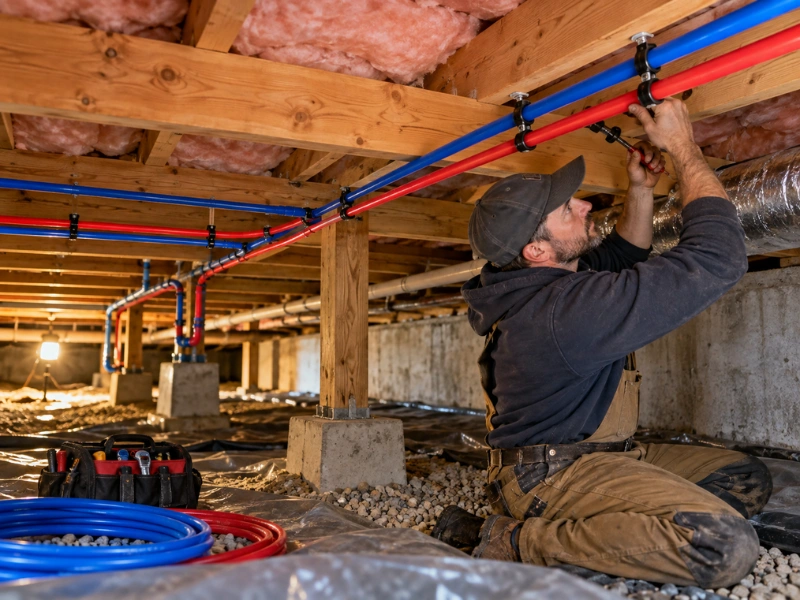
Crawlspaces help a lot here. Many homes in Redmond and on the Sammamish Plateau sit over one, so a plumber can trace most lines without cutting holes. In turn, that access can noticeably lower labor costs.
Why does polybutylene pipe replacement matter in 1980s and '90s homes?
Polybutylene pipe replacement is an important issue because this type of plastic degrades from the inside, often giving no visible sign that it is about to fail. Builders used this type of plastic extensively between the late 1970s and mid-1990s because it was inexpensive and quick to install.
Here's the problem. Disinfectants in treated city water slowly attack the plastic and its fittings. As a result, the pipe turns brittle and cracks. Then one day a fitting lets go, and a soaked ceiling can follow within minutes.
Copper usually warns you with a slow drip. Polybutylene, on the other hand, tends to go all at once. Home inspectors often flag it, too, which can complicate a sale.
What makes galvanized pipe replacement different from other repipes?
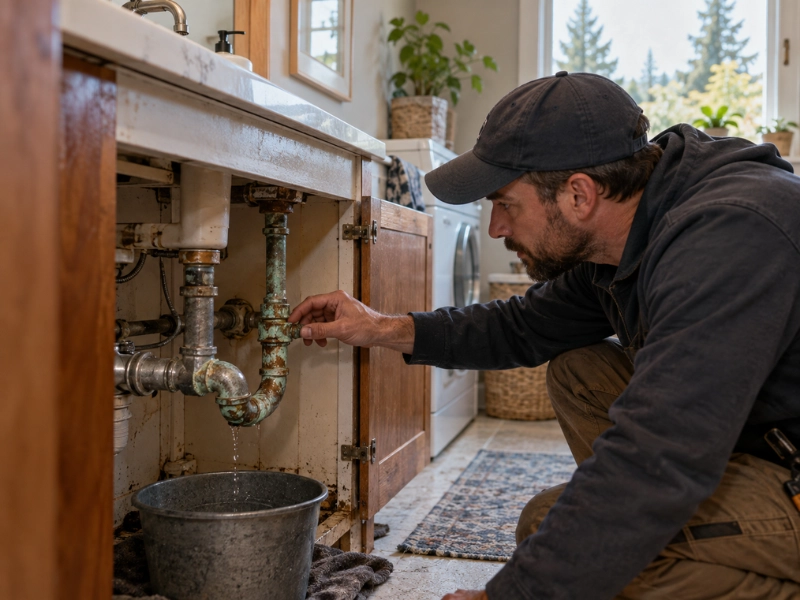
Galvanized pipe replacement is different because the main problem is slow clogging, not sudden bursting. These steel pipes were coated in zinc, and once that coating wears away, rust starts building up on the inside walls.
That buildup narrows the pipe like plaque in an artery. Consequently, pressure drops and the threaded joints corrode through first. It's most common in homes built before the 1970s.
Some houses were only partly updated decades ago. For example, a home might have copper upstairs and galvanized hidden downstairs. Our corroded and galvanized pipe work starts by finding those leftover runs, since one old section can keep sending rust into new lines.
Which pipe materials last longest in Eastside homes?
Copper and CPVC usually last the longest, PEX is close behind, and polybutylene has the shortest and least predictable life. A common search is how long do house pipes last, and the honest answer is that material matters more than age.
Pipe material | Common in homes built | Typical service life | How it usually fails |
Galvanized steel | Before the 1970s | 40 to 60 years | Rust buildup, low pressure, brown water |
Copper | 1960s onward | 50 to 70 years | Pinhole leaks, green corrosion at joints |
Polybutylene | Late 1970s to mid-1990s | Unpredictable | Brittle pipe and fittings, sudden bursts |
CPVC | 1980s onward | 50 to 75 years | Turns brittle, cracks when bumped |
PEX | Late 1990s onward | 40 to 50+ years | Fitting failures, sun damage if exposed |
Still, treat these as ranges. Water chemistry, install quality, and past freezes all shift the number.
What drives whole house repipe cost on the Eastside?
Whole house repipe cost comes down to four things: fixture count, access, material, and the city permit. People searching for the cost to repipe homes near Redmond and Sammamish Washington often find huge national ranges that average very different houses.
Fixture count. Every sink, toilet, tub, shower, and appliance hookup needs its own run and connection.
Access. Crawlspace runs go faster. In contrast, finished ceilings in a two-story home mean more openings and more patching.
Material. Copper costs more to buy and takes longer to install than PEX.
Permit. Redmond charges by the fixture for this kind of work.
That last item surprises people. According to Redmond's 2026 plumbing fee schedule, replacing water piping carries a $140.71 base fee plus $97.08 per fixture, with a 4% technology surcharge on top. So a home with 10 fixtures would pay roughly $1,156 in permit fees alone. Furthermore, reinspections cost $192.03 an hour, so getting it right the first time matters.
If you've typed how much does it cost to repipe a house into a search bar, that's why the answers vary so much.
What happens during a whole house repipe?
A whole house repipe moves through four stages: planning, new lines, switchover, and inspection. If you've been searching for whole house repiping Redmond WA, here's how the work usually unfolds.
Walkthrough and plan. Every fixture gets mapped, access points get marked, and floors and furniture get covered.
New lines in. New pipe runs alongside the old system, which keeps supplying water in the meantime.
Switchover. Fixtures move to the new lines in sections, so the water is off for hours rather than days.
Pressure test and inspection. The new system is pressure-tested, and then the city inspector signs off before any walls close up.
Old pipe behind finished walls is usually disconnected and left in place, since removing it means far more drywall work. See how we handle each stage on our whole-house repiping service page.
How do you check a plumber before you sign?
Check that the company is a registered contractor in Washington and that the plumbers on your job hold a current state plumber certification. Washington L&I's Verify a Contractor, Tradesperson or Business tool shows both, along with bond, insurance, and any past infractions.
Beyond that, a few quick questions will tell you a lot:
Who pulls the permit and schedules the inspection?
Is drywall patching included, or is it a separate bid?
Will the shutoff valves under sinks and toilets be replaced too?
Get every answer in writing, because cheap bids often leave these items out.
Frequently asked questions
1. How do you know when a house actually needs repiping?
A house typically needs repiping when multiple leaks begin appearing in the system and/or the water coming out of the fixtures begins to change somehow. This could mean the water turns brown, there's a drop in pressure at multiple fixtures, metallic or salty taste, or the fittings are full of a crusty residue. If the house has had 3 leaks in two years in different areas of the house then the next leak is almost certainly coming very soon.
2. Does a 1980s Redmond home still have polybutylene pipe in it?
Some homes built in the 1980s did have PB, but many were repiped during the decade and possibly partially. The only way to be entirely certain is to see the pipe, and inspect it. Exposed pipe near the water heater, under sinks, in the crawlspace, and the pipe running from the meter to the house's main water line, may indicate what type of pipe is in the walls. PB looks like a gray, flexible plastic pipe that is often stamped with the words PB2110 along its length. Some homes in the city have copper pipe on their main line, from the meter, often in blue or black, making them difficult to see without inspection.
3. What does it cost to repipe a house?
For most people, a whole house repipe in the Seattle area costs somewhere in the range of about $4,000 and $15,000. A small single story home with crawl space access and PEX repiping is on the lower end, while a larger two story home with finished ceiling spaces and copper is on the upper end. A good repipe quote also includes the costs of repair patches, permits, and shutoff valves because those are the largest areas in which quotes vary. We provide free written quotes after a walk-through of the house.
4. Is PEX or copper the better choice for a repipe here?
PEX is the best material for most Eastside repipes, while Copper is a good alternative in a few particular circumstances. PEX is lower in cost, requires fewer wall openings due to its ability to bend, and doesn't split open as readily when frozen from the inside. Copper is useful for exposed plumbing in a remodeling project, or for the sake of preference. Both materials are excellent with proper installation, and can last for decades.
5. Can a house be repiped while the family keeps living in it?
Most of the time, families stay in their home while the plumbers work. The water is shut off at work hours on switch over days, and is generally on again by the end of the work day so that the family can shower or cook dinner. Expect a few noisy sounds in the walls, and a number of small openings in the walls where the plumbers have to work. If you work in the home or have pets, make sure they will have access to certain rooms for a period of time every day.
6. Do I need a permit to repipe a house in Redmond?
Yes, a plumbing permit is required in Redmond to replace water piping, and a city inspection must pass on the final day of work. Most often, licensed plumbing contractors will pull the permit for a customer and book the inspection, so it should come up on the invoice. If a bid doesn't mention the permit, ask them about it, as an unpermitted plumbing job can come up in later inspections, such as on a home sale.
7. How long does a whole house repipe take?
Most whole house repipes can be completed in anywhere from two to five work days, not including the day of the inspection and any patching work. A small one bath home with crawlspace access could be quicker. Patching and painting are usually done after the city inspector finishes his or her tour of the house.
8. Can you repipe just part of the house instead?
Yes, a partial repipe job can be done in some instances. If the affected area is isolated, such as a kitchen line, a single bathroom, or the main line from the meter, a partial repipe is an option. However, it is a poor choice in the case of PB pipe, as the rest of the system is likely to fail soon as well, being made of the same material. A competent plumber will be able to explain the options to you, depending on your particular circumstance.
Where can you book a free repipe estimate in Redmond?
You can book a free repipe estimate by calling Eastside Repipe and Plumbing at 425-331-2011. We serve homeowners across Redmond and nearby Sammamish, plus the rest of the Eastside. You can also reach us through our contact page.
Visit or Call Us
Eastside Repipe and Plumbing 12005 NE 12th St # 29, Bellevue, WA 98005 Phone: 425-331-2011 Email: [email protected] Service area: Redmond, Sammamish, Bellevue, Kirkland, Issaquah, Mercer Island, Bothell, Renton, and the greater Seattle Eastside
