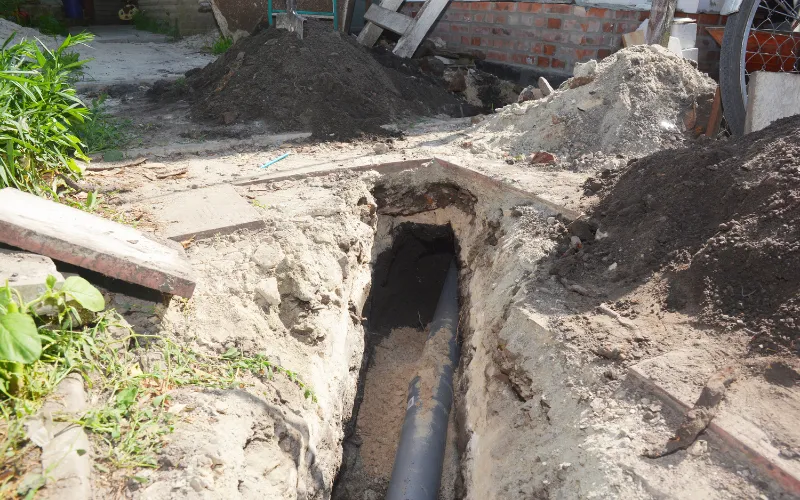
Trenchless Sewer Replacement: How It Works
Sewer line replacement used to mean a backhoe in the yard, torn-up landscaping, and days of disruption before anything was fixed. Trenchless technology changed that. In most cases, the line can be replaced through two small access points rather than a trench running the full length of the pipe.
By Ramin Shahbaziasl, Owner, Eastside Repipe and Plumbing · Last updated October 07, 2025
This guide covers how it actually works, when it applies and when it doesn't, and what it costs compared with traditional excavation.
How It Works
Rather than digging out the old pipe entirely, trenchless methods rehabilitate or replace it from within, using two small access points instead of a continuous trench.
Pipe bursting. A specialized tool breaks apart the old pipe while simultaneously pulling a new one through in its place, following the same path the old line took.
Pipe lining (CIPP, cured-in-place pipe). A resin-soaked liner is inserted into the existing pipe and cured in place, forming a new, seamless pipe inside the old one.
Both methods avoid full-scale excavation. The yard stays largely untouched, the driveway stays intact, and the disruption is a fraction of what traditional trenching involves.
When Trenchless Makes Sense
Repeated blockages or backups
Tree root intrusion
Corrosion or partial collapse in older clay or cast iron pipe
Leaks causing property damage or soil erosion
You want a permanent fix rather than another temporary patch
If your sewer line is more than 40 to 50 years old, it's worth a professional inspection regardless of whether you're seeing symptoms yet.
When it doesn't apply. A pipe that's fully collapsed or severely misaligned may still need partial excavation. This is something a camera inspection establishes before any method is chosen, not something to guess at.

Trenchless vs Traditional Repair
Cost. Traditional repair often looks cheaper upfront. Once landscaping restoration, driveway repair, and downtime are factored in, trenchless frequently costs less overall.
Time. Traditional excavation can take days. Trenchless work is often completed in a single day.
Durability. Modern materials used in trenchless work, including HDPE and epoxy liners, have long service lives when properly installed.
Property impact. Minimal with trenchless. Considerable with traditional trenching.
The upfront number on a trenchless quote can look higher. The total cost, including restoration, is frequently lower.
The Process
Inspection and diagnosis. A camera inspection identifies cracks, root intrusion, or misalignment before anything else happens
Cleaning the line. Hydro jetting clears debris and buildup so the new pipe or liner can be installed properly
Repair or replacement. Pipe bursting or lining, chosen based on what the inspection showed
Final testing. A second camera inspection confirms the new line is sealed and properly aligned
What This Actually Improves
Reduced disruption. Less digging means less soil disturbance and less restoration work afterward.
Better flow. Trenchless pipe interiors are smoother than older, corroded pipe, which reduces friction and the buildup that causes future clogs.
Resale value. A documented, replaced sewer line removes a liability that would otherwise surface during a home inspection.
Permitting. Because it's less invasive, trenchless work is often more straightforward to permit and inspect than a full excavation.
Trenchless Replacement vs Main Line Repair
These get confused, but they're not the same thing.
Main line repair addresses a specific section or blockage within the sewer line, generally a localized fix appropriate for smaller issues.
Trenchless replacement addresses larger-scale damage or full-line deterioration. It's a full replacement of the line's condition rather than a targeted fix.
Choose main line repair for: smaller leaks, isolated clogs, or short sections of damage.
Choose trenchless replacement when: the entire line is old, failing, or structurally unsound.
A camera inspection is what actually determines which situation you're in. Our guide to sewer line repair covers both approaches and how they're diagnosed.
What It Costs
Trenchless pricing depends on depth, pipe diameter, length, and the extent of damage found during inspection. Rather than quote fixed figures that vary enormously by project and go stale over time, the meaningful comparison is total cost: the trenchless rate against traditional excavation plus the landscaping, driveway, and concrete restoration a trench requires.
Get a written quote broken into diagnosis, the work itself, and any restoration, so you're comparing scope rather than just a headline number. Our plumber cost guide reflects current local rates.
Choosing a Contractor
Look for:
Proven experience specifically with trenchless methods; not every plumbing company has the equipment or training
Camera inspection included as standard
Clear, itemized pricing
A stated warranty on both materials and labour
Licensed, insured, and independently verifiable
Ask directly:
Do you perform both pipe bursting and CIPP lining?
What's your typical timeline for a job like mine?
What materials do you use?
Can I see before-and-after footage from previous work?
Hesitation on any of these is worth taking seriously. You can verify any Washington contractor's license, bond, and insurance for free through the state Department of Labor and Industries.
Common Myths, Corrected
"It's only for new homes." The opposite is closer to true. It's specifically well suited to older properties with aging or failing sewer systems.
"It doesn't last." Properly installed trenchless pipe has a long service life, comparable to or exceeding traditionally installed pipe.
"It's always more expensive." The per-project rate can be higher, but once restoration costs are included, total project cost is often lower than traditional trenching.
"It's a gimmick." It's an established method with decades of use in the industry, not a fringe technique.

Signs You Should Have Your Sewer Line Checked
Frequent backups or gurgling sounds
Unexplained wet patches in the yard
Foul odours near drains or the foundation
Slow drains across multiple rooms at once
Mould growth or foundation cracks with no other explanation
Any of these is worth a camera inspection before it becomes an emergency.
Maintenance After Installation
Avoid flushing wipes, grease, or anything that doesn't break down
Schedule a camera inspection every year or two
Keep tree roots trimmed back from the sewer path
Know where your access points are for future inspections
A well-maintained trenchless line typically outperforms a comparably maintained traditional one.
Frequently Asked Questions
What's the lifespan of trenchless sewer replacement?
Properly installed trenchless pipe has a long service life, commonly comparable to traditional replacement, though the exact figure depends on material and soil conditions.
Is trenchless replacement always possible?
No. A fully collapsed or severely misaligned pipe may still require partial excavation. A camera inspection establishes this before any method is chosen.
Can it handle tree root damage?
Yes. The resulting pipe or liner is seamless, which resists root intrusion far better than older jointed pipe.
How long does the work take?
Most residential jobs are completed in a single day, occasionally two, depending on complexity.
Does it work with all pipe materials?
Yes, including clay, cast iron, PVC, and concrete systems, provided the existing pipe is in a condition that can be lined or burst rather than fully collapsed.
Is trenchless more expensive than digging?
The rate can look higher upfront. Once landscaping, driveway, and concrete restoration are factored into a traditional trenching job, trenchless frequently costs less overall.
Get an Inspection
Whether trenchless applies to your situation depends on the actual condition of the pipe, which only a camera inspection can confirm.
Contact us or call 425-331-2011 to schedule one. We handle both trenchless and traditional sewer line work across Bellevue, Kirkland, Redmond, Bothell, Renton, Issaquah, Sammamish, Seattle, and the wider Eastside service area.
