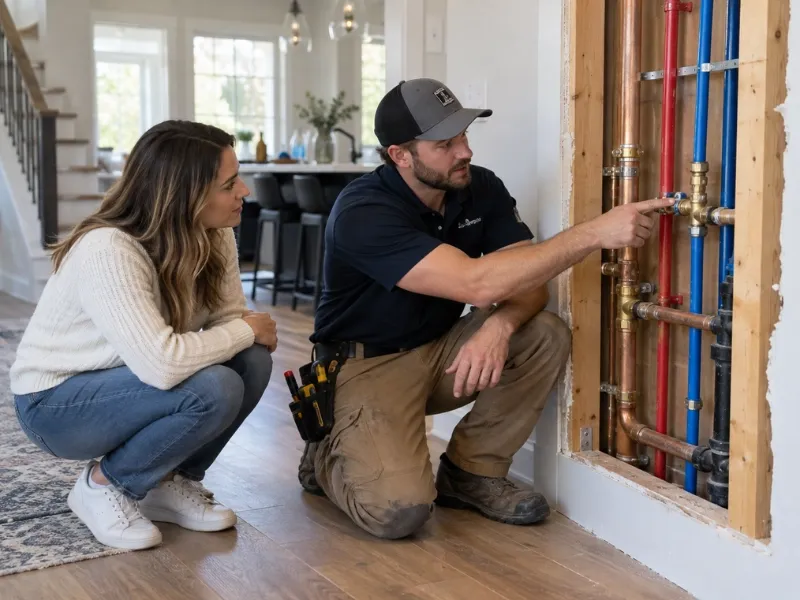
How Do Repipe Specialists Handle Condos And Townhomes?
Condos and townhomes are approached differently by repipe specialists. We'll create a map of who owns which pipes. This will help us plan your job to be considerate of your neighbours, HOA and building water system. The plumbing is not too different to that in a house. However, the approvals, access and timing are very different.
By Ramin Shahbaziasl, Owner and Lead Plumber · Last updated October 29, 2026
What do repipe specialists check first in a condo or townhome?
They'll look at the type of pipe, history of leaks and location of shutoffs to your unit. This will tell them whether it is your fault, the buildings fault or both.
What a good initial visit includes:
Pipe material. Polybutylene, galvanized steel, CPVC and copper each fail in their own way. Mixed materials are a warning sign too.
Leak pattern. One leak in one unit is usually a repair. On the other hand, pinhole leaks in several units on the same line point to a building-wide problem.
Shutoff valves. If your unit has its own working valves, the job can often stay inside your walls. If not, the building's water has to be part of the plan.
Access routes. Closets, ceilings and garages often give the shortest path for new lines, so fewer walls get opened.
This is where many owners searching for how is a condo repipe differ may be surprised. While the piping itself is familiar to any plumber, the rules, neighbors, and shared systems will change the job.
Where does a condo repipe stop and the building's plumbing start?
A condo repipe only goes as far as your individual unit piping. The building plumbing starts at the common main and riser lines. The boundary between the two is clearly stated in your declaration. Please review it before hiring anyone:
Washington law requires that. Under RCW 64.90.440, the association maintains, repairs and replaces the common elements. Meanwhile, each owner takes care of their own unit, unless the declaration says otherwise.
Some older condos still fall under the earlier Washington Condominium Act. That's one more reason to pull your documents first. Also, if you've ever searched who pays for a repipe in a condo, this boundary is where the answer begins.
Pipe section | What it serves | Who usually maintains it |
Main water service and meter | The whole building | Association |
Vertical risers | Several stacked units | Association |
Unit shutoff valves | One unit | Varies, so check the declaration |
Branch lines inside your walls | Only your unit | Unit owner |
Fixture supply lines | Only your unit | Unit owner |
These are common defaults, not rules. Your declaration can move any line on this chart, and some associations take on more than the law requires.
Why does townhome repiping feel more like a house job?
The nature of townhomes makes them feel more like a home. As the rooms are contained within a single unit there is no other units above or below. This means that your kitchen and bathroom pipes will typically not be serving anyone else.
A few other things set townhomes apart:
Separate water service. Many townhomes have their own meter or service line, while stacked condos often share one main.
Vertical routes. Pipes climb two or three floors within the same unit. Because of that, plumbers often route new lines through closets, chases and the garage ceiling.
Ground-level access. A crawlspace or slab decides how the main line enters, just like a detached home.
That's why one question owners often search, can one unit be repiped on its own, usually has an easier answer for a townhome. Even so, the HOA may still want to approve the work. After all, exterior walls and roofs are often common elements.

What makes a multi unit repipe succeed or stall?
A multi unit repipe succeeds when the board settles scope, funding and communication before any wall is opened. It stalls when one of those gets pushed to later.
Boards that run smooth projects tend to follow the same steps:
Keep a leak log. Record the date, unit, location and pipe type for every leak. That record shows whether failures are random or spreading.
Get a condition assessment. A licensed plumber can cut out a short sample of pipe, so you see the corrosion from the inside.
Write down the scope. Decide whether the bid includes drywall patching, paint and permits, or pipe only.
Check the reserves early. Compare the likely cost against the reserve study before the vote, not after.
Name one contact person. Residents should know exactly who answers their questions.
Skipping the leak log is the most common mistake. Without it, nobody can prove how widespread the problem is. Consequently, owners end up debating the scope long after the bids come in.
Which pipe problems show up most in Eastside condo buildings?
The most common causes of water leaks are failed polybutylene pipe, recurring pinhole leaks on older copper piping and corroded galvanized piping in the oldest buildings.
Polybutylene. This gray plastic pipe was common in the 1980s and early 1990s. Both the pipe and its fittings can fail without warning, so full replacement usually beats spot repairs.
Copper pinholes. Small leaks keep appearing in new spots. Once they repeat across several units, patching tends to cost more than replacing.
Galvanized steel. Rust narrows the pipe from the inside. You'll notice weak pressure and brown water first.
Patchwork repairs. Years of fixes in mixed materials leave many weak joints behind.
Choosing what goes back in the walls matters just as much. Our guide on which repipe material suits Redmond water walks through PEX and copper in more detail.
How should you compare repipe specialists before you sign?
Compare repipe specialists on registration, multi-unit experience, permits and a written restoration plan. Price only means something once those line up.
Check registration first. Look up the company and its bond on the state's contractor verification tool before you sign anything.
Ask who pulls the permit. The contractor should file the plumbing permit and book the inspections.
Get the patch plan in writing. Find out who repairs drywall, matches texture and paints.
Ask for the right references. A board member or property manager can tell you more than one homeowner can.
Read the warranty. Make sure it covers both the pipe and the labor.
If you're searching for repipe specialists for condos in Redmond WA, ask each company how many occupied buildings they've worked in. Likewise, anyone searching for multi unit repipe contractors Redmond WA should ask to see a sample schedule from a past project.
Where does Eastside Repipe and Plumbing handle condo and townhome repipes?
We handle condo and townhome repipes across Redmond, Bothell and the wider Eastside, from our office in Bellevue. Our repiping services include whole-home repipes with copper or PEX.
People searching for who repipes townhomes and condo buildings near Redmond and Bothell Washington can find local details on our Redmond plumbing page and our Bothell page. For property managers, our commercial plumbing in Redmond covers larger buildings as well.

How do you book a free condo repipe estimate?
Call 425-331-2011 or reach us through our contact page to book a free estimate. It also helps to have your HOA's plumbing rules and any leak history ready, since that speeds up the walk-through.
Frequently asked questions
1. How is repiping a condo different from a house?
The main difference is that most associations will require you to have approval documented, a certificate insurance, and some time restrictions. Protection will need to be put in place for hallways and elevators plus waste will need to be taken out using a specific path. With a house you simply book up the job.
2. Can a single unit be repiped on its own?
In most buildings this can be done. As long as there are working stopcock valves this new pipework will go from these valves to your fixtures. You will need transition fittings to connect into the building pipework. This will not rectify any issues with your riser. If there is leaking in shared pipework you will still be able to draw water from above.
3. How are shared walls and stacks handled?
Most shared stacks will be common areas so this will be approved and scheduled by the association. If you have a stack changed then all units on this line will lose water for some of the day whilst sections are changed over floor by floor. Shared walls will only ever be cut from one side. All new pipework openings will have fire rated sealant to keep the rating of the wall.
4. How is scheduling managed across several units?
This is usually done in stages so either one stack or whole building at once. All residents will receive documentation regarding the planned water cutoffs. Where possible water will be off during working hours. This will show the manager which units are open, patching and complete using a shared calendar.
5. Who normally pays, the owner or the building?
This depends on what is stated in your declaration however most of the time the building will pay for shared pipework and the owner will pay for pipework that is exclusive to their unit. If the whole building is being repiped this is often covered by reserves or a special charge. Insurance rarely covers this as most policies will not cover wear and tear. If the owner wishes to upgrade more than the building then this cost will usually fall onto the owner.
Where can you visit or call us?
Eastside Repipe and Plumbing
Address: 12005 NE 12th St # 29, Bellevue, WA 98005
Phone: 425-331-2011
Email: [email protected]
Family-owned repipe and plumbing company serving Redmond, Bothell, Bellevue, Kirkland, Sammamish, Issaquah, Renton and the greater Seattle Eastside.
