Radiant Floor Heating: Types, Costs, and Fit
By Ramin Shahbaziasl, Owner, Eastside Repipe and Plumbing · Last updated October 03, 2025
Radiant floor heating warms the floor rather than the air, which then warms everything in the room: no vents, no drafts, no cold corners, and no fan noise.
It is a genuinely better way to heat a space. Whether it makes financial sense depends on your climate, your heat source, and whether you are building, remodelling, or retrofitting. Here is what the decision actually turns on for a Pacific Northwest home.
Quick Comparison
Electric radiant
Cables or mats under the finished floor
Lower installation cost, especially in small rooms
Higher running cost, since it is resistance heating
Straightforward to retrofit
Best used for spot comfort: bathrooms, kitchens, entryways
Lifespan around 20 to 30 years
Hydronic radiant
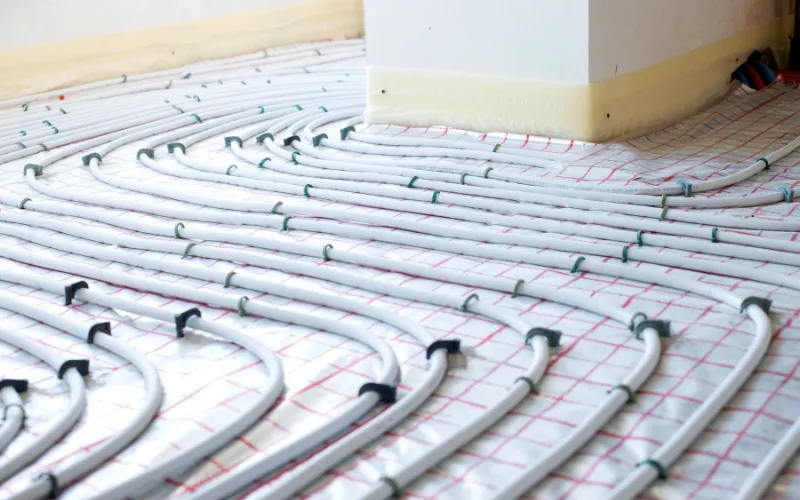
Tubing carrying warm water from a boiler or heat pump
Higher installation cost, considerably lower running cost
Best installed during new build or a full renovation
Works as a whole home heating system
Tubing lifespan measured in decades; the heat source is the wear item
Air-heated systems exist but are effectively obsolete. Air holds very little heat, which makes them inefficient. Not worth considering.
How It Works, and Why It Feels Different
Forced air heats the air and circulates it. Radiant heats the mass of the floor, which then radiates warmth upward across the whole surface.
Two practical consequences follow from that.
It feels warmer at a lower thermostat setting. Even low-level warmth from a large surface is more comfortable than intermittent blasts of hot air, so most people run radiant systems a couple of degrees lower than they ran forced air.
It responds slowly. This is the drawback nobody mentions. A concrete slab holds a lot of heat and takes hours to warm up or cool down. Radiant is excellent at holding a steady temperature and poor at rapid changes, which makes programmable control and zoning genuinely important rather than optional extras.

The Pacific Northwest Factor
Most radiant heating content is written for cold climates, and the economics do not transfer cleanly here.
Our heating season is mild. Lower annual heating demand means less energy saved per year, which lengthens payback on a higher install cost. A system that pays back in seven years in a Rocky Mountain climate takes considerably longer here.
Electricity dominates residential heating locally, and heat pumps have become the default rather than the exception. That matters for hydronic radiant, because the heat source is most of the operating cost.
Which points to the option this comparison usually misses: hydronic radiant paired with an air-to-water heat pump. Radiant runs at low water temperatures, which is exactly the condition heat pumps are most efficient at. That combination is a much better fit for this region than the gas boiler assumed in most guides.
The practical read for a Bellevue homeowner: electric mats in a bathroom or kitchen are an easy yes, because the area is small, the comfort gain is immediate, and the running cost is limited. Whole-home hydronic is a strong choice if you are already building or gutting, and a hard one to justify as a retrofit purely on energy savings in this climate.
Where It Works Best
Bathrooms. Warm tile underfoot in winter. The single most popular application, and the one with the best comfort per dollar.
Kitchens. Hard flooring, high traffic, and long periods standing.
Basements and slab-on-grade areas. Concrete is permanently cold and hard to heat any other way. Radiant genuinely changes how these spaces feel.
Whole homes. Hydronic only, and realistically only during new construction or a full renovation.
Flooring Compatibility
Tile and stone. Ideal. Conducts heat well and tolerates the temperature cycling
Engineered wood. Works, provided the product is rated for radiant. Check the manufacturer's specifications
Solid hardwood. Risky. Moisture cycling and heat can cause cupping and gapping
Vinyl and laminate. Only products specifically rated for it, and observe the maximum floor temperature
Carpet. Possible with thin carpet and a low-resistance pad. Thick carpet and underlay insulate the floor from the room, which defeats the point
Insulation beneath the system matters as much as the flooring above it. Heat driven downward into an uninsulated slab is heat you paid for and will not feel.

What Drives the Cost
Rather than quote per square foot figures that vary enormously by situation, here is what moves a quote:
System type. Electric is cheaper to install and more expensive to run. Hydronic is the reverse
Area covered. A bathroom is a different project from a floor plate
New build or retrofit. Embedding tubing during construction is straightforward. Retrofitting hydronic means raising floor heights or removing existing floors
The heat source. For hydronic, a boiler or heat pump is a substantial part of the total and is frequently quoted separately. Ask whether it is included
Floor buildup and insulation required beneath the system
Zoning and controls. More zones cost more up front and save more over time
Electrical capacity for electric systems, particularly over larger areas
Get quotes itemized so you can see the heat source, the floor system, and the controls separately. Our plumber cost guide covers typical local labour rates.
Installation: New Build vs Retrofit
New builds. The best case for hydronic. Tubing is laid before the slab or screed goes down, insulation is designed in, and there is no floor height penalty.
Renovations. Practical if floors are coming up anyway. Hydronic retrofits mean either raising the floor level or removing and rebuilding the floor structure.
Retrofits without major work. Electric mats. Thin enough to sit under a new tile floor without meaningful height gain, and confined to the rooms you actually want warm.
Do not treat this as a DIY project. Electric systems involve dedicated circuits and permitted electrical work. Hydronic involves pressurized tubing embedded in a floor, where a leak means opening that floor to reach it. You can verify any Washington contractor's license, bond, and insurance for free through the state Department of Labor and Industries.
Maintenance and Lifespan
Electric. Effectively no maintenance. The cables either work or they do not, and a properly installed system typically lasts 20 to 30 years. The thermostat is the component most likely to need replacing.
Hydronic. The tubing itself is long-lived, commonly rated for several decades. The heat source is the wear item: a boiler or heat pump needs annual servicing like any other appliance, and it will be replaced at least once during the life of the tubing.
Neither system is accessible once the floor is down, which is the whole argument for getting the installation right the first time.
Radiant vs Forced Air
Comfort. Radiant wins clearly. Even temperature, no drafts, no noise, no dust circulation.
Efficiency. Radiant runs at lower supply temperatures with no duct losses, which is a real advantage. Forced air with well-sealed ducts closes the gap.
Response time. Forced air wins. Radiant is slow to react by design.
Cooling. Forced air does both. Radiant heats only, so you still need a separate solution for summer, which in this region usually means a heat pump you could have used for heating anyway. That is worth factoring in.
Install cost. Forced air is cheaper, particularly as a retrofit.
Tips for Getting It Right
Insulate beneath the system. The single most common efficiency mistake
Zone it. Heat the rooms you use, on the schedule you use them
Use programmable controls and set them well ahead of when you want the warmth, given the response time
Confirm flooring compatibility in writing with the manufacturer before ordering
Ask what the heat source is and whether it is in the quote
Match the system to the room. Electric in a bathroom is sensible. Electric across a whole floor plate usually is not
Frequently Asked Questions
Is radiant floor heating expensive to run?
Electric radiant is expensive per unit of heat, which is why it suits small areas. Hydronic is efficient, particularly paired with a heat pump, and is the option that makes sense for whole home heating.
Can it go under hardwood?
Under engineered wood rated for radiant, yes. Solid hardwood is risky because heat and moisture cycling can cause cupping and gapping.
Is it worth it in the Pacific Northwest?
For bathrooms and kitchens, yes on comfort grounds alone. For whole home heating, it makes most sense during new construction or a full renovation, since our mild heating season lengthens the payback on a retrofit.
How long does it last?
Electric systems generally run 20 to 30 years. Hydronic tubing lasts considerably longer, but the boiler or heat pump feeding it will need replacing during that time.
Can I retrofit it into an existing home?
Electric mats, yes, most easily during a floor replacement. Hydronic retrofits are possible but mean raising or rebuilding the floor, so they usually only make sense as part of a larger renovation.
Does it replace my need for air conditioning?
No. Radiant heat only. In this region, a heat pump handles both heating and cooling, which is worth considering before committing to a heating-only system.
Talk It Through Before You Commit
The right answer depends on the room, the flooring, the heat source, and whether you are building or retrofitting. Those are worth working through properly, because nothing about this system is accessible once the floor is finished.
Get an estimate or call 425-331-2011. We will look at the space, tell you honestly whether radiant is the right call, and quote the full system including the heat source.
See our specialized plumbing services for the radiant heating work we handle. We serve Bellevue, Kirkland, Redmond, Seattle, and the wider Eastside service area.
