Polybutylene Pipe Replacement: Is Your Bellevue Home at Risk?
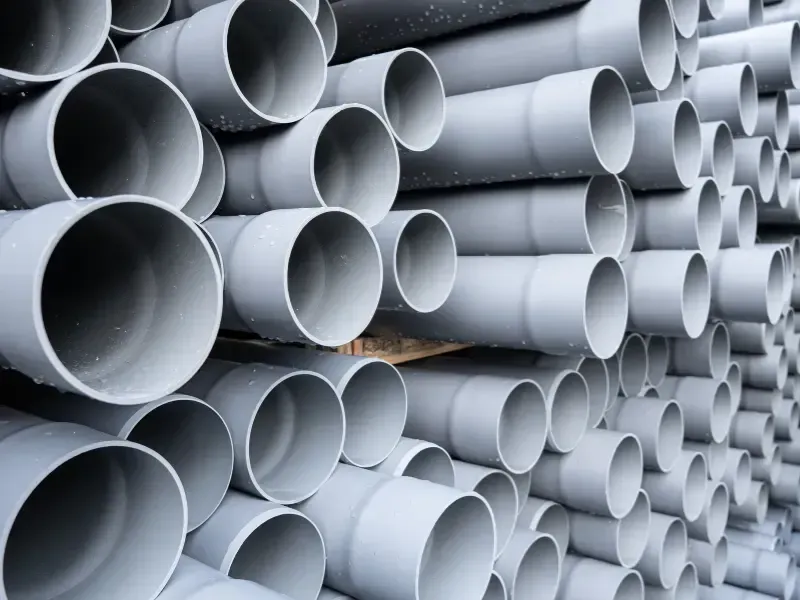
Homes built between 1978 and 1995 commonly have polybutylene pipes — a grey flexible plastic plumbing material that degrades when exposed to chlorinated municipal water. This guide explains how to identify polybutylene in your home, what whole-home PEX replacement costs in the Bellevue area, what to expect during the project, and your options if you are buying, selling, or staying put.
At Eastside Repiping and Plumbing, we have replaced polybutylene systems in hundreds of homes across Bellevue, Kirkland, Redmond, Issaquah, and the greater Seattle area for over 20 years. Below is the practical guide we wish more homeowners had before they discovered a leak inside a finished wall.
What Is Polybutylene Pipe?
Polybutylene is a grey flexible plastic resin used in residential plumbing from 1978 to 1995, installed in an estimated six to ten million U.S. homes.[^1] It was marketed as a low-cost alternative to copper. The problem is chemical: oxidants like chlorine in municipal water react with the resin, causing the pipe to flake, crack, and become brittle from the inside out.
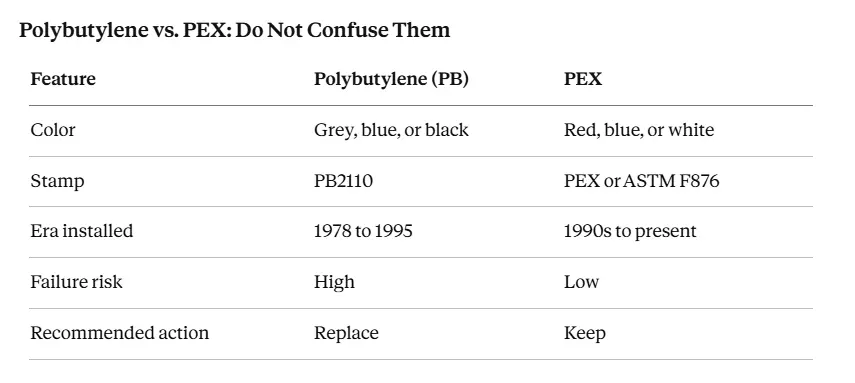
The material was produced under several brand names — Qest, Vanguard, Shell, and others — and is most often identified by the PB2110 stamp printed along the pipe. Polybutylene was widely used in the mid-Atlantic, the deep South, and the Pacific Northwest, including throughout the Eastside.
After widespread failures, the Cox v. Shell Oil Co. class action settled in November 1995 with an initial commitment of $950 million from Shell Oil and Hoechst Celanese, the resin manufacturers.[^2] The claim filing deadline for that settlement expired in 2009, and no active class action is currently accepting new claims.[^2]
How Do I Know If I Have Polybutylene Pipes?
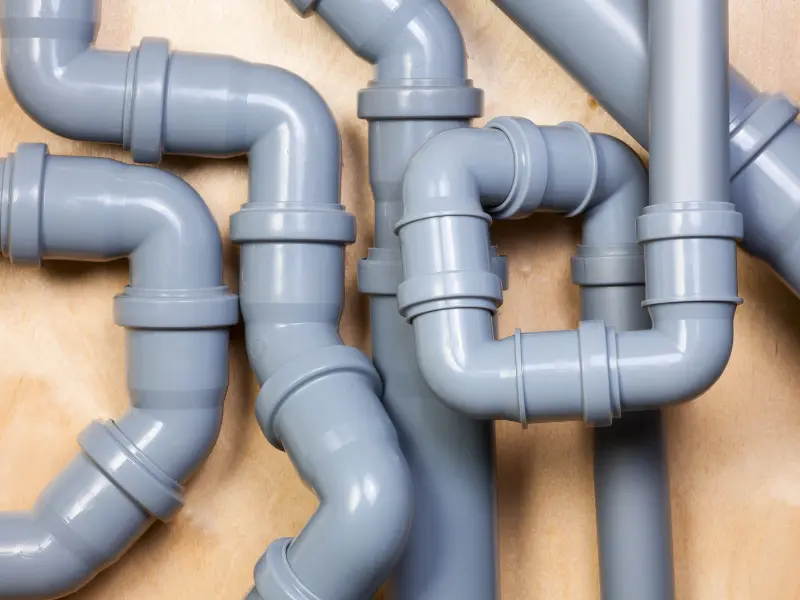
You likely have polybutylene if your home was built between 1978 and 1995 and your water supply lines are grey, blue, or black flexible plastic stamped PB2110. The fastest places to check are the supply lines at your water heater, under bathroom and kitchen sinks, and where the main line enters your home from the crawl space or basement.
Step-by-Step: How to Check Your Bellevue or Eastside Home
Check your water heater. Grey or blue flexible plastic supply lines feeding the tank are a strong indicator.
Look under bathroom and kitchen sinks. Shutoff valve supply lines reveal the pipe material.
Inspect the crawl space or basement. Main supply runs are visible here in most Eastside homes built in this era.
Find the PB2110 stamp. Lettering is printed in grey along the pipe every few feet.
Review your home inspection report. Many Eastside inspectors already flag polybutylene by name.
Schedule a free walkthrough. Eastside Repiping and Plumbing confirms pipe material and condition at no charge.
What Are the Polybutylene Plumbing Problems to Watch For?
The most common polybutylene plumbing problems are sudden pipe bursts, slow fitting leaks, low water pressure, and discolored water — issues that often appear with little or no advance warning. Fittings tend to fail before the pipe walls do, which means leaks often start behind drywall before any visible symptom reaches the room.
Watch for these signs in your Bellevue, Kirkland, or Redmond home:
Unexplained wet spots on walls, ceilings, or floors
Low pressure throughout the house, not just one fixture
Discolored or cloudy water from the tap
Visible cracks, flaking, or scaling on exposed pipes in the crawl space
Multiple leaks in different rooms within a short window
Insurance concerns — some carriers limit coverage on homes with active polybutylene systems
A fitting failure inside a finished wall can leak for days or weeks before it is noticed, and water damage in a finished interior compounds quickly into mold remediation, drywall replacement, and flooring work. This is why most Eastside homeowners with confirmed polybutylene choose to replace proactively rather than wait.
What Does Polybutylene Pipe Replacement Cost in the Bellevue Area?
A whole-home PEX repipe in the Bellevue area typically runs $4,500 to $10,000 depending on home size, fixture count, and access. The national average for whole-home repiping ranges from $1,500 to $15,000, with most homeowners landing around $7,500 according to Angi and HomeAdvisor figures.[^3]
Cost by Home Size (Whole-Home PEX Repipe)
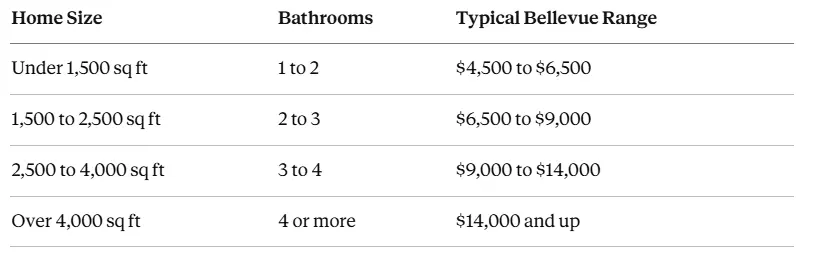
Worked example: A typical 2,000 sq ft Bellevue rambler with two full bathrooms, a half bath, kitchen, laundry, and a crawl space foundation generally runs $7,500 to $9,500 for a complete PEX repipe including permit, pressure test, and basic drywall patching at access points.
The Three Factors That Move the Number Most
Wall condition and access. Finished walls and tile surrounds add labor time. Crawl-space-accessible runs install faster than slab or two-story interior runs.
Fixture count. Each additional bathroom, laundry, or wet bar adds supply runs, shutoffs, and connection points. A four-bath home is roughly twice the work of a two-bath home.
Foundation type. Crawl space homes — common throughout Bellevue, Kirkland, and Mercer Island — repipe faster than homes on slab foundations, where pipes must be rerouted through walls and ceilings.
Permit fees, drywall repairs, and any rerouting around remodels can add several hundred to a few thousand dollars on top of the base bid.
Ready for an exact number for your home? Call us at 425-331-2011 for a free walkthrough and written estimate. Most Eastside estimates are scheduled within 48 hours.
What to Expect During Your Repipe
Most whole-home polybutylene repipes in the Eastside take one to two days from arrival to final pressure test. Homes over 3,000 sq ft or with difficult access can run two to three days. Here is what an actual project looks like from your perspective as the homeowner.
Day 1 — Arrival, Layout, and Rough-In
Our crew arrives between 7:00 and 8:00 a.m., walks the home with you, and confirms shutoff and fixture locations. Water is turned off at the meter while the new PEX runs are laid in. In a typical Eastside crawl space home, most of day 1 is spent below the floor and in the attic, with limited interior wall openings only where existing fixtures and shutoffs need to be tied in.
Water is off for most of day 1
Access holes are cut in walls only where required for tie-ins
Dust containment is used at every access point
Pets and people should plan to be out or in a non-work area
Day 2 — Connections, Pressure Test, and Walkthrough
On day 2, fixtures are reconnected, the new system is pressurized and tested, and the city inspection is scheduled. Water is restored the same day in nearly every case. Once the inspection passes, drywall patches at access points are cleaned up and a final walkthrough is performed. Texture, paint, and tile finishing are coordinated separately if needed.
What You Need to Do
Clear access to the water heater, sinks, and any visible pipe runs
Move pets and valuables out of work zones
Plan for water to be off for most of one workday
You do not need to move out — most clients stay in the home throughout
Should I Replace Polybutylene Pipes Before Selling My House?
In most cases, yes. Under Washington's seller disclosure law (RCW 64.06), you are required to disclose known material defects on Form 17, including issues with plumbing systems.[^4] Polybutylene is widely treated as a material defect by Eastside buyers' agents and home inspectors, and disclosed polybutylene almost always becomes a negotiating point at closing.
In the Bellevue, Kirkland, Mercer Island, and Sammamish market, buyers are well-informed and well-represented. Listings with disclosed polybutylene typically face one of three outcomes: a price reduction, a buyer-requested repipe before closing, or financing complications with FHA, VA, or some conventional lenders. A proactive pre-listing repipe in the one-to-two day range removes the issue entirely and most sellers recover the cost through stronger offers and a faster sale.
What Are Your Class Action and Insurance Options?
The Cox v. Shell Oil settlement claim filing deadline expired in 2009 and the fund is closed to new claims.[^2] A follow-on case, Hurt v. Shell Oil, was filed in 2017 to reach homeowners excluded from the original settlement and was dismissed with prejudice in 2018, meaning it cannot be refiled.[^5]
Washington homeowners today generally have three practical paths:
Homeowners insurance for sudden water damage. Many policies cover the damage from a sudden pipe burst, even if they exclude the cost of replacing the pipe itself. Coverage varies — confirm with your carrier.
Builder or developer warranty claims. Rarely available this far out, but worth checking on newer-construction homes still inside warranty windows.
Proactive whole-home replacement. The most common path for Eastside homeowners today.
Not sure where to start? A free walkthrough tells you exactly what you have, what it will cost, and how fast it can be done. Call 425-331-2011 or contact Eastside Repiping and Plumbing online.
Why Bellevue and Eastside Homeowners Choose Eastside Repiping and Plumbing
We have repiped homes in Bellevue, Kirkland, Redmond, Issaquah, Sammamish, Mercer Island, and Renton for more than 20 years. Every project includes a free walkthrough estimate, a Washington state permit, a full pressure test, and same-day water restoration in nearly every case. We do not subcontract — every plumber on your job is a direct Eastside Repiping employee trained specifically in whole-home polybutylene-to-PEX conversions.
Learn more about our full repiping services or meet the team.
Frequently Asked Questions
1. Is polybutylene pipe still legal in Washington state?
Polybutylene has been out of new construction since 1995 and is no longer accepted by U.S. building codes. Existing polybutylene systems are legal to keep in place, but no Washington building permit will approve new polybutylene installation, and most lenders, inspectors, and buyers treat it as a known defect.
2. How long does polybutylene pipe last before it fails?
Industry sources cite a service life of roughly 10 to 25 years, with failure risk rising sharply past the 15-year mark.[^6] Homes still on polybutylene from the 1980s and early 1990s are well past that window. Failure is unpredictable — some systems hold for decades while others fail suddenly with no visible warning signs.
3. Does homeowners insurance cover polybutylene pipe failure?
Most Washington homeowners policies cover sudden, accidental water damage from a burst pipe, but they typically do not cover the cost of replacing the polybutylene system itself. Coverage language varies widely. For coverage disputes, the Washington State Office of the Insurance Commissioner provides guidance and a complaint process.
4. Can I sell a house with polybutylene pipes in Washington?
Yes, but Washington's seller disclosure law (RCW 64.06) requires you to disclose known material defects, including polybutylene plumbing, on Form 17.[^4] Most Eastside buyers respond with a price reduction request or a requirement to replace the system before closing. A pre-listing repipe removes the issue from the negotiation entirely.
5. How long does polybutylene pipe replacement take?
One to two days for most whole-home jobs in the Bellevue area. Water is restored the same day in nearly every case. Homes over 3,000 sq ft or with slab foundations and limited access may take two to three days.
6. What replaces polybutylene pipe?
PEX is the industry standard for residential repipes — flexible, corrosion resistant, chlorine tolerant, and rated by manufacturers for 50 to 100 years of service life.[^3] Copper is the alternative for homeowners who prefer a metal system; it costs more in both material and labor but offers a similar long service life.
7. Do I need a permit to replace polybutylene pipes in Washington?
Yes. Whole-home repiping requires a plumbing permit pulled by a licensed contractor, followed by a city or county inspection before the walls are closed up. Eastside Repiping and Plumbing handles the full permit and inspection process on every job.
8. How do I get a free estimate?
Call 425-331-2011 or visit Eastside Repipe and Plumbing. We serve Bellevue, Kirkland, Redmond, Issaquah, Sammamish, Mercer Island, and surrounding Eastside communities. Most estimates are scheduled within 48 hours.
Ready to Replace Your Polybutylene Pipes?
A whole-home polybutylene repipe in the Bellevue area is a straightforward, one-to-two day project that protects your home's value, your insurance position, and your peace of mind. The right contractor knows Washington's permit process, understands the crawl-space and slab layouts common across Eastside neighborhoods, and manages your project from the first walkthrough to the final inspection sign-off.
Eastside Repiping and Plumbing has been doing exactly that for Bellevue, Kirkland, Redmond, Issaquah, Sammamish, and Mercer Island homeowners for over 20 years. Schedule your free estimate online or call us at 425-331-2011 to walk your home and get a clear, honest picture of what replacement looks like for your specific situation.
By Ramin Shahbaziasl, Licensed Plumbing Contractor | Eastside Repiping and Plumbing, Bellevue, WA | Over 20 Years Experience
Sources
[^1]: International Association of Certified Home Inspectors (InterNACHI), "Polybutylene for Inspectors." https://www.nachi.org/pb.htm
[^2]: Lieff Cabraser Heimann & Bernstein, LLP (Class Counsel), "Cox v. Shell Defective Polybutylene Piping Case." https://www.lieffcabraser.com/
[^3]: Angi, "How Much Does It Cost to Repipe a House? [2026 Data]." https://www.angi.com/articles/cost-to-repipe-a-house.htm
[^4]: Revised Code of Washington, Chapter 64.06, "Real property transfers — Sellers' disclosures." https://app.leg.wa.gov/RCW/default.aspx?cite=64.06
[^5]: ClassAction.org, "Class Action Revisits Settled Case Over Allegedly Defective Shell Oil Polybutylene Piping Systems." https://www.classaction.org/news/class-action-revisits-settled-case-over-allegedly-defective-shell-oil-polybutylene-piping-systems
[^6]: Repipe Specialists, "When Was the Polybutylene Lawsuit Deadline?" https://repipe.com/articles/when-was-the-polybutylene-lawsuit-deadline.html
