Which Plumbing Near Me Fixes Copper Pinhole Leaks?
When you search plumbing near me for a copper pinhole leak in Redmond, pick a plumber who fixes today's leak properly. Then make sure they'll tell you honestly whether more leaks are coming. Eastside Repipe and Plumbing does both. We handle everything from a single cut-out repair to a full-house repipe across Redmond, Sammamish and the rest of the Eastside.
By Ramin Shahbaziasl, Owner and Lead Plumber · Last updated November 24, 2026
What do pinhole leaks in copper look like before they drip?
They usually show up as small blue-green spots or crusty bumps on the pipe long before you ever see water. In fact, most of the leaks we find were weeping quietly for weeks, so it pays to know the early signs.
Here's what to look for under sinks, in the crawlspace and around the water heater:
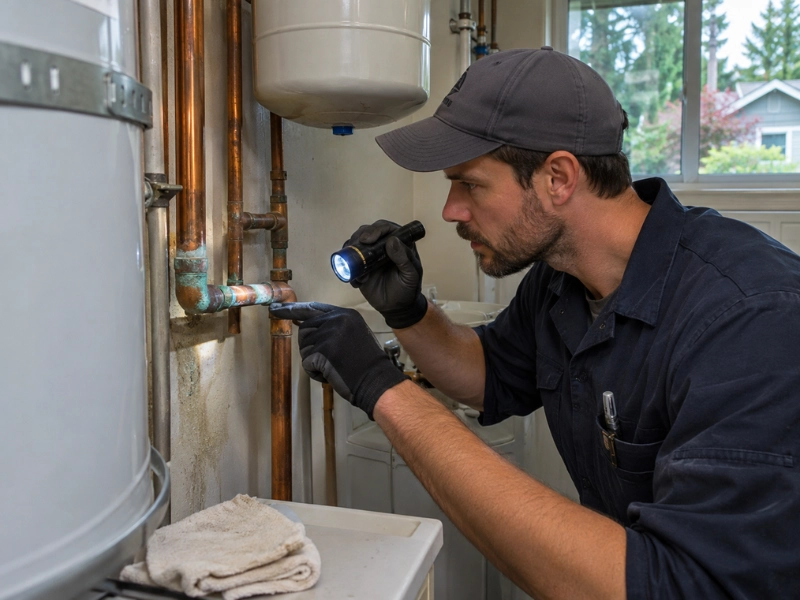
Green or turquoise dots on bare copper, often near a fitting
Tiny dimples or blisters you can feel with a fingertip
A faint hiss in a quiet wall, especially at night
A ceiling stain right below a bathroom or laundry room
A warm patch on a tile floor, which points to a hot line
A water bill that jumps even though nothing changed at home
Even one of these deserves a look. After all, drywall and subfloor soak up water fast, and a hidden drip costs far more in repairs than the pipe itself.
Where does Redmond's water come from, and why should you care?
Redmond runs on two different water supplies, and that matters when we read the pattern of leaks in your house. According to the City of Redmond, about 60% of the city's water is Tolt River water bought through Cascade Water Alliance. The rest comes from five city wells that serve the neighborhoods east of the Sammamish River.
So a home in Grass Lawn or Idylwood, west of the river, gets mostly mountain water from the Tolt. Meanwhile, homes on Education Hill and further east sit in the zone the city wells serve. So on a call for copper pinhole leak repair in Redmond WA, we first ask which side of the river you're on.
Tolt water is naturally soft and low in minerals. Because of that, Seattle Public Utilities adjusts its pH and alkalinity at the Tolt treatment plant. It has also worked for years to cut the copper coming off home plumbing. That treatment helps a lot today. However, it can't undo the damage already sitting inside a pipe that's been in service for 30 or 40 years.
Why do homes built in the eighties and nineties show it first?
Simply put, their copper is old enough to wear through and thin enough to do it sooner. Many subdivisions on Education Hill and the Sammamish Plateau went in during that boom. Most still carry their original supply lines.
Three things stack up in those houses:
Thin-wall pipe. Many builders used Type M copper, the thinnest wall approved for household water. It works fine for decades, but there's simply less metal to lose before a hole opens.
Hot-side wear. Hot water moves faster and attacks copper harder than cold. As a result, the hot line feeding a busy upstairs bathroom is often the first to fail.
Recirculation pumps. Instant-hot-water loops keep water moving around the clock. That's great for comfort, but it also means the pipe never gets a rest.
That combination explains most of the pinhole leaks in copper plumbing in Eastside homes we see. Still, age alone doesn't decide anything, because two houses on the same street can hide very different pipe.
How can you check for a hidden leak before you call?
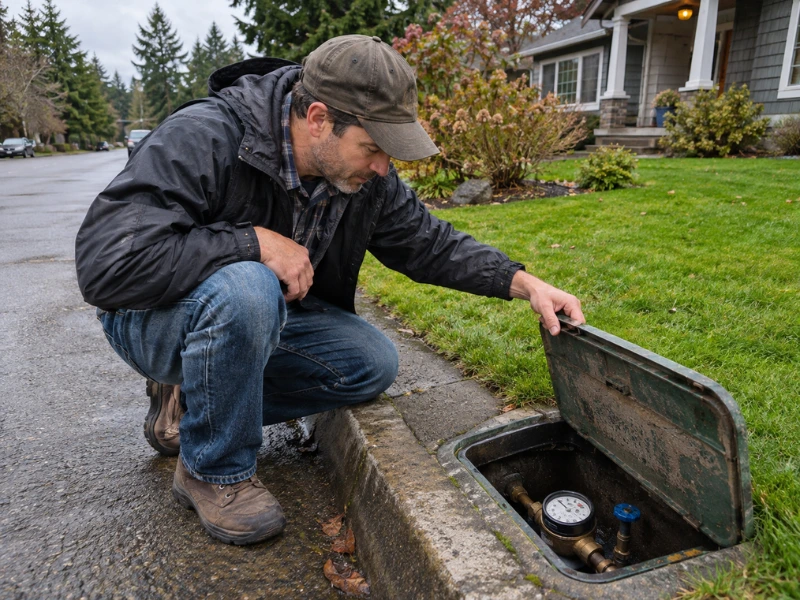
Your water meter is the easiest leak detector you own, and the test takes about two hours. First, turn off every tap, the dishwasher, the washer and the irrigation. Next, find the meter box near the street and note the reading. You can also watch the small dial that spins with any flow.
Then leave everything off for an hour or two and check again. If the numbers moved, water is going somewhere it shouldn't. In that case, shut the main valve if you can find it, and call us.
This test won't tell you where the leak is. Even so, it gives you a clear yes or no before anyone opens a wall, and it saves time once we arrive.
Spotted a green dot or a damp patch?
Call: 425-331-2011
Email: [email protected]
Offer: Free estimate on any leak repair or repipe
Water on the floor right now? Book our emergency plumbing service instead.
What does a patch against repipe really cost you?
The honest answer is that the cheapest fix today isn't always the cheapest fix overall. A single repair is quick and affordable. But every leak also brings drywall patching, paint, a mess to dry out and sometimes an insurance claim.
Here's how the options compare in practice:
Option | What it involves | Disruption | Good for | What it won't fix |
|---|---|---|---|---|
Clamp or epoxy putty | Wrapping or sealing the hole from outside | Minimal | Buying time until a plumber arrives | The thinning pipe around it |
Cut-out repair | Removing the bad piece and soldering in new copper | One wall opening | A single leak at a clear weak spot | Pitting elsewhere in the line |
Section replacement | Replacing one full run, such as a bathroom branch | A few openings | One run that keeps failing | Other runs of the same age |
Whole-home repipe | New PEX or copper to every fixture | Several small openings, one visit | A system wearing out everywhere | Nothing left of the old supply lines |
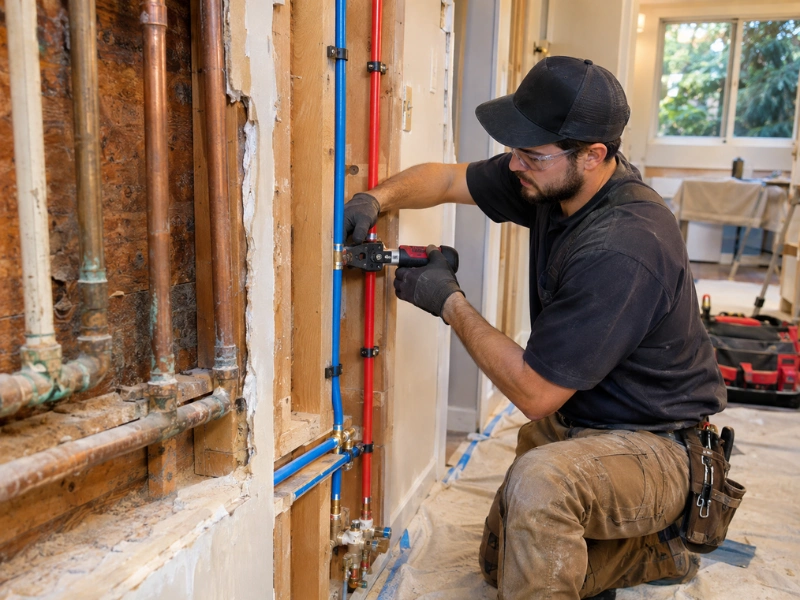
Our general plumbing team handles the cut-out repairs and section work. Meanwhile, a full house repipe replaces the aging supply lines with new PEX or copper, and most of ours finish in a day.
So when you weigh it up, add the hidden costs to every repair quote. Count the drywall, the painter, the cleanup and the days without a usable bathroom. That's the real number to set against one planned repipe.
What should you ask when you search plumbing near me?
Ask any plumber you call whether they'll show you the pipe they cut out. Above all, a cut piece tells the truth. Smooth, shiny metal inside suggests a one-time flaw. On the other hand, a rough, pocked inner wall means the rest of the line is wearing the same way.
Next, ask for two prices side by side: one for the repair and one for a repipe. A good plumber should be comfortable quoting both, rather than steering you toward the bigger job or hiding it.
Finally, check what the quote actually covers. For example, does it include wall openings and patching, permits and inspection, and cleanup? Clear answers up front mean no surprises on the final bill.
Where on the Eastside do we handle copper leak calls?
We cover the whole Eastside, from our base in Bellevue. That includes Redmond, Kirkland, Bellevue, Issaquah, Mercer Island, Bothell and Newcastle, plus Renton and Seattle.
If you're looking for copper leak repair near Redmond and Sammamish WA, we're close by. In addition, we know the Plateau's housing well, from Sammamish neighborhoods like Klahanie and Pine Lake to the newer streets around Redmond Ridge.
We're a family-owned, locally operated company, so you'll talk to people who actually know these neighborhoods.
Frequently asked questions
1. A tiny leak in copper pipe - is that the start of something?
Often it is, because a pinhole is usually the first spot where corrosion has eaten all the way through, and the same water runs through every other foot of that line. Fix it right away and have the nearby pipe checked while the wall is already open.
2. Why does it happen to copper at all, when it is meant to last?
Soft water, fast flow through narrow lines and leftover soldering flux can start small pits on the inside of the pipe that slowly work outward. Homeowners who search why does copper pipe develop pinhole leaks are usually surprised that the damage starts inside and stays hidden until it breaks through.
3. Is one pinhole a one-off, or a sign the rest is going?
It can be a one-off when it sits at a single joint with an obvious installation flaw, but pitting or green buildup on the pipe around it means more leaks are likely. For anyone searching do pinhole leaks mean the whole house needs repiping, the answer is not always, and an inspection of the exposed pipe shows which case you're in.
4. Can it be patched, and how long does a patch hold?
Yes, and a proper cut-out repair with new copper holds for years at that spot, while clamps and epoxy are stopgaps meant for days or weeks. When people search how do you fix a pinhole leak in a copper pipe, the lasting answer is replacing the damaged piece, since the repair rarely fails but the old pipe beside it can.
5. At what point does patching stop making sense?
Patching stops making sense once a second leak appears in a different spot, or when the pipe we remove shows pitting along its inside wall. At that stage you're paying for drywall and water damage again and again, and a planned repipe usually costs less than the repairs still ahead.
Visit or Call Us
Eastside Repipe and Plumbing
Address: 12005 NE 12th St # 29, Bellevue, WA 98005
Phone: 425-331-2011
Email: [email protected]
Family-owned plumbing and repiping company
Serving Redmond, Sammamish, Bellevue, Kirkland, Issaquah, Mercer Island and Bothell. Call for a free estimate, or use our contact page to book a visit.
