How Do You Keep Plumbing Healthy In A Redmond Home?
Maintaining plumbing in a Redmond home is done by doing a cursory visual check once a year, paying some attention to your water heater and crawlspace, and filling small leaks the week you discover them, not the month after. Most of the expensive calls we get started as something small that sat too long.
By Ramin Shahbaziasl, Owner and Lead Plumber · Last updated October 22, 2026
What does a home plumbing system actually include?
A home's plumbing consists of (1) the pressured supply side, which delivers clean water into your home, and (2) the drained side, which removes water either to septic or municipal lines. Everything else is ancillary.
The parts worth knowing by name:
Main shutoff. Usually near where the water line enters, often in the crawlspace or garage. Find it now, not during a leak.
Supply lines. The pipes feeding every faucet, toilet, and appliance, plus the flexible connectors under sinks.
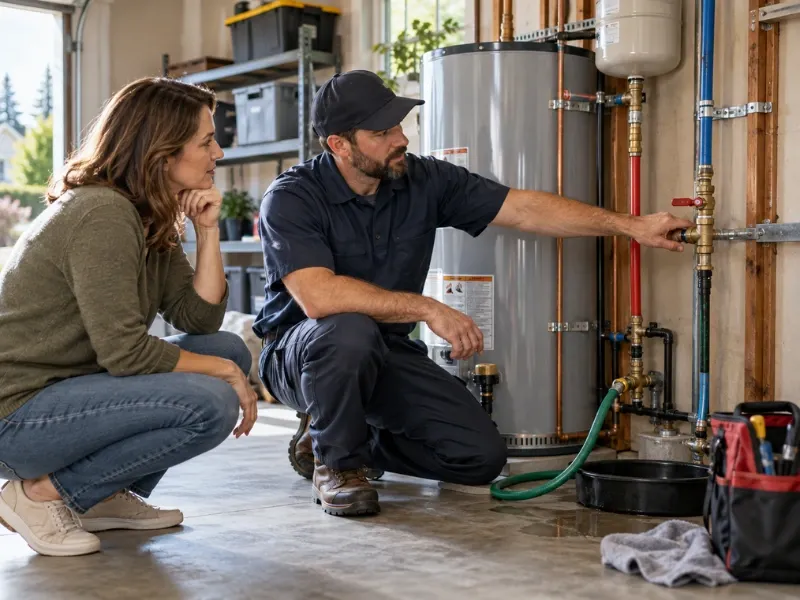
Water heater. Tank or tankless, it's the hardest-working appliance in the system.
Drain, waste, and vent lines. They move water out and let air in so drains flow without gurgling.
Sewer lateral. The pipe from your house to the city main. In many older neighborhoods it's clay.
Backflow assembly. Required on lawn irrigation, so sprinkler water can't siphon back into drinking water.
That last one surprises a lot of people. More on it below.
Where does Redmond's water come from, and why does it matter?
Redmond's water came from two places, and which one reach your tap depends on where you live. According to the city's drinking water page, about 60% comes from the Tolt River watersheds in the Cascades, and the other 40% is pump from the city's own wells, which serve the areas east of the Sammamish River.
Why should a homeowner care? Because mountain surface water and well water don't have the same minerals, this can effect the amount of white scale on shower heads, faucet aerators, and the bottom of your water heater tank. Also, the city mixes in Tolt water with water from the ground in the summer to meet the increased demand, so what comes out of your tap can vary slightly depending on the time of year.
If you find yourself constantly scrubbing away crusty faucets, you should probably flush your water heater more often than the minimum.
Which common plumbing problems start small and get expensive?
The common plumbing problems that cost the most are the quiet ones: slow leaks, running toilets, sluggish drains, and a water heater nobody's touched in years. Each one is cheap to fix early. Left alone, they get ugly.
Here's how that usually plays out:
A drip under the sink soaks the cabinet floor, then the subfloor, then turns into rot and mold.
A running toilet can waste a surprising amount of water and quietly run up your bill.
One slow drain is a local clog. Several slow drains at once often point to the main line.
Sediment in the water heater makes popping noises, then cuts efficiency, then shortens the tank's life.
Tree roots find their way into older clay sewer laterals through tiny cracks at the joints.
We see the same patterns over and over across the Eastside. The most common plumbing problems in Redmond and Kirkland Washington homes are actually on this list. The difference between a quick and major plumbing job is often just timing.
What does a yearly plumbing maintenance routine look like?
A yearly plumbing maintenance routine is about an hour of checking, plus a couple of tasks done by a pro. People ask how often should home plumbing be checked. Once a year covers most homes, with a quick look after any hard freeze.
Task | How often | Who usually does it |
Look under sinks and around toilets for moisture | Every few months | Homeowner |
Test the main shutoff valve | Once a year | Homeowner |
Flush the water heater | Once a year | Homeowner or plumber |
Check supply hoses to washer and dishwasher | Once a year | Homeowner |
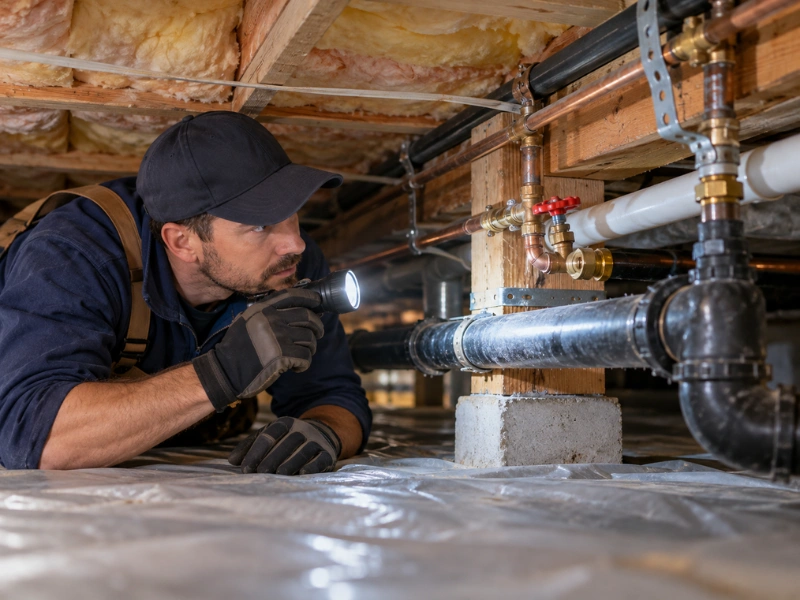
Walk the crawlspace with a flashlight | Each spring and fall | Homeowner |
Test the irrigation backflow assembly | Once a year | Certified tester |
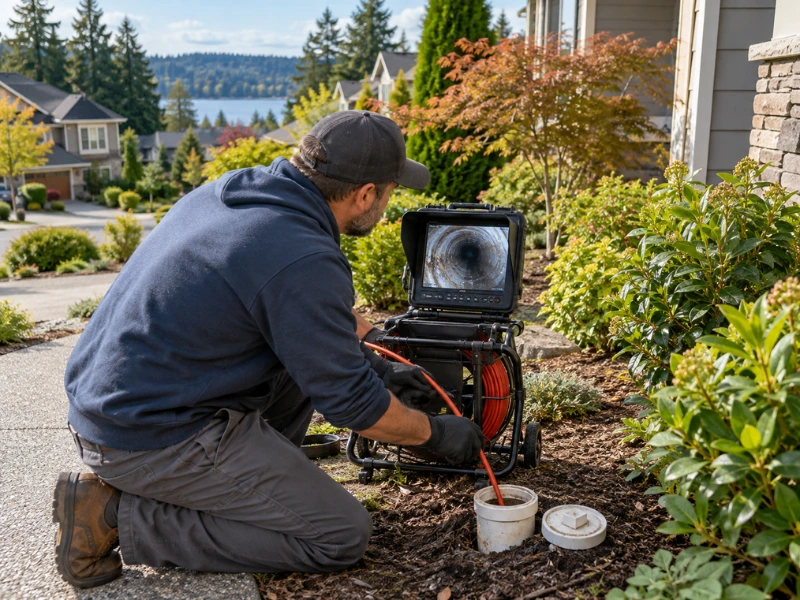
Camera-inspect an older sewer lateral | Every few years | Plumber |
That backflow line isn't optional. Redmond's cross-connection control program requires approved backflow assemblies on residential irrigation, fire sprinkler systems, boilers, pools, and spas, and they have to be tested every year by a state-certified tester.
People also ask how long does home plumbing last. The pipes themselves can go for decades. The parts around them, like water heaters, valves, and flexible connectors, wear out much sooner, which is why the checklist focuses on them.
How do you choose between plumbing companies in Redmond?
Choose a plumbing company that is licensed with Washington L&I, employs certified plumbers, and offers an estimate for the repairs before they occur. When it comes to plumbing companies recommended by Redmond WA locals, there are a few questions that could help shorten the list of options:
Is the company a registered contractor, and are the plumbers state-certified?
Will I get a written price before work starts?
Who pulls the permit if one is needed?
Do you handle bigger jobs like repiping, or only repairs?
That last question matters more than it sounds. A company that only does quick fixes may keep patching the same failing pipe. One that also handles whole-house repiping can tell you honestly when patching stops making sense.
Frequently asked questions
1. What are the most common plumbing problems in Redmond homes?
Plumbing problems are leaky faucets and supply lines, running toilets, clogged drains, water heater issues, and root-damaged sewer lines. Older homes have aging galvanized or polybutylene pipe added to the list. Cold winter nights create a host of calls dealing with frozen pipes, usually in crawlspaces and garages.
2. How long does home plumbing last before it needs real work?
Home plumbing usually needs to be serviced after 10 to 15 years (or less), and 40 to 70 years (or less) for the pipes (depending on materials) for the water heater and fixtures, respectively. A tank-type water heater will generally last for about ten to twelve years, while copper and PEX pipe can last a lifetime (or longer), and polybutylene and galvanized pipe often fail much sooner.
3. Which plumbing problems are specific to crawlspace homes?
Crawlspace homes experience a lot of frozen, hidden leaks and pests. Foundation that vents can freeze during a long cold snap, and insulation will often come off over time. Leaks can drip for months before homeowners are aware of it, and rodents often chew through plastic pipe and insulation. A visual inspection with the flashlight in the crawlspace once a year in the spring and fall will turn up most of these problems.
4. How do you prepare home plumbing for a cold snap?
Prepare for a cold snap by taking out your garden hoses, covering outdoor faucets, and closing crawlspace vents while freezing weather persists. Keep the house heated when away, and open up sink cabinets along exterior walls to let warm air reach the pipes. It's often best to have a dripping faucet on the coldest nights, and all inhabitants should know where the main water shutoff is.
5. When is a plumbing problem worth calling someone about?
Call a plumber if water appears where it shouldn't, there's no hot water, or multiple drains are backing up at the same time. A plumber should also be called when the smell of sewage appears, the water pressure suddenly changes, or water is heard running when it shouldn't be. Small leaks can wait until the next day or two, but a whole month is too long.
6. Should I replace my water heater before it fails?
Yes, if your tank water heater is over 10 years old, it's smart to plan a replacement before it fails. Water that appears rusty or has a rumbling sound coming from it, or moisture appearing around the base are also indications that replacement is approaching. It is far less expensive and less stressful to plan the replacement rather than deal with the inevitable disaster.
7. What should I do first if a pipe bursts?
The first order of business is to turn off the water at the main shutoff valve and then to turn off the water heater. Next, open a sink at the lowest point in the home to allow the water to drain from the system. Valuables should be removed from the path of the water, and pictures taken for insurance purposes. A plumber should be called in to repair the pipe and to help with insurance dealings.
8. Can a plumber check a home before I buy it?
Yes, a plumber can inspect a home's plumbing before you buy it, separately from a general home inspection. That usually includes checking the pipe materials, water heater age, and visible leaks. For older homes, a sewer camera inspection is often the most valuable part, since a damaged lateral is expensive to replace.
Where can you get plumbing help in Redmond?
You can get plumbing help in Redmond by calling Eastside Repipe and Plumbing at 425-331-2011 for a free estimate. We'll take a look, explain what we find, and give you a price before any work starts. Learn more about our general plumbing services, our work in Redmond and Kirkland, or reach us through our contact page.
Visit or Call Us
Eastside Repipe and Plumbing 12005 NE 12th St # 29, Bellevue, WA 98005 Phone: 425-331-2011 Email: [email protected] Service area: Redmond, Kirkland, Sammamish, Bellevue, Issaquah, Mercer Island, Bothell, Renton, and the greater Seattle Eastside
