Heated Flooring Systems: Costs and Options
Heated flooring warms the floor surface, which then warms the room. No vents, no fan noise, no drafts, and no dust pushed around the house.
By Ramin Shahbaziasl, Owner, Eastside Repipe and Plumbing · Last updated October 03, 2025
There are two ways to do it, and they suit very different situations. This guide covers how each works, what drives the cost, and which one fits your home.
Electric or Hydronic
Electric
Heating cables or mats laid directly under the finished floor
Lower installation cost, particularly in small rooms
Higher running cost, since it is resistance heating
Straightforward to fit during a floor replacement
Best for single rooms: bathrooms, kitchens, entryways
Typically lasts 20 to 30 years
Hydronic
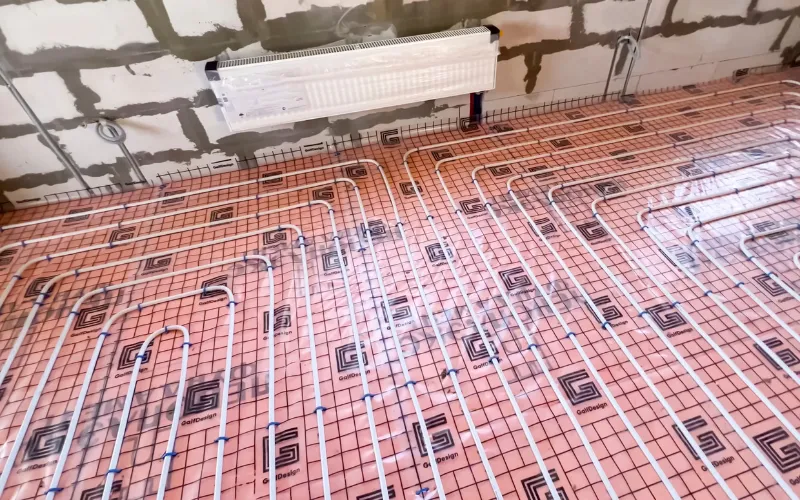
Warm water circulated through PEX tubing beneath the floor
Higher installation cost, considerably lower running cost
Needs a heat source: a boiler or, increasingly, a heat pump
Best installed during new construction or a full renovation
Suits whole home heating
Tubing lasts decades; the heat source is the wear item
The short version: electric for one or two rooms, hydronic for a whole house. The mistake people make is running electric across a large floor plate, where the operating cost stops being trivial.
Our radiant floor heating guide covers the decision in more depth, and our hydronic heating installation guide covers system types and heat sources.

Why People Choose It
Even warmth. Heat comes from the whole floor surface rather than a vent in one corner. No cold spots, no hot ceilings.
Quiet. Nothing runs, nothing cycles audibly.
Cleaner air. No ducts means no dust, pollen, or pet dander circulated through the house. Genuinely useful in a household with allergies.
Lower supply temperatures. Radiant systems deliver comfort at lower operating temperatures than forced air, and there are no duct losses.
Design freedom. No radiators taking wall space, no vents to plan around.
One honest caveat: radiant floors respond slowly. A warmed floor takes hours to heat up and hours to cool down. That makes it excellent at holding a steady temperature and poor at reacting quickly, which is why zoning and programmable controls matter rather than being optional.
Where It Works Best
Bathrooms. The most popular application and the best comfort per dollar. Warm tile in winter.
Kitchens. Hard flooring, long periods standing.
Basements and slab on grade areas. Concrete stays cold and is difficult to heat any other way.
Whole homes. Hydronic only, and realistically only during new construction or a full renovation.
Flooring Compatibility
Tile and stone. Ideal. Conducts heat well and tolerates temperature cycling
Engineered wood. Works if the product is rated for radiant. Check the specification
Solid hardwood. Risky. Heat and moisture cycling can cause cupping and gapping
Vinyl and laminate. Only rated products, and observe the maximum floor temperature
Carpet. Possible with thin carpet and a low-resistance pad. Thick carpet insulates the room from the floor and defeats the purpose
Insulation beneath matters as much as the covering above. Heat driven downward into an uninsulated slab is heat you paid for and will not feel.

What Drives the Cost
Published per square foot figures vary so widely that they mislead more than they help. Here is what actually moves a quote:
System type. Electric is cheaper to install and more expensive to run. Hydronic is the reverse
Heat source. For hydronic, this is frequently the largest single line item and is often quoted separately. Ask whether it is included
Area covered. A bathroom is a different project from a floor plate
New build or retrofit. The biggest single variable, since retrofits mean lifting floors or raising floor heights
Floor buildup and insulation required beneath the system
Zoning and controls. More zones cost more up front and save more in operation
Electrical capacity for electric systems over larger areas
Ask for quotes itemized into heat source, floor system, controls, and labour, so you can compare like with like. Our plumber cost guide covers typical local labour rates.
On operating cost: electric costs more per unit of heat, which is why it suits small areas. Hydronic is cheaper to run, and cheapest when paired with a heat pump. PSE runs rebates on qualifying heat pump equipment, which is worth checking before you specify a heat source.
The Pacific Northwest Angle
Most heated flooring content is written for cold climates, and the numbers do not transfer.
Our heating season is mild, which means lower annual demand and a longer payback on a higher install cost. Electricity dominates residential heating here, and heat pumps have become the default rather than the exception.
That points to the pairing most guides skip: hydronic radiant with an air-to-water heat pump. Radiant runs at low supply temperatures, which is exactly where heat pumps are most efficient, and it gives you a route to cooling that a boiler does not.
The practical read for a Bellevue homeowner: electric mats in a bathroom or kitchen are an easy call on comfort grounds. Whole home hydronic makes sense during construction or a gut renovation, and is difficult to justify as a retrofit on energy savings alone in this climate.
Installation
Electric
Prepare and level the subfloor
Lay mats or cables to the planned layout
Connect to a dedicated circuit and thermostat
Test before covering
Install the finished floor
Electric systems still involve dedicated circuits and permitted electrical work. Kits exist, but this is not a job to improvise.
Hydronic
Room-by-room heat loss assessment
System design: loop layout, spacing, zoning, heat source sizing
Insulation and vapour barrier
PEX loops laid and secured within manufacturer loop length limits
Manifold and heat source connection
Pressure test before anything is covered
Floor covering
Commissioning: flow balanced, controls configured
Step 6 is the one that matters most. Once the floor is down, the system is not accessible.
Maintenance
Electric. Effectively none. The thermostat is the component most likely to need replacing.
Hydronic. Annual heat source service, periodic system flush, pressure checks, and confirming zone balance. The tubing itself is rated for decades.
Common Mistakes
Skipping insulation beneath the system. The most common efficiency error
No heat loss calculation on hydronic, which produces either cold rooms or an oversized heat source
Too few zones, so you heat rooms you do not use
Electric across a large area, where running cost stops being trivial
Unrated flooring, particularly solid hardwood
Not planning for cooling. Radiant heat only, and deciding how you will cool the house afterwards costs more than deciding beforehand
Frequently Asked Questions
Are heated floors expensive to run?
Electric is expensive per unit of heat, which is why it suits small rooms. Hydronic is efficient, particularly with a heat pump, and is the sensible option for whole-home heating.
Can heated floors go under hardwood?
Under engineered wood rated for radiant, yes. Solid hardwood is risky because heat and moisture cycling can cause cupping and gapping.
How long does installation take?
Electric in a single room is typically one to two days as part of a floor replacement. Hydronic runs one to three weeks depending on scope, plus lead time on the heat source.
Is it safe?
Both are sealed, low-temperature systems with no combustion in the living space, and floor surface temperature is limited by design. Electric systems require proper circuit protection, which is part of why they are permitted work.
Do heated floors add value when selling?
Buyers generally view them positively, particularly in bathrooms. Treat resale as a secondary benefit rather than the reason to install, since the return varies with the market.
Is it worth it in the Pacific Northwest?
For bathrooms and kitchens, yes on comfort alone. For whole home heating, most sensible during new construction or a full renovation, since the mild heating season lengthens retrofit payback.
Talk It Through First
Nothing about a heated floor is accessible once the floor is finished, which makes the design conversation the important one. Room, flooring, heat source, insulation, and zoning all need settling before anything is laid.
Get a free consultation or call 425-331-2011. We will look at the space, tell you honestly whether it is worth doing, and quote the full system including the heat source.
You can verify our license, bond, and insurance for free through the state Department of Labor and Industries.
See our specialized plumbing services for the radiant and hydronic work we handle. We serve Bellevue, Kirkland, Redmond, Seattle, and the wider Eastside service area.
