
What Does General Plumbing Fix In A Redmond Home?
General plumbing deals with the small issues within your home. This includes fixing any leaks, blockages, faulty taps and toilets that are running. Replacing any faulty valves and fixtures. Most homes will require general plumbing every couple of years. Bigger systems like whole-home repiping and sewer lines sit outside it.
By Ramin Shahbaziasl, Owner and Lead Plumber · Last updated October 30, 2026
Which plumbing services count as general plumbing?
General plumbing services include fixing and replacing the plumbing fixtures, drains and pipes you use regularly.
People asking what does a general plumber do usually think of clogs. In practice, the work falls into a few groups:
Category | Common jobs | What usually gets replaced |
Faucets | Drips, low flow, loose handles | Cartridges, O-rings, aerators or the whole faucet |
Toilets | Running, weak flush, rocking base | Fill valve, flapper, wax ring or the toilet |
Drains | Slow sinks, tubs and showers | Trap, stopper parts or a cleared line |
Valves | Seized or leaking shutoffs | Angle stops under sinks and toilets |
Appliances | Garbage disposals, dishwasher hookups | Disposal unit, supply line or drain connection |
Leaks | Drips under sinks or behind walls | Fittings, supply lines or short pipe sections |
Larger jobs, like repiping or sewer line replacement, need more planning and usually a permit. So they're handled as separate projects, not general service calls.
How does fixture replacement work, start to finish?
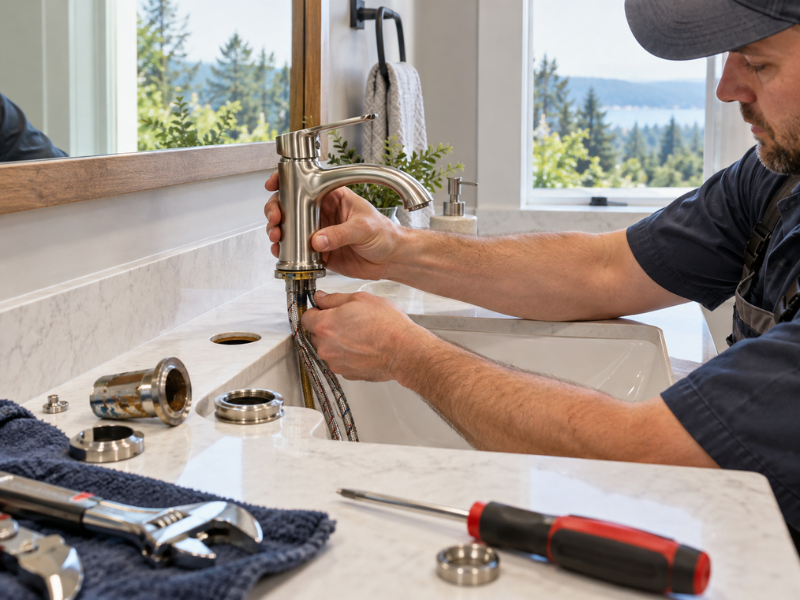
It is generally a one visit job. Turn off the water supply, remove the old fixture, inspect the connections (this is where a good plumber will earn their money) and fit the new fixture. Test everything works.
A typical faucet/ toilet change would be:
Shut off the water at the fixture's own valve, or at the main if that valve won't close.
Remove the old fixture and inspect what's behind it.
Check the supply lines and valves. Old braided lines and multi-turn valves are common failure points.
Install the new fixture with fresh seals and connections.
Test for leaks under pressure, then clean up the work area.
The most important part of this is step 3. You might find that a valve hasn’t been used in 20 years so it may not shut properly or may begin to leak once you start moving it. It can be replaced while they’re there to prevent a second visit.
If you are purchasing the fitting yourself make sure to check what the rough in size is. Toilets can vary in how far they stick out from the wall. If you get the wrong size it will not fit. Also make sure you know who will remove your old fitting. Most plumbers will remove it if you mention it when booking.
What usually causes drain and faucet repair calls?
Most of the problems with drain and faucet repairs are caused by either blockages, worn parts or loose joints. Often, there is an easy solution once the problem has been identified.
Below are the common problems:
Hair and soap in bathroom drains, especially showers and tubs.
Grease and food scraps in kitchen lines, which harden as they cool.
Wipes and paper products that don't break down like toilet paper.
Worn cartridges inside single-handle faucets, causing drips or stiff handles.
Clogged aerators after work on the water main stirs up sediment.
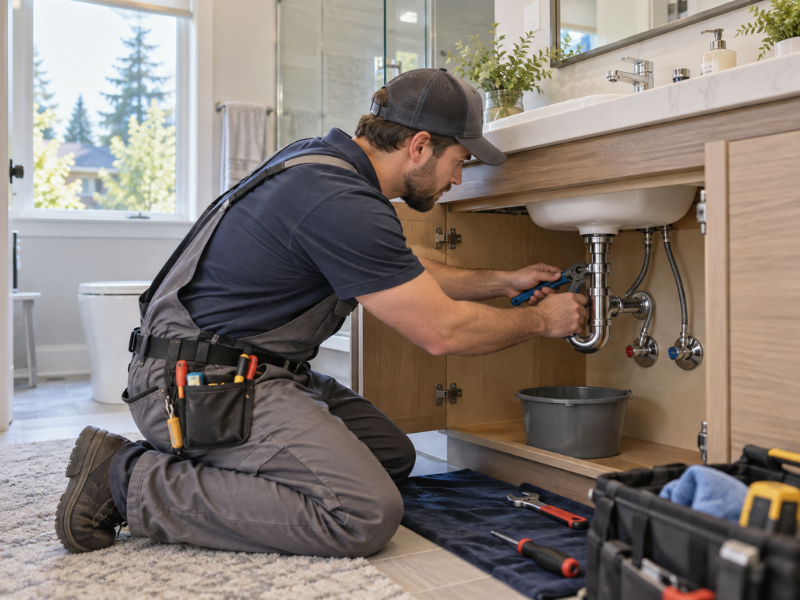
Loose slip nuts under sinks, which let small leaks drip into the cabinet.
If it is just a single sink that is running slowly it can be a local blockage. If multiple fixtures are running slowly then there is probably a problem further along the pipe.
To stop your drains getting blocked between visits to the plumber fit a hair catcher in your showers. Scrape food off plates and throw them in the bin. Run hot water down the disposal. Don’t put wipes (even flushable ones) in your toilets.
How do you plan a multi-job plumbing visit?
Plan ahead by making a comprehensive list of all of the issues you want to discuss, add photographs and also mark where your shut-off valves are. This will help you to get everything sorted in one go instead of 3 separate visits.
Take a walk around your home and note:
Every drip, clog or running toilet, even ones you've learned to ignore.
Fixtures you plan to replace soon, so parts can come on the same trip.
Valves you're unsure about, especially under sinks and behind toilets.
Anything that changed recently, like a new noise or a damp cabinet floor.
Then, clear out the cabinets under any sinks on your list, so the plumber can get straight to work.
Grouping jobs is also changes the answer to how much does a plumbing service call cost for you. When one visits covers several problems, you pay for one trip instead of three.
As a rule of thumb, swapping a flapper, replacing an aerator or clearing a single trap are the kinds of jobs people mean when they ask what plumbing jobs are quick fixes. Hidden leaks and recurring clogs usually take longer.
Who can legally do plumbing work in Washington?
In Washington, only plumbers certified by the state can legally do plumbing work on someone else's property. Homeowners can still work on plumbing in homes they own.
The state's Department of Labor & Industries runs the plumber certification program, which also checks job sites and investigates complaints. Trainees can work too, but only under a certified plumber's supervision.
King County's public health department adds that anyone you pay to install plumbing should be a certified journeyman plumber working for a registered contractor. So before work starts, it's fair to ask to see the plumber's card. Also verify that they have a current plumbing contractor license on file. This has been a requirement of L&I since 2021. This ensures you know who is accountable.
Where do we handle general plumbing around Redmond?
We handle general plumbing across Redmond and the Seattle Eastside, from our office in Bellevue. That includes leak repairs, faucets, toilets, drains, disposals and fixture swaps.
If you're comparing general plumbing services in Redmond WA, our Redmond plumbing page covers local service. People asking who handles small plumbing jobs near Redmond and Carnation Washington can call to confirm we cover their address, especially out toward the valley.
And if you're weighing general plumbers Redmond WA on price, our post on what general plumbing costs in Redmond breaks down service fees and pricing. For specific jobs, see our faucet repair in Redmond and toilet repair in Redmond pages. If a leak can't wait, our emergency service page explains how to reach us fast.
How do you book a general plumbing visit?
Call 425-331-2011 or use our contact page to book a visit. Estimates are free, so send your list of jobs and we'll tell you what to expect before anyone arrives.
Frequently asked questions
1. Which jobs does a general plumber handle day to day?
Most of the time we are fixing leaks, clogs and broken water valves! From dripping taps, leaking toilets, slow drains, leaking valves and bad garbage disposals. There are often small bathroom/kitchen upgrades with new fixtures. We also tend to check for leaks under sinks and behind appliances.
2. What does a service call cost in Redmond?
It really depends on what you need and which company you use, however we can give you free quotes. We can let you know over the phone if we can give you a quote based off what you tell us, or if we need to come out to do some diagnostics. If they charge a service fee ask if it can be put towards the repair cost.
3. Which plumbing problems are quick fixes and which are not?
Replacing a flapper, fill valve, aerator or cartridge in your tap. Unclogging a single trap. Leaks that aren’t easily found, repeat blockages, low water pressure throughout your home and corroded piping will take longer to fix. These often require some investigation to get a fixed price.
4. Can several small jobs be done in one visit?
Yes! Most of the time it will be the cheapest option. When you book in let them know what all you need doing so they can bring the correct parts with them. If you have any jobs that require special order fixtures then you may need a short second visit.
5. When does a small job turn into a bigger one?
If there is damage found whilst fixing the job such as a rotten subfloor under your toilet or corroded pipe behind your tap. If your shutoff valves are seized then this can turn into a valve replacement. A good plumber will stop and explain why they are doing more work.
Visit or call us
Eastside Repipe and Plumbing
Address: 12005 NE 12th St # 29, Bellevue, WA 98005
Phone: 425-331-2011
Email: [email protected]
Family-owned repipe and plumbing company serving Redmond, Bothell, Bellevue, Kirkland, Sammamish, Issaquah, Renton and the greater Seattle Eastside.
